

Funeral leave in Singapore is defined as paid or unpaid time off granted by an employer to an employee following the death of a close family member. The formal industry term is bereavement leave or compassionate leave, and both phrases refer to the same entitlement. Most Singapore employees receive between 2 and 5 days depending on their company policy and their relationship to the deceased. This funeral leave entitlement Singapore guide covers eligibility, typical leave durations, documentation requirements, and what to do when your employer has no formal policy. Understanding these details before grief arrives makes a difficult time far less stressful for your family.
What is the funeral leave entitlement in Singapore?
Bereavement leave is not mandated by Singapore's Employment Act. The Ministry of Manpower does not legally require employers to grant it. This surprises many employees who assume it is a statutory right similar to annual leave or sick leave.
Despite the absence of a legal mandate, the Ministry of Manpower encourages employers to show empathy and flexibility. Bereavement leave remains a discretionary benefit, which means your employer sets the rules. The practical result is that most companies do offer it, because withholding it damages morale and trust.

Many employees mistakenly believe funeral leave is a legal entitlement. That misunderstanding can cause real problems when a family member passes and an employee discovers no formal policy exists. Knowing the truth now puts you in a stronger position to plan and advocate for yourself.
The key takeaway is simple: your rights depend on your employment contract, your company handbook, and your employer's goodwill. Check those documents before you need them.
Who qualifies for funeral leave in Singapore?
Eligibility for funeral leave in Singapore varies by company, but most policies follow a consistent pattern based on your employment status and your relationship to the deceased.
Employment status
Probationary, contract, and part-time employees may have different entitlements compared to permanent full-time staff. Some employers extend the same policy to all staff regardless of status. Others restrict paid bereavement leave to confirmed employees only. If you are on probation or a fixed-term contract, check your offer letter or speak directly with HR.
Relationship to the deceased
Most policies define two tiers of coverage:
- Immediate family: Spouse, child, parent, and sibling. These relationships almost always qualify for the maximum leave duration.
- Extended family: Grandparents, parents-in-law, and grandparents-in-law. Coverage here varies widely. Some companies include adoptive family members; others restrict leave to the nuclear family only.
Some policies extend coverage to parents-in-law and grandparents-in-law, while others do not. The only way to know your specific entitlement is to read your employment contract or company handbook carefully.
Pro Tip: If your company handbook is unclear about extended family coverage, ask HR for written clarification before a bereavement occurs. A written response protects you and removes ambiguity at the worst possible time.
How many days of funeral leave can you take?
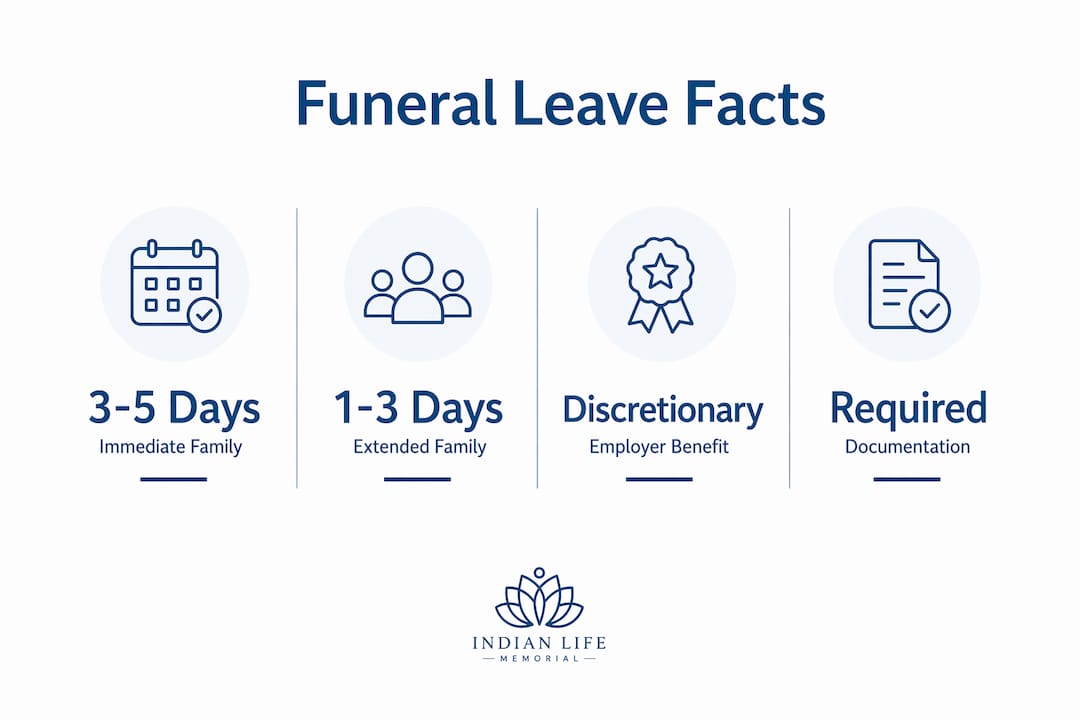
Most Singapore companies grant 3 to 5 days of paid bereavement leave for immediate family members. For extended family, the typical range is 1 to 3 days. These are industry norms, not legal minimums.
The table below shows common leave durations by relationship category:
| Relationship | Typical paid leave duration |
|---|---|
| Spouse | 3–5 days |
| Parent or child | 3–5 days |
| Sibling | 2–3 days |
| Grandparent | 1–3 days |
| Parent-in-law | 1–3 days |
| Grandparent-in-law | 1–2 days |
These figures reflect common industry practice across Singapore employers. Your actual entitlement depends entirely on your company's written policy.
Some progressive employers go further. Combining compassionate leave with annual leave is an accepted practice at many companies, allowing employees to extend their time away when the situation demands it. If you need more time than your bereavement leave covers, requesting to use annual leave immediately after is a reasonable and common approach.
Paid versus unpaid leave is another key distinction. Most policies for immediate family are paid. Extended family leave may be unpaid at some companies. Confirm this detail with HR when you apply, because it affects your paycheck directly.
Pro Tip: When requesting additional time beyond your formal entitlement, frame the conversation around specific needs such as traveling for the funeral or managing estate matters. Concrete reasons make it easier for managers to approve extra days.
What documentation is required to apply for funeral leave?
Applying for bereavement leave follows a clear process at most Singapore companies. Acting quickly and communicating proactively makes the process smoother for everyone involved.
- Notify your manager or HR as soon as possible. A phone call or message is acceptable in the immediate hours after a death. A formal written request can follow once you have the details.
- Submit a leave application through your company's system. Most companies use an HR platform or email-based process. Fill in the dates, the relationship to the deceased, and the reason for leave.
- Provide supporting documentation. Employers commonly require a death certificate or funeral notice to approve bereavement leave. An obituary or official funeral program also serves as acceptable proof at many companies.
- Keep copies of all documents. Store a copy of the death certificate and any funeral notices. You may need them for HR records or insurance claims later.
- Confirm the leave approval in writing. Ask HR to confirm your approved leave dates by email. This protects you if any dispute arises about your absence.
Death certificates and funeral notices are industry standard for validating leave requests. Gathering these documents early reduces stress and speeds up the approval process. If the death occurs overseas, a translated copy of the death certificate is typically acceptable.
If your company has no formal bereavement leave policy, the same steps apply. Communicate early, provide documentation, and request the leave in writing. This creates a paper trail that supports your case.
What are your options if your employer has no formal funeral leave policy?
Employers without a formal policy are encouraged to offer discretionary leave on a case-by-case basis. Rejection is rare, but it can happen. Knowing your alternatives prevents you from being left without options during a bereavement.
Your main fallback options are:
- Annual leave. Using annual leave is the most common alternative when no bereavement leave policy exists. You are entitled to your annual leave regardless of the reason, so this is a reliable safety net.
- Unpaid leave. If you have exhausted your annual leave or prefer to preserve it, request unpaid leave. Most employers will approve this given the circumstances.
- Special or compassionate leave. Proactively discussing compassionate leave with HR can secure time off even without a formal policy. Frame the request clearly and provide documentation upfront.
- Flexible work arrangements. Some employers allow remote work or adjusted hours during bereavement. This option suits situations where you need to be present for family but can still manage some responsibilities.
- Medical leave. Grief can have genuine physical and mental health effects. If your doctor certifies that you are unfit for work, medical leave is a legitimate option.
Since bereavement leave is not statutory, approval depends on employer discretion. Compassionate consideration is common, but your approach matters. A calm, clear, and documented request is far more likely to succeed than an informal verbal conversation. You can also find practical guidance on managing bereavement in Singapore to help you prepare for the steps ahead.
Key Takeaways
Bereavement leave in Singapore is a discretionary employer benefit, not a legal right, so knowing your company's policy before a loss occurs is the single most protective step you can take.
| Point | Details |
|---|---|
| Not a legal requirement | Singapore's Employment Act does not mandate funeral leave; it is granted at employer discretion. |
| Typical duration | Immediate family: 3–5 days paid. Extended family: 1–3 days, sometimes unpaid. |
| Eligibility varies | Contract, part-time, and probationary staff may receive different entitlements than permanent employees. |
| Documentation needed | A death certificate or funeral notice is standard proof required to process leave approval. |
| Fallback options exist | Annual leave, unpaid leave, and compassionate leave requests are all viable alternatives when no formal policy exists. |
What I've learned about funeral leave gaps in Singapore workplaces
The absence of statutory bereavement leave is one of those workplace realities that most people only discover at the worst possible moment. I have spoken with families who were shocked to learn their employer had no formal policy, and the stress of navigating that conversation while grieving is real and unnecessary.
My honest observation is this: most employers in Singapore are compassionate when approached respectfully and with documentation. The problem is not usually employer cruelty. The problem is that employees do not know their options and feel powerless to ask. That silence costs them days they genuinely need.
The cultural weight of family in Singapore, particularly within Indian and Chinese communities, means that funeral rites often require more than three days. Hindu Antyesti rites, for example, involve multiple ceremonies across several days. Employees from these communities may need to combine compassionate leave with annual leave to fulfill their obligations properly. Knowing this in advance, and having that conversation with HR before a loss occurs, makes a measurable difference.
My advice is to read your employment contract today, not tomorrow. If the policy is vague, ask HR for written clarification. If your company has no policy, suggest that one be created. Advocating for a clear policy benefits every colleague, not just you.
— Admin
Indianlifememorial is here when your family needs support
Losing a loved one brings grief and a long list of practical responsibilities at the same time. Indianlifememorial provides compassionate, transparent funeral services across Singapore for families of all faiths, including Hindu, Christian, and freethinker traditions. Their team is available 24 hours a day, 7 days a week, so you are never left without guidance.
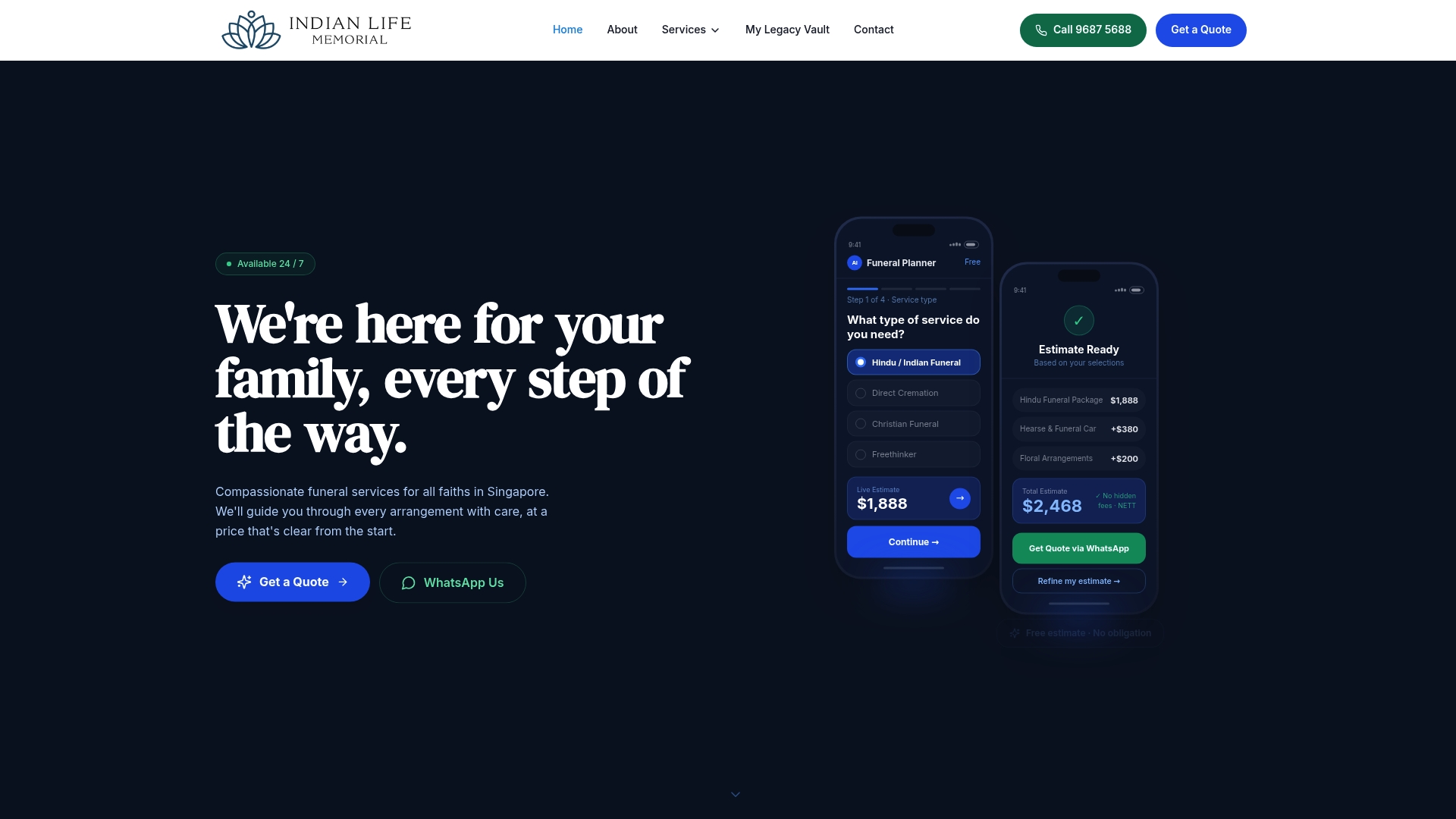
Indianlifememorial's pricing starts at $1,888 with no hidden fees, giving your family clarity during an uncertain time. Their step-by-step process covers every arrangement so you can focus on honoring your loved one. Explore their full suite funeral services or browse their funeral packages to find the right fit for your family's needs and traditions.
FAQ
Is funeral leave a legal right in Singapore?
Funeral leave is not legally mandated under Singapore's Employment Act. It is a discretionary benefit granted at the employer's discretion, though most companies offer it as standard practice.
How many days of bereavement leave do Singapore employees typically get?
Most Singapore employers grant 3 to 5 days of paid leave for immediate family and 1 to 3 days for extended family such as grandparents or in-laws.
What documents do I need to apply for funeral leave?
A death certificate or funeral notice is the standard documentation most employers require. An obituary or official funeral program is also commonly accepted.
What can I do if my company has no bereavement leave policy?
You can use annual leave, request unpaid leave, or speak directly with HR about compassionate leave on a case-by-case basis. Proactive communication with documentation gives you the best chance of approval.
Do part-time or contract employees qualify for funeral leave in Singapore?
Eligibility for part-time and contract employees varies by company policy. Some employers extend the same entitlement to all staff; others limit paid bereavement leave to permanent employees only.
Recommended
- Government Subsidies for Funerals in Singapore: 2026 Guide
- Indian Life Memorial | Funeral Services Singapore | 24/7 Hindu, Christian, All Faiths
- Indian Life Memorial | Funeral Services Singapore | 24/7 Hindu, Christian, All Faiths
- Indian Life Memorial | Funeral Services Singapore | 24/7 Hindu, Christian, All Faiths