

A funeral procession is a coordinated convoy of vehicles traveling together from the service location to the burial or cremation site, honoring the deceased with a final, shared journey. This funeral procession arrangement guide covers every step your family needs: vehicle order, driver etiquette, timeline planning, cultural variations, and transparent budgeting. Whether you are arranging a traditional hearse-led convoy or a walking procession rooted in cultural practice, understanding the logistics in advance transforms a stressful day into a dignified tribute. Indianlifememorial has supported countless families through this process, and the guidance below reflects what actually works.
What is the typical order and arrangement of vehicles in a funeral procession?
The standard convoy order places the police escort or lead vehicle first, followed by the hearse carrying the deceased, then immediate family vehicles, close relatives, and finally friends and other mourners. This sequence is not arbitrary. It reflects both respect for the deceased and a practical system for keeping the convoy intact on public roads.
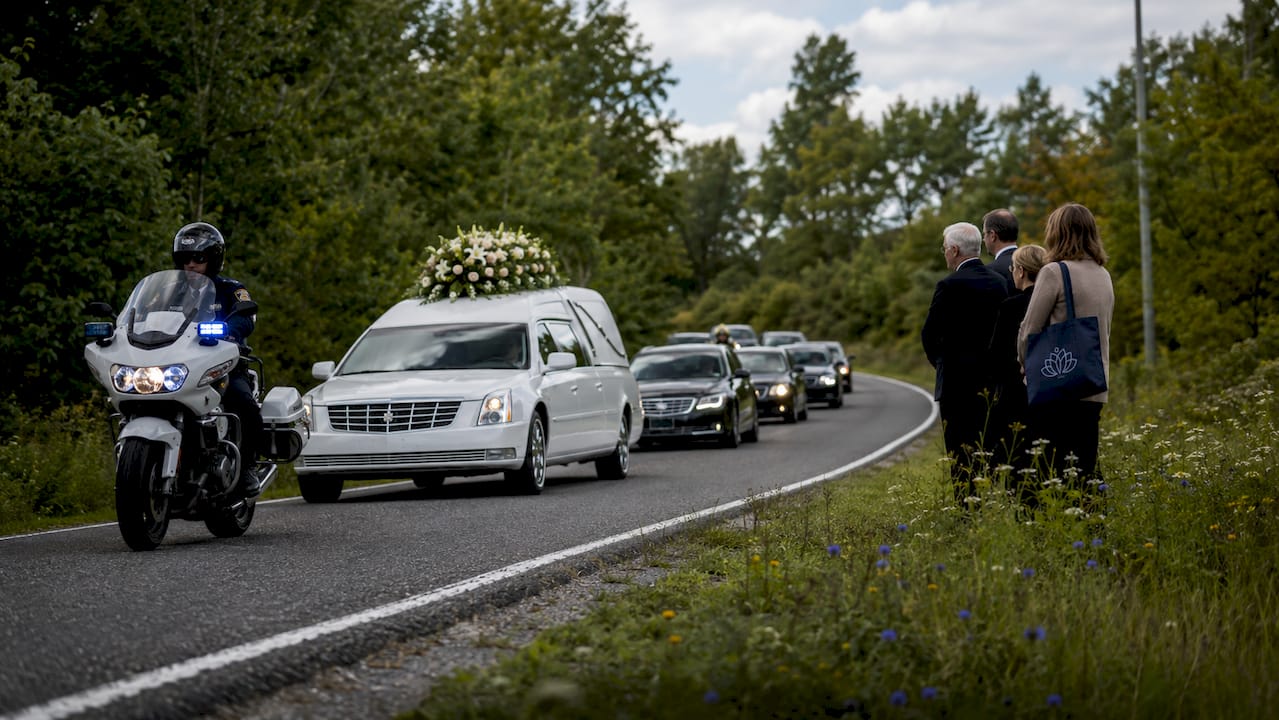
The funeral director or a designated lead driver coordinates the lineup before departure. Their role is to confirm every vehicle is in position, brief drivers on the route, and signal when the procession moves. Assigning a single point-of-contact for route and timing communication reduces confusion and prevents the convoy from breaking apart at intersections.
To identify participating vehicles clearly, families typically use:
- Magnetic procession signs or decals placed on car roofs or hoods
- Small funeral flags mounted on driver-side windows
- Printed route cards distributed to each driver before departure
- Hazard lights or headlights activated simultaneously as a visual signal
For large groups, carpooling reduces the number of vehicles and simplifies spacing. A procession of more than 20 cars becomes difficult to manage without a police escort, so coordinate with your funeral director early if you expect a large attendance.
Pro Tip: Ask your funeral director to provide a printed route map for every driver. Even with GPS, a paper map prevents a single navigation error from pulling a vehicle out of the convoy.
How should attendees and drivers prepare for the procession?
Arriving 15 to 20 minutes early prevents last-minute lineup confusion and gives the funeral director time to assign vehicle positions correctly. Drivers who arrive late disrupt the entire sequence and create unnecessary stress for the family.
Follow these steps to conduct yourself safely and respectfully during the procession:
- Turn on your headlights as soon as you join the lineup. Headlights signal to other road users that a procession is in progress.
- Maintain one car length of following distance at all times. Closing gaps too tightly creates rear-end risk; leaving too much space invites other drivers to cut in.
- Keep hazard lights on if instructed by the funeral director or lead vehicle. Practice varies by region and funeral home preference.
- Avoid lane changes and never overtake another procession vehicle. The convoy's integrity depends on every driver holding their position.
- Obey traffic signals unless a police escort is actively directing otherwise. Without a police escort, each vehicle must stop at red lights independently and rejoin the convoy when safe.
- Do not use your phone while driving. Distraction is the most common cause of procession vehicles becoming separated.
- Stay calm if separated. Proceed directly to the destination using the route card provided. Do not speed to catch up.
Safety during the procession takes precedence over staying in formation. Emergency vehicles cause temporary breaks, and no driver should take risks to keep up. Clear communication and printed maps are the best contingency tools available.
Pro Tip: If you are organizing the procession, designate a "sweep vehicle" at the rear of the convoy. This driver confirms all vehicles have departed and can assist anyone who breaks down or becomes separated.
What timeline considerations matter when planning a procession?
Most funeral services in the U.S. are arranged within 3 to 7 days, which leaves a narrow window for procession logistics. Starting coordination with your funeral home on day one of arrangements prevents scheduling conflicts with the cemetery, crematorium, or religious venue.
A practical funeral arrangement timeline guide for procession planning looks like this:
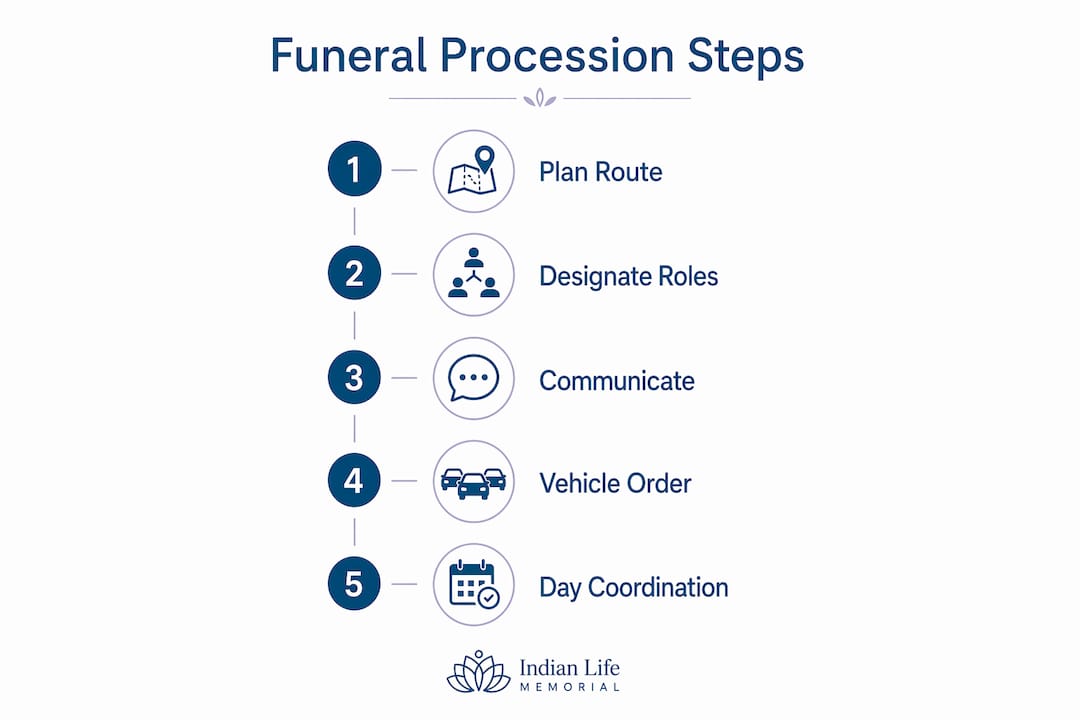
- Day 1 to 2: Contact the funeral home and confirm transport needs. Discuss hearse type, number of family cars required, and whether a police escort is necessary.
- Day 2 to 3: Finalize the route. Consider travel time, road conditions, and whether the route passes any location meaningful to the deceased, such as a family home or place of worship.
- Day 3 to 4: Communicate procession details to attendees. Include the assembly point, departure time, vehicle identification method, and destination address in printed invitations or a digital message.
- Day 4 to 5: Confirm all vehicle bookings and escort arrangements in writing with the funeral home.
- Day of service: Arrive early, distribute route cards, and allow the funeral director to conduct a brief driver briefing before departure.
Clear advance communication to guests is one of the most overlooked steps in funeral planning tips. Attendees who do not know where to park, when to arrive, or how to identify procession vehicles create avoidable delays. A short printed guide or a group message the evening before the service resolves most of these issues. For families getting started with arrangements, having this checklist ready from day one reduces the number of decisions you face under emotional pressure.
How can families personalize a funeral procession?
A funeral procession does not have to follow a single format. Families increasingly choose alternatives that reflect the personality, faith, or cultural background of the person they are honoring.
Consider these options when arranging a funeral procession with a personal touch:
- Walking processions are growing in popularity because they reduce transport costs and create an intimate, communal atmosphere. They require careful route safety planning, particularly for elderly attendees or guests with mobility limitations.
- Horse-drawn hearses carry deep historical and cultural significance in many communities and remain available through specialist providers.
- Motorcycle hearses offer a modern alternative, particularly meaningful for families of motorcyclists or those who want a distinctive tribute.
- Ceremonial stops along the route, such as pausing outside the family home or a significant community building, add a layer of personal meaning without disrupting the overall procession.
- Music and symbolic gestures, such as a live musician walking ahead of the hearse or the release of flowers at the graveside, can be incorporated with advance coordination.
For Hindu families, the Antyesti rites and the role of the Pandit in guiding the Atman's transition shape the procession's character significantly. The order of participants, the chanting of mantras, and the timing of specific Samskaras all influence how the procession is structured. Indianlifememorial's experienced priests and culturally trained team ensure these sacred elements are honored correctly within the procession framework.
Pro Tip: Discuss your personalization ideas with your funeral director at least three days before the service. Some options, such as horse-drawn carriages or ceremonial musicians, require advance booking and may not be available on short notice.
What do funeral procession arrangements typically cost?
Transparent funeral pricing separates funeral director fees from disbursements, which are third-party costs such as cemetery fees, police escort charges, and additional vehicle hire. Families who receive a single lump-sum quote often discover hidden charges only after the service.
Separating transport costs into individual line items, such as hearse hire, family limousines, and mileage, gives your family a clear picture of where money is going. Specialty options like motorcycle hearses can range considerably in price depending on provider and distance, so always request an itemized quote before confirming.
| Cost component | What to ask your funeral home |
|---|---|
| Hearse hire | Is mileage included, or charged separately beyond a set distance? |
| Family limousines | How many passengers per vehicle, and how many vehicles are included? |
| Police escort | Is this arranged by the funeral home, and what is the fee? |
| Specialty transport | What is the full cost for motorcycle or horse-drawn options? |
| Procession flags and markers | Are these included in the package, or billed as extras? |
Itemized billing reduces anxiety and builds trust between the funeral home and the family. Indianlifememorial's pricing starts at $1,888 with no hidden fees, and every transport component is disclosed upfront. Families can review funeral service fees in detail before making any commitment, which removes one significant source of stress during an already difficult time. For those comparing providers, learning how to compare quotes effectively prevents overpaying for services that should be standard.
Pro Tip: Request a written, itemized quote for every procession component before signing any agreement. A reputable funeral home will provide this without hesitation.
Key takeaways
A well-organized funeral procession requires early coordination, clear communication to all participants, and transparent pricing from your funeral home.
| Point | Details |
|---|---|
| Vehicle order matters | Place the hearse directly behind the lead vehicle, with immediate family following in sequence. |
| Arrive early | Drivers should arrive 15 to 20 minutes before departure for lineup instructions and route cards. |
| Safety over formation | If separated, proceed to the destination calmly rather than speeding to rejoin the convoy. |
| Plan the timeline early | Begin procession logistics on day one of arrangements to avoid scheduling conflicts. |
| Request itemized pricing | Ask for a written breakdown of every transport cost to avoid surprise fees after the service. |
What I have learned from planning dignified processions
Every family I have worked with carries the same quiet fear: that something will go wrong on the day, and the procession will feel chaotic rather than sacred. The honest truth is that most procession problems trace back to one cause. Communication was not given enough time or attention in the days before the service.
The families who feel most at peace on the day of the procession are the ones who received a printed route card, knew exactly where to park, and had a brief conversation with the funeral director the evening before. That is not a luxury. It is a standard that every family deserves.
I also want to name something that does not appear in most guides. Personalization is not in conflict with dignity. A walking procession through a meaningful neighborhood, a ceremonial pause outside a family home, or the sound of devotional music accompanying the hearse are not distractions from the solemnity of the moment. They are expressions of it. The procession is the last public act of love your family offers. It should reflect who your loved one truly was.
Finally, on pricing: a funeral home that cannot give you an itemized quote is not a partner. It is a source of future regret. Transparent billing is not a premium feature. It is the baseline standard your family should expect and demand.
— Admin
How Indianlifememorial supports your procession planning
Organizing a funeral procession involves more decisions than most families anticipate, and Indianlifememorial is built to carry that weight with you.

Indianlifememorial's full-suite funeral services include procession coordination, experienced Pandits for Vedic rites, and culturally sensitive support for Hindu, Christian, and multi-faith families across Singapore. Every package comes with transparent, itemized pricing starting at $1,888, so your family knows exactly what is included before the day arrives. The team handles route planning, vehicle coordination, and attendee communication, giving you the space to focus on honoring your loved one. Explore the available service packages or reach out directly for personalized guidance. Compassionate support is available 24 hours a day.
FAQ
What is the correct order of vehicles in a funeral procession?
The standard order places the police escort or lead vehicle first, followed by the hearse, then immediate family vehicles, close relatives, and finally friends and other mourners. This sequence maintains convoy integrity and ensures the most important participants remain closest to the deceased.
How early should drivers arrive for a funeral procession?
Drivers should arrive 15 to 20 minutes before the scheduled departure time. Early arrival allows the funeral director to assign vehicle positions and distribute route cards before the procession begins.
Do all vehicles need headlights on during a procession?
Yes. Turning on headlights signals to other road users that a funeral procession is in progress. Some funeral directors also instruct drivers to use hazard lights, depending on local practice and road conditions.
How do families budget transparently for procession transport?
Request an itemized quote that separates hearse hire, family limousine costs, mileage charges, and any specialty transport fees. Transparent funeral pricing distinguishes director fees from third-party disbursements, preventing surprise costs after the service.
Can a funeral procession include cultural or personal elements?
Yes. Walking processions, horse-drawn hearses, ceremonial route stops, and devotional music are all options families can discuss with their funeral director. For Hindu families, the Antyesti rites and Pandit-led ceremonies shape the procession's structure and timing in meaningful ways.