
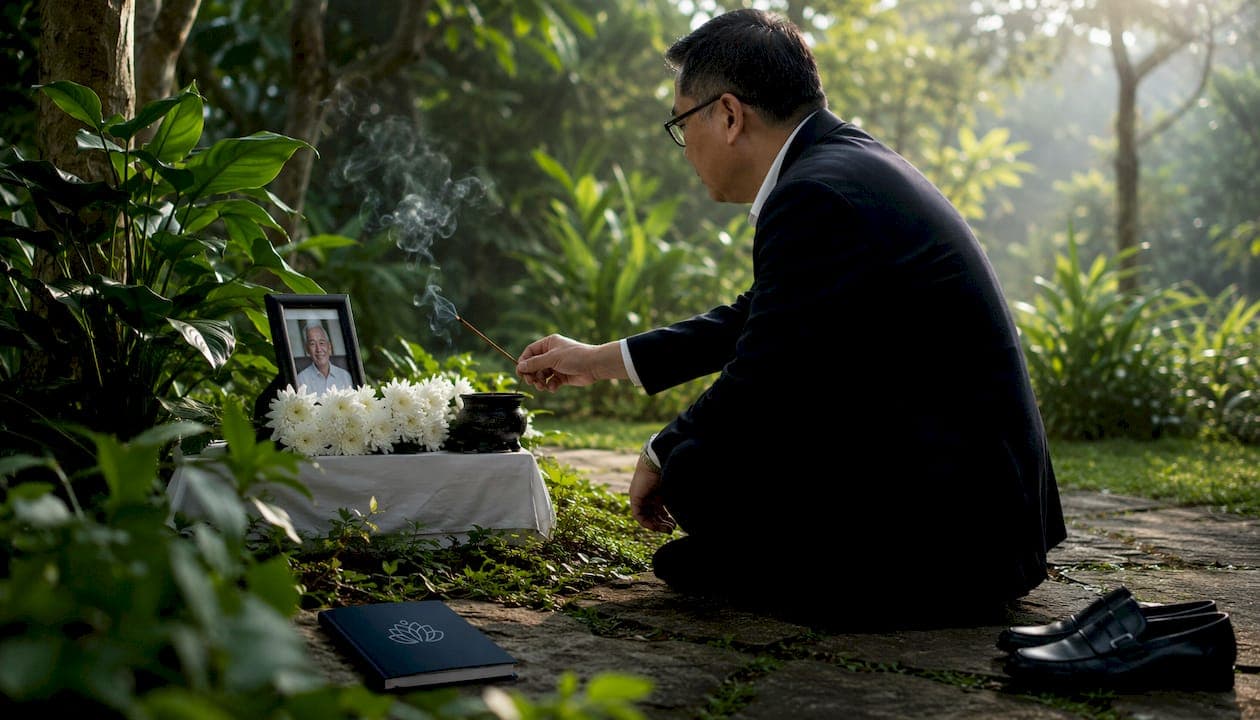
Singaporean condolence culture is defined as the collective set of mourning customs, grief rituals, and expressions of sympathy practiced across the nation's Chinese, Malay, Indian, and Christian communities. Understanding what is a Singaporean condolence culture means recognizing that no single tradition governs how families grieve. Instead, shared values of respect, empathy, and community solidarity unite four distinct religious and ethnic frameworks into one cohesive social fabric. Whether you are attending a Chinese wake lasting several days, a Malay Muslim burial completed within 24 hours, or a Hindu ceremony guided by Vedic rites, the underlying expectation is the same: show up, be present, and honor the deceased with sincerity.
What are the key condolence customs in major Singaporean cultures?
Singaporean mourning customs vary significantly by religion and ethnicity, yet each tradition carries the same core purpose: to honor the deceased and support the living. Knowing the differences protects you from unintentional disrespect and helps you participate meaningfully.
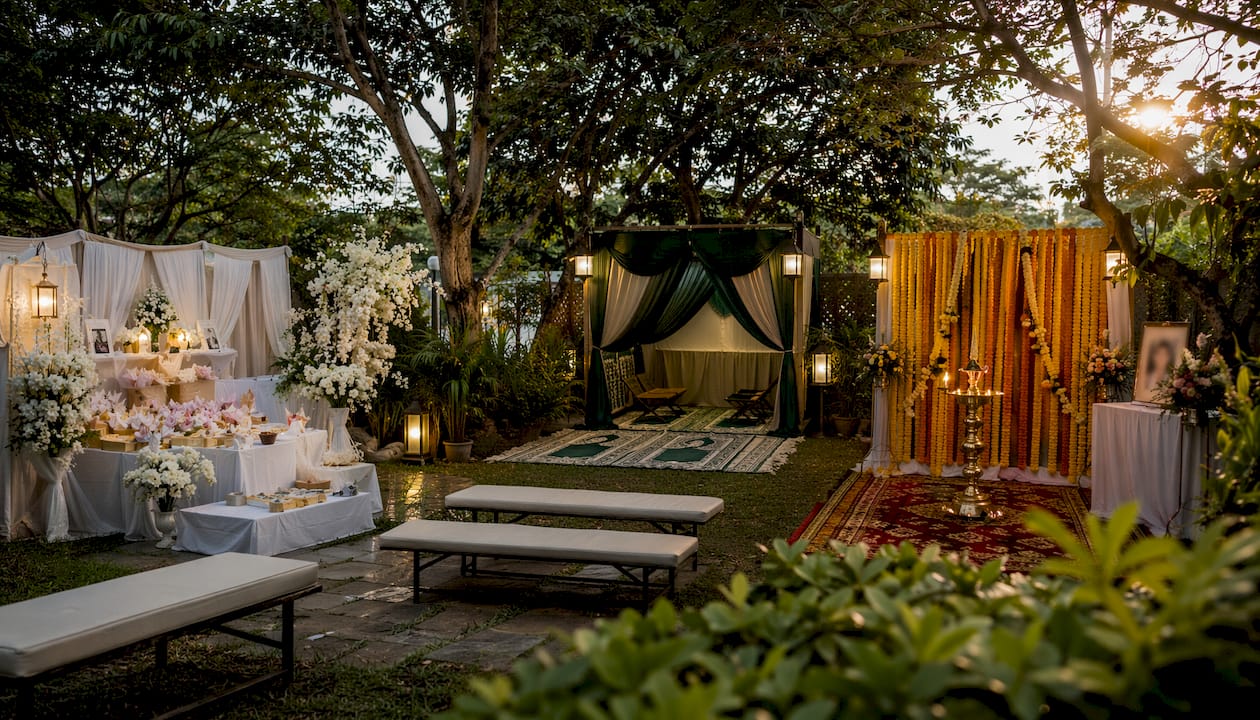
Chinese funeral traditions
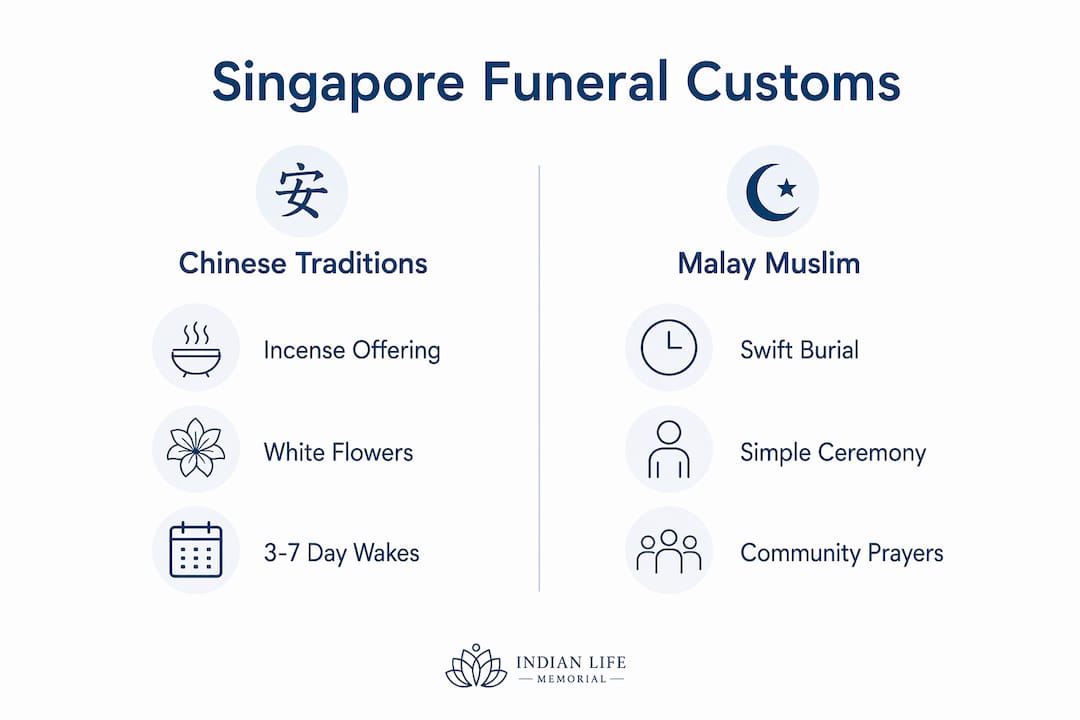
Chinese funerals in Singapore follow a structured mourning period rooted in both Taoist and Buddhist beliefs. Wakes last 3, 5, or 7 days because odd numbers are considered auspicious and even numbers are associated with bad luck. That detail alone surprises most non-Chinese attendees. Filial piety sits at the center of these rites. Adult children wear white or black mourning clothes, and the family maintains a visible presence beside the casket throughout the wake.
Key practices include:
- Burning of joss paper and incense to provide for the deceased in the afterlife
- Chanting by monks or Taoist priests throughout the night
- A procession to the crematorium or burial site on the final day
- Guests offering condolence money in white envelopes, never red
Malay Muslim funeral customs
Malay Muslim funerals prioritize swift burial, simplicity, and community support, reflecting the Islamic principle of submission to God's will. The body is typically washed, shrouded, and buried within 24 hours of death. That urgency reflects religious obligation, not haste. The community gathers to pray, recite the Quran, and provide food for the bereaved family. Flowers and elaborate decorations are generally absent, keeping the focus on prayer and remembrance.
Indian Hindu, Sikh, and Christian customs
Hindu funerals in Singapore follow the Antyesti rites, a sacred set of Samskaras guiding the Atman toward its next life. A Pandit leads prayers, and the mourning period can extend to 13 days, with specific rituals performed on each day. You can learn more about these rites through the Hindu funeral Singapore guide published by Indianlifememorial. Sikh funerals center on readings from the Guru Granth Sahib and emphasize acceptance of God's will. Indian Christian funerals blend Western liturgical elements with South Asian cultural expressions of grief, including communal prayer and shared meals.
Christian funeral practices
Christian funerals in Singapore span Catholic, Protestant, and other denominations, each with distinct liturgical formats. The common thread is a service of remembrance that celebrates the deceased's life and affirms hope in resurrection. Christian funeral services typically include hymns, scripture readings, and a eulogy. Guests dress in dark, subdued colors and are expected to observe quiet reverence throughout.
How to express condolences appropriately in Singapore's multicultural context?
Expressing condolences across cultural lines requires sincerity above all else. The phrase "I'm so sorry for your loss" is appropriate in every Singaporean context, regardless of religion or ethnicity. That universality makes it the safest and most respectful starting point for anyone uncertain about what to say.
Words and phrases that work across cultures
- Universal: "I'm so sorry for your loss" or "My deepest condolences."
- Islamic context: The Arabic phrase Inna lillahi wa inna ilayhi raji'un (meaning "We belong to God, and to Him we return") is welcomed and respected at Malay Muslim funerals.
- Hindu context: Acknowledging the soul's peaceful transition is appropriate. Avoid phrases that imply the death was preventable.
- Christian context: References to peace, heaven, and God's comfort are welcomed.
Avoid clichés like "Everything happens for a reason" or "They're in a better place now." These phrases, though well-intentioned, can feel dismissive to a grieving family.
Pro Tip: When you are unsure what to say, say less. A quiet handshake, a bow of the head, or simply sitting beside a grieving family member communicates more than any rehearsed phrase.
Condolence money and flower customs
Condolence money is given in plain white envelopes, written in black or blue ink, never red. Amounts typically range from SGD 30 to SGD 100 or more, depending on your closeness to the family. Red envelopes are strictly reserved for celebrations and must never appear at a funeral. White chrysanthemums are the standard condolence flower for Chinese funerals. Malay Muslim funerals generally do not include flowers. For Hindu and Christian services, white or yellow flowers are appropriate, though you should confirm with the family when in doubt.
What to expect at wakes and funerals in Singapore?
Wakes in Singapore are held in three main settings: the family home, HDB void decks, and funeral parlors. Urban housing constraints have shifted many wakes from private homes to void decks and dedicated venues. That shift has changed the social character of wakes. Void deck wakes are open to the entire neighborhood, creating a communal atmosphere that reinforces solidarity.
| Setting | Typical culture | Key features |
|---|---|---|
| Home | Chinese, Indian | Intimate, family-centered, incense and altar present |
| HDB void deck | Chinese, Malay | Open to community, tents and chairs set up |
| Funeral parlor | All faiths | Structured, climate-controlled, professional staff |
| Church or temple | Christian, Hindu, Sikh | Liturgical or ritual-led, formal seating |
Guest conduct at wakes
Arrive quietly and sign the guest book near the entrance. Bow your head respectfully when passing the casket or altar. If incense is available, you may offer a stick as a sign of respect, though this is optional for non-Chinese guests. Do not photograph the casket or the family without explicit permission. Accept food or drinks offered by the family. Refusing can be perceived as cold or dismissive in Chinese and Indian contexts.
Pro Tip: Observe what other guests do before acting. If you see guests bowing before the altar, follow their lead. Mirroring respectful behavior is always safer than standing apart.
Physical contact norms differ by culture. A gentle handshake is acceptable across most communities. Hugging is common in Christian and some Indian contexts but less so in traditional Chinese or Malay Muslim settings. When in doubt, a respectful nod communicates empathy without overstepping.
How have modern influences affected Singaporean condolence customs?
Singapore's condolence practices are evolving, driven by urbanization, generational change, and technology. The core values remain intact, but the formats are shifting in meaningful ways.
Modern funerals increasingly incorporate personalization, including favorite music playlists, photo slideshows, and themed tributes that reflect the deceased's life story. That shift reflects a broader cultural move from ritual obligation toward individual celebration of life. Younger Singaporeans often lead this change, blending traditional rites with personal expression.
Key shifts in modern Singaporean mourning customs include:
- Digital condolences: Social media tributes, WhatsApp messages, and online memorial pages have become standard ways to express sympathy, especially for overseas family members.
- Shorter mourning periods: Some families opt for condensed ceremonies to accommodate work schedules and practical constraints, while still honoring core religious requirements.
- Venue professionalization: Funeral parlors now offer full-service packages that manage logistics, catering, and ritual coordination, reducing the burden on grieving families.
- Interfaith sensitivity: As intermarriages increase, families increasingly blend elements from two or more traditions into a single service.
Respecting these changes means recognizing that a funeral with a photo slideshow and contemporary music is no less sacred than a traditional seven-day wake. The form changes. The intention does not.
Key Takeaways
Singaporean condolence culture is defined by multicultural mourning customs that share a common foundation of respect, presence, and community solidarity across Chinese, Malay, Indian, and Christian traditions.
| Point | Details |
|---|---|
| Multicultural framework | Chinese, Malay Muslim, Indian, and Christian traditions each follow distinct but equally respected mourning customs. |
| Odd-numbered wake days | Chinese funerals last 3, 5, or 7 days to avoid bad luck. Even numbers are considered inauspicious. |
| Universal condolence phrase | "I'm so sorry for your loss" is appropriate across all Singaporean cultures and faiths. |
| Presence over words | Showing up matters more than saying the right thing. Physical presence communicates empathy most powerfully. |
| Modern adaptations | Personalized funerals, digital tributes, and venue-based wakes reflect Singapore's evolving urban lifestyle. |
What I've learned about condolence culture after years of observation
The most common mistake people make at Singaporean funerals is overthinking what to say. They rehearse phrases, worry about cultural missteps, and sometimes avoid attending altogether out of fear of doing something wrong. That fear is understandable. It is also counterproductive.
Presence matters far more than eloquence. I have seen grieving families draw genuine comfort from a neighbor who said nothing at all, simply sat beside them for an hour, and left quietly. That act of solidarity carries more weight than the most carefully worded condolence message. Words can feel scripted. Presence cannot be faked.
The second thing I have learned is that most Singaporeans are remarkably gracious hosts at funerals. If you make a small cultural error, such as forgetting to remove your shoes before entering a Hindu home wake, the family will almost always correct you gently and without judgment. They understand that Singapore's multicultural context means no one can be an expert in every tradition. What they notice is whether you tried.
My honest advice: observe first, ask gently when unsure, and let sincerity guide every gesture. Singapore's diverse funeral traditions are not obstacles to navigate. They are an invitation to understand your neighbors more deeply.
— Admin
Indianlifememorial: compassionate funeral support for all faiths in Singapore
Grief does not follow a schedule, and neither does Indianlifememorial. The team provides 24/7 funeral services covering Hindu, Christian, and all-faith ceremonies across Singapore, with transparent pricing starting at $1,888 and no hidden fees.
Families receive step-by-step guidance from the first call through the final rite, with experienced Pandits, culturally sensitive logistics, and full coordination of Vedic Antyesti rites. For those honoring a loved one through Hindu Indian funeral services or a Christian service, Indianlifememorial assigns a dedicated coordinator who understands the specific customs your family holds sacred. The goal is simple: let your family focus on honoring your loved one while the team handles every detail with care and respect.
FAQ
What is Singaporean condolence culture?
Singaporean condolence culture is the set of mourning customs, grief rituals, and expressions of sympathy practiced across Chinese, Malay, Indian, and Christian communities in Singapore. It is defined by shared values of respect, empathy, and community solidarity, expressed through distinct religious and ethnic traditions.
How long do wakes last in Singapore?
Chinese wakes typically last 3, 5, or 7 days, following the tradition of odd-numbered mourning periods. Malay Muslim burials occur within 24 hours of death, while Hindu mourning periods can extend up to 13 days.
What should I wear to a funeral in Singapore?
Dark, subdued colors such as black, navy, or gray are appropriate across most Singaporean funeral traditions. Avoid bright colors and patterns. For Hindu funerals, white is also acceptable and commonly worn.
Is it appropriate to give money at a Singaporean funeral?
Yes. Condolence money in plain white envelopes, written in black or blue ink, is a common and respectful gesture at Chinese funerals. Amounts typically range from SGD 30 to SGD 100 or more, depending on your relationship with the family.
What should I say when attending a funeral in Singapore?
"I'm so sorry for your loss" is appropriate in every Singaporean cultural context. Sincerity matters more than finding the perfect phrase. Simply being present and attentive communicates empathy more powerfully than any rehearsed words.
Recommended
- Indian Life Memorial | Funeral Services Singapore | 24/7 Hindu, Christian, All Faiths
- Indian Life Memorial | Funeral Services Singapore | 24/7 Hindu, Christian, All Faiths
- Indian Life Memorial | Funeral Services Singapore | 24/7 Hindu, Christian, All Faiths
- Indian Life Memorial | Funeral Services Singapore | 24/7 Hindu, Christian, All Faiths