
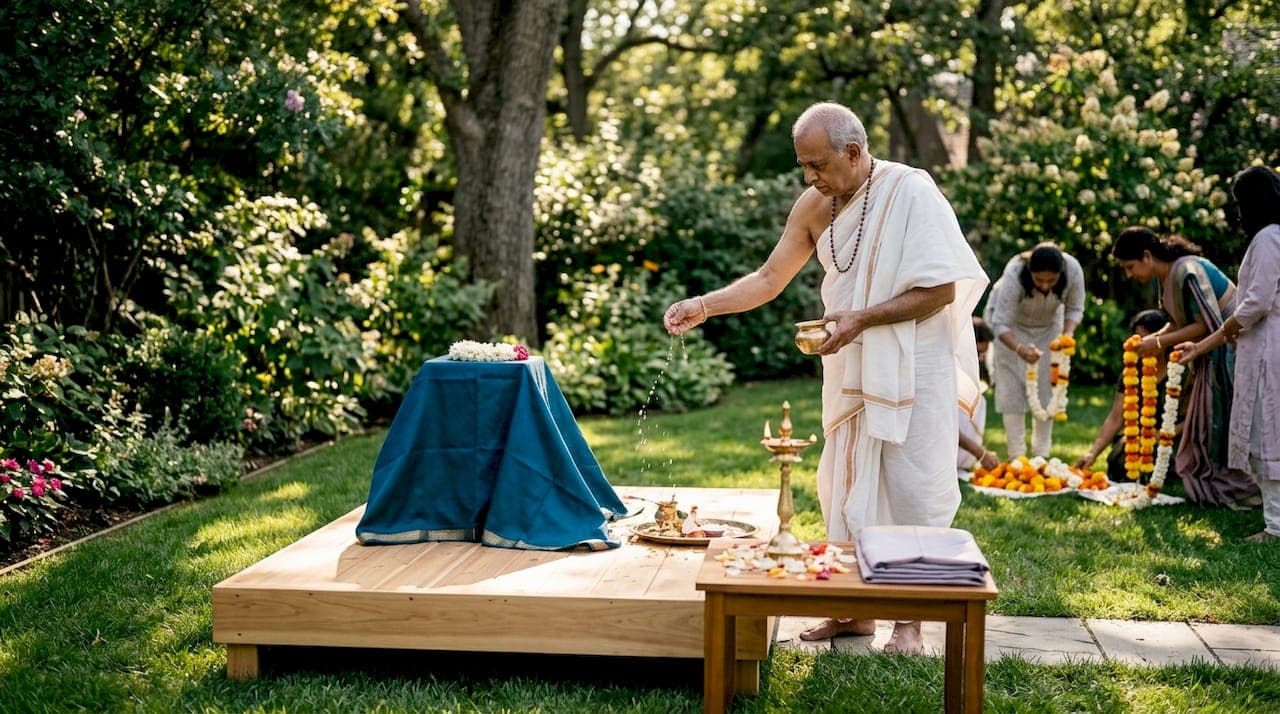
When a loved one passes, most Hindu families understand that a priest, known as a Pandit, will be present. What many do not realize is how deeply the role of priest in a Hindu funeral extends beyond reciting mantras. The Pandit does not simply chant in the background. He guides the family through every ritual step, clarifies who does what, and provides spiritual support that carries the soul and the living through one of life's most sacred transitions. Understanding this role before the funeral day can bring your family genuine comfort and confidence.
Table of Contents
- Key Takeaways
- The role of priest in a Hindu funeral: the Antyesti framework
- What the priest actually does during the ceremony
- The priest's role after cremation
- Practical guidance for working with a Hindu priest
- My perspective on why the priest's role matters more than most families expect
- How Indianlifememorial supports your family through every rite
- FAQ
Key Takeaways
| Point | Details |
|---|---|
| Priest role is deeply active | The Pandit leads mantras, guides family ritual actions, and ensures correct ceremonial sequence throughout. |
| Family and priest have distinct duties | Physical acts like lighting the pyre (Mukhagni) typically fall to the eldest son, while the priest provides sacred direction. |
| Priest involvement extends beyond cremation | Post-funeral rites including pind daan, tarpan, and Shraddha require continued priestly guidance for up to 13 days. |
| Early coordination reduces stress | Contacting a qualified priest and experienced funeral coordinator before the day eases logistics and honors tradition properly. |
| Regional customs vary | Ritual practices differ by family lineage and sampradaya, so communicating your traditions to the priest in advance matters. |
The role of priest in a Hindu funeral: the Antyesti framework
The formal term for Hindu funeral rites is Antyesti, which translates roughly as "last sacrifice." It is one of the sixteen Samskaras, the sacred life milestones in Hinduism, and it holds profound spiritual weight. The Antyesti ceremony is typically completed within a day of death, with the priest participating in the cremation ceremony and the concluding rites that follow.
Understanding where the Pandit fits requires seeing the full ceremony in stages. The rites move through preparation of the body, the cremation itself, and an extended mourning period that can last thirteen days. Each stage carries specific rituals, and the priest serves as the sacred anchor for all of them.
Here is how the primary stages unfold and where the priest's presence is central:
- Body preparation: The priest guides the family in bathing, dressing, and placing the deceased with proper ritual attention. Sacred items, flowers, and the correct positioning of the body all follow scriptural guidance the Pandit provides.
- The cremation ceremony: The priest leads Vedic prayers, recites specific mantras, and coordinates the sequence of offerings made at the pyre. He also performs or supervises Kapala Kriya, a rite performed to release the soul from the physical body.
- Post-cremation rites: The priest continues to lead daily rituals including offerings for the soul's onward journey, culminating in the thirteenth-day ceremony.
- Family coordination: The priest clarifies which actions belong to the eldest son or designated mourner and which are his own responsibilities, preventing confusion during emotionally charged moments.
Ritual practices vary by sampradaya and priestly lineage, so the Pandit your family works with brings both scriptural authority and practical knowledge of your tradition.
What the priest actually does during the ceremony
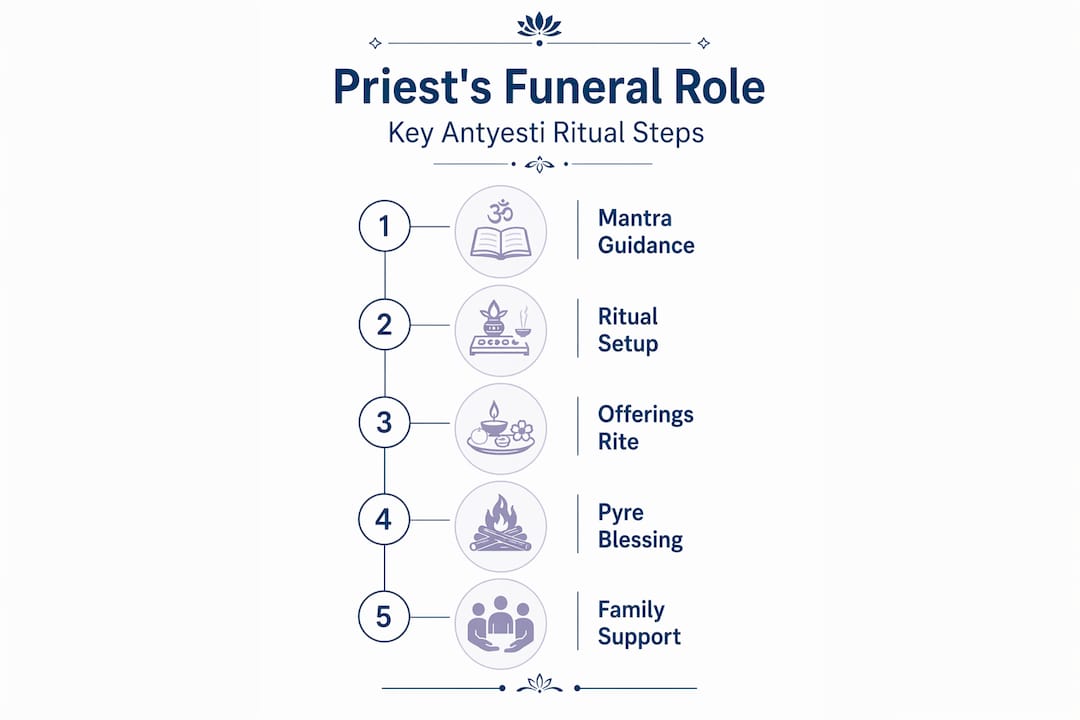
Many families arrive at the cremation expecting the priest to handle everything independently. The reality is more collaborative, and knowing this in advance helps everyone participate meaningfully.
The Pandit's specific duties during the funeral ceremony follow a deliberate order:
- Opening prayers and invocations. The priest begins with sacred invocations to Lord Yama, the deity of death, and to the ancestors. He recites the Mahamrityunjaya mantra, one of the most powerful Vedic prayers for liberation of the soul, along with other funeral mantras that guide the Atman toward peace.
- Guiding family ritual actions. The priest instructs family members step by step. He explains the meaning of each action so the family is not simply following instructions but participating with understanding and intention.
- Supervising or performing Mukhagni. The lighting of the pyre, known as Mukhagni, is accompanied by specific mantras from the Yajur Veda. This act is traditionally performed by the eldest son. The priest ensures the mantras are recited correctly at the precise moment of lighting. If no family member is available to perform this duty, the priest may step in.
- Performing Kapala Kriya. This ritual, performed at the cremation site, is believed to release the soul from the physical body. The priest bathes beforehand, circumambulates the pyre, makes the required offerings, and performs this rite with full ceremonial attention.
- Maintaining ritual sequence. The priest ensures correct chanting and ritual order while the eldest son or designated mourner conducts the physical cremation actions. Keeping these roles separate prevents confusion and honors the scriptural intent of each act.
Pro Tip: Before the funeral day, ask the priest to walk your family through the ceremony sequence. Even a brief explanation of who does what, and why, can transform a disorienting experience into one that feels sacred and purposeful.
The priest's role after cremation
One of the most commonly overlooked aspects of Hindu last rites is how much priestly involvement continues after the cremation. The soul's journey, according to Vedic tradition, requires ongoing ritual support during the mourning period. Families who plan only for the funeral day often find themselves unprepared for what follows.
Post-funeral rites under priest guidance include daily pind daan and tarpan offerings, culminating in the thirteenth-day ceremony. Here is what that extended involvement looks like:
- Daily pind daan and tarpan. These offerings of rice balls and water are made each day to nourish and honor the soul as it transitions. The priest leads or guides these rites, often at the family home.
- Shraddha ceremonies. The Shraddha rites are among the most meticulous in Hinduism. They include homa fire sacrifices and ancestor invocations that require a qualified Vedic priest to perform correctly.
- Handling incomplete family records. In many diaspora families, the gotra (ancestral lineage) or full name of the deceased may not be known. A skilled priest addresses this by using universal ancestor invocations, so the rituals proceed without disruption.
- The thirteenth-day ceremony. This is the formal conclusion of the initial mourning period. The priest conducts prayers and rites that mark the soul's completion of its transition and the family's return to daily life.
Priest involvement often extends beyond cremation day, and families benefit significantly from booking priest services for the full initial mourning period. Planning this in advance removes the burden of last-minute arrangements during an already difficult time.
Pro Tip: When you first contact a priest or funeral service, ask specifically about post-cremation rites and whether they include priest coordination for the full thirteen days. This one question can save your family considerable stress.
Practical guidance for working with a Hindu priest
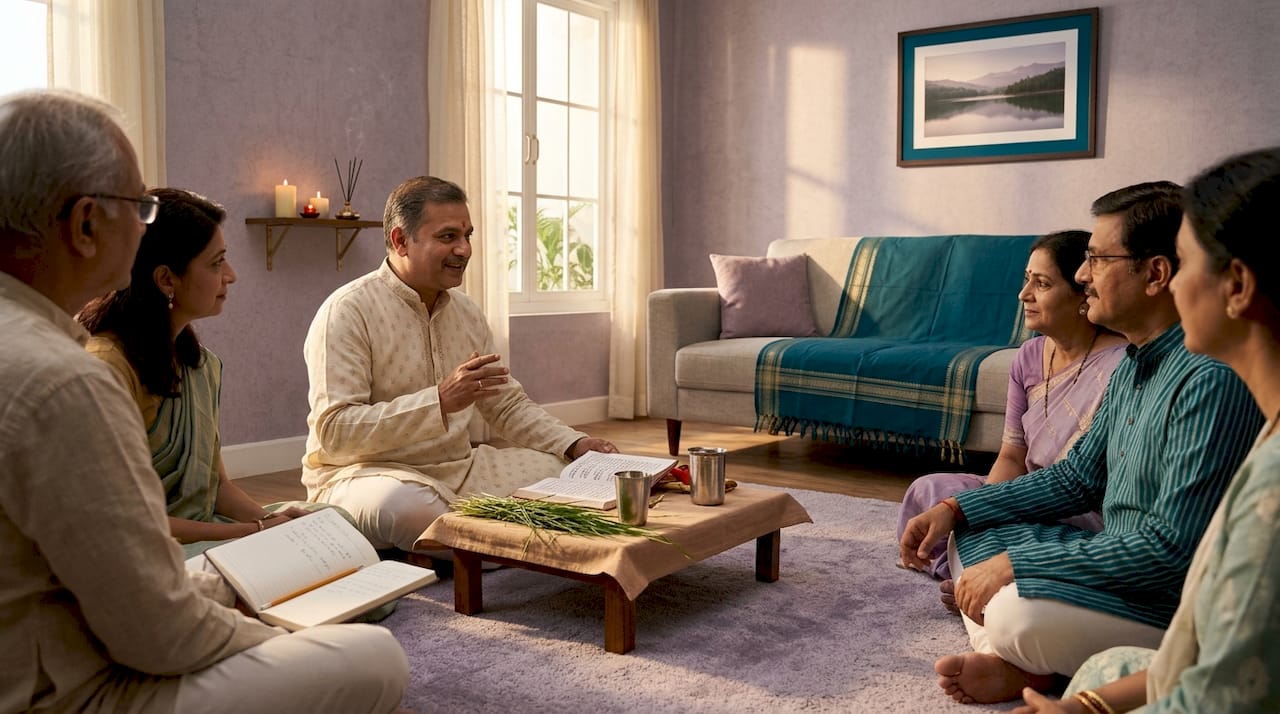
Knowing the priest's role is one thing. Knowing how to engage a priest effectively is another. Families who approach this process with clarity and early communication consistently have more peaceful, well-conducted ceremonies.
Here is what to consider when coordinating with a Pandit for a Hindu funeral:
- Contact early. Families are advised to contact a Hindu priest and funeral director experienced in Hindu funerals as early as possible. This allows time to discuss your family's specific customs, regional traditions, and any special circumstances.
- Communicate your family's lineage and customs. Ritual practices differ across North and South Indian traditions, and between different sampradayas. Share your gotra, regional background, and any family-specific customs with the priest before the ceremony.
- Clarify roles before the day. Discuss who will perform Mukhagni and other family-led acts. Knowing this in advance prevents uncertainty at the most solemn moments.
- Work with a funeral director experienced in Hindu rites. In diaspora settings like Singapore, priests adapt rituals to venue capabilities. A funeral director who understands Hindu customs will coordinate logistics so the priest can focus entirely on the sacred work.
The table below shows how responsibilities are typically divided between the priest and the family:
| Responsibility | Priest (Pandit) | Family (Eldest Son / Mourner) |
|---|---|---|
| Vedic mantras and prayers | Leads and recites | Listens and participates |
| Ritual sequence guidance | Directs all steps | Follows instructions |
| Mukhagni (lighting the pyre) | Supervises; performs if needed | Traditionally performs |
| Kapala Kriya | Performs | Witnesses |
| Pind daan and tarpan | Guides daily offerings | Makes the offerings |
| Shraddha ceremony | Leads fully | Participates as directed |
My perspective on why the priest's role matters more than most families expect
I have worked alongside Hindu families during some of the most difficult days of their lives, and one pattern stands out clearly. Families who understand the priest's role before the funeral feel more grounded during it. Those who arrive without that understanding often feel lost, even when the ceremony is conducted correctly.
What I have found is that the Pandit's value goes far beyond ritual accuracy. Yes, correct mantra pronunciation and sequencing matter spiritually. But what I have seen move families most deeply is the priest's quiet guidance, the way a good Pandit explains the why behind each act so that grief has somewhere sacred to go.
There is also a practical truth that I think gets overlooked. Many families assume the priest handles everything, and then feel caught off guard when they are asked to step forward for Mukhagni or daily offerings. The confusion is not their fault. It comes from not knowing that Hindu funeral rites are designed as a collaboration between the priest and the family. The priest holds the sacred framework; the family inhabits it.
My honest advice: treat the first conversation with your priest as a planning session, not just a booking. Ask questions. Share your family's background. The more the priest knows, the more he can tailor the ceremony to honor your loved one with genuine authenticity.
— Admin
How Indianlifememorial supports your family through every rite
When your family is preparing for a Hindu funeral in Singapore, the last thing you need is uncertainty about who handles what. Indianlifememorial specializes in Hindu funeral services that include experienced priest coordination, proper Vedic rites, and transparent pricing from $1,888 with no hidden fees.

Their full-suite funeral packages are designed to synchronize every element of the ceremony, from the priest's ritual duties to venue logistics and post-cremation support. You do not have to coordinate these pieces alone during an already overwhelming time. Reach out to Indianlifememorial early so your family can focus entirely on honoring your loved one with the reverence they deserve.
FAQ
What is the main role of a priest in a Hindu funeral?
The Pandit leads Vedic prayers and mantras, guides family members through each ritual step, performs sacred rites like Kapala Kriya, and ensures the correct ceremonial sequence throughout the Antyesti funeral rites.
Does the priest or the eldest son light the funeral pyre?
Mukhagni, the lighting of the pyre, is traditionally performed by the eldest son while the priest recites the required Yajur Veda mantras. If no family member is available, the priest may perform this act.
How long does the priest's involvement last after a Hindu funeral?
Priest involvement extends through the full mourning period, which typically lasts thirteen days. This includes daily pind daan and tarpan offerings and the concluding Shraddha ceremony.
What if we do not know our gotra or ancestor's full name?
A qualified priest can use universal ancestor invocations to proceed with Shraddha and other rites when specific family details are unavailable, so the ceremonies are not disrupted.
How do we find a qualified Hindu priest for a funeral in Singapore?
Working with a funeral service that specializes in Hindu rites, such as Indianlifememorial, is the most reliable approach. They coordinate directly with experienced priests and manage all logistics so your family does not have to search independently during a time of grief.
Recommended
- Indian Life Memorial | Funeral Services Singapore | 24/7 Hindu, Christian, All Faiths
- Indian Life Memorial | Funeral Services Singapore | 24/7 Hindu, Christian, All Faiths
- Indian Life Memorial | Funeral Services Singapore | 24/7 Hindu, Christian, All Faiths
- Indian Life Memorial | Funeral Services Singapore | 24/7 Hindu, Christian, All Faiths