

Transportation in a funeral package is defined as the coordinated movement of the deceased and family members across every stage of the funeral process, from the initial transfer at the place of death to the final transit to a cemetery or crematorium. Funeral providers bundle these services because managing them separately creates legal, logistical, and emotional burdens that grieving families are rarely equipped to handle alone. Understanding why transportation included in funeral package arrangements matters helps your family make informed decisions quickly, without confusion or unexpected costs. Indianlifememorial builds this coordination into every package so families can focus entirely on honoring their loved one.
What transportation services are typically included in funeral packages?
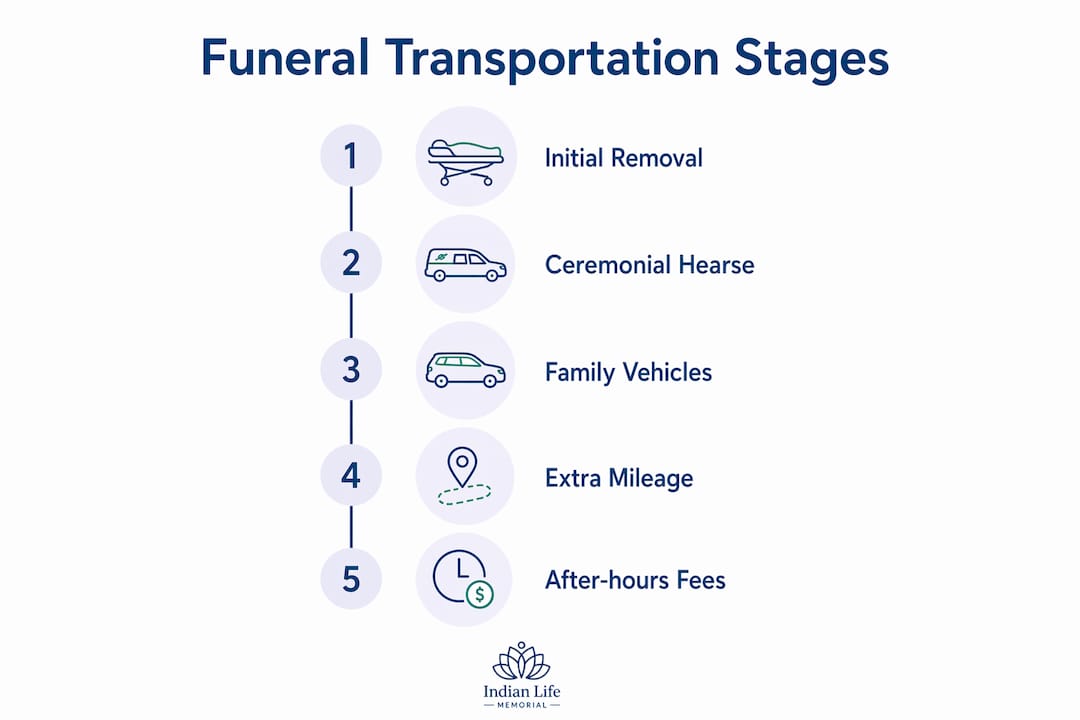
Funeral packages bundle transportation into a single managed solution that covers three distinct stages: initial removal, ceremonial transport, and final transit. Each stage requires different vehicles, permits, and professional handling. Knowing what is covered at each stage prevents surprises on the day of the service.
The three stages break down as follows:
- Initial removal and transfer. A trained team collects the deceased from the place of death, whether a home, hospital, or care facility, and transports them to the funeral home. This service operates 24 hours a day, 7 days a week, and requires specialized equipment to comply with health codes.
- Ceremonial transport. A hearse carries the deceased from the funeral home to the ceremony venue and then onward to the cemetery or crematorium. This is the most visible part of funeral transport and sets the tone for the procession.
- Family vehicle options. Many packages include a limousine or family car to keep close relatives together during the procession. Coordinated family transportation reduces the stress of navigating traffic while grieving.
- Mileage limits. Package coverage typically spans 20–40 miles. Transfers beyond that radius usually carry additional per-mile fees.
Pro Tip: Ask your funeral provider to confirm the exact mileage radius covered in your package before signing any agreement. Knowing this limit upfront prevents unexpected charges if the cemetery or crematorium is farther than expected.
Why is transportation bundled into funeral packages rather than arranged separately?
Bundling transport into a comprehensive funeral package is not simply a convenience. It reflects the legal, regulatory, and emotional realities that families face immediately after a death.
"Transportation is far more than moving a vehicle from one point to another. It involves securing death certificates, transit permits, and procession route approvals, all of which must be in place before any movement occurs. Professional funeral providers manage this invisible layer of compliance so families never have to."
The reasons for bundling are concrete:
- Legal compliance. Moving a deceased person across public roads requires a death certificate, a burial or cremation permit, and sometimes a procession permit. Funeral professionals manage these permits as part of the transportation service.
- Timing and coordination. A ceremony cannot begin until the deceased arrives. Professional coordination ensures every vehicle, venue, and officiant is synchronized.
- Reduced burden on families. Grieving families should not be making calls to transport companies or chasing permit offices. Bundling these services removes that burden entirely.
- Pricing clarity. A single line item for transportation is easier to understand and compare than five separate vendor quotes.
The industry has standardized this bundling precisely because the alternative, asking families to self-coordinate, consistently leads to delays, errors, and added grief.
How do transportation costs impact the overall funeral package price?
Transportation is one of the most variable cost components in any funeral arrangement. Understanding how it is priced helps your family budget accurately and avoid confusion.
| Transportation component | Typical cost range | Notes |
|---|---|---|
| Initial 24/7 removal | Included in base fee | Covers local transfer within mileage limit |
| Hearse for ceremony | Included in base fee | Standard single-use for service day |
| Family limousine | Add-on or included | Varies by package tier |
| Extra mileage | Per-mile surcharge | Applies beyond 20–40 mile radius |
| After-hours transfer | Additional fee | Applies outside standard business hours |
| Long-distance or repatriation | Quoted separately | Requires additional permits and logistics |
Average transportation costs within a standard package are often around $500, though this figure shifts based on location, distance, and vehicle type. That number represents the bundled value of removal, hearse use, and coordination, not just fuel and a driver.
Additional fees apply for distance beyond the package radius, after-hours requests, and accessibility challenges such as narrow roads or multi-story buildings. These are standard industry practices, not arbitrary charges.
Families should request an itemized General Price List from any funeral provider before committing. The biggest source of confusion is comparing quotes that mix coordination fees with vehicle charges without separating them clearly.
Pro Tip: When reviewing a funeral quote, ask the provider to separate the "professional services fee" from the physical vehicle costs. These are two distinct charges, and knowing the difference helps you compare packages accurately.
What practical benefits do families gain from including transport in a funeral package?
Families who have transportation professionally managed within their package consistently report one outcome: they were able to grieve without distraction. The practical benefits are specific and significant.
-
Dignity at every stage. Trained staff handle the deceased with care and respect from the moment of removal to the final transit. Dignified, timely transportation is not incidental. It reflects the family's love and the community's respect for the person who has passed.
-
Family unity during the procession. When a limousine or family car is included, close relatives travel together. This shared experience provides comfort and keeps the family focused on the ceremony rather than parking logistics or traffic.
-
Single point of coordination. Your funeral provider manages all vehicles, drivers, and timing. Your family does not need to contact a hearse company, a limousine service, and a permit office separately.
-
Legal protection. Professional providers carry the required licenses and insurance for transporting the deceased. Families who attempt to arrange transport independently risk legal complications and delays.
-
Peace of mind during an emotionally difficult time. Knowing that transport logistics are professionally handled lets your family be present for the ceremony rather than managing operations behind the scenes.
The funeral logistics package model exists specifically to protect families from these operational demands at the worst possible moment.
Key Takeaways
Transportation is included in funeral packages because it bundles legally complex, emotionally sensitive logistics into a single professionally managed service that protects families from operational burdens during grief.
| Point | Details |
|---|---|
| Three-stage transport coverage | Packages cover initial removal, ceremonial transport, and final transit to cemetery or crematorium. |
| Mileage limits apply | Standard packages cover 20–40 miles; confirm your radius before signing to avoid extra charges. |
| Bundling ensures legal compliance | Permits, death certificates, and procession approvals are managed by the funeral provider, not the family. |
| Request an itemized price list | Separating coordination fees from vehicle costs is the clearest way to compare funeral quotes accurately. |
| Family vehicles reduce stress | Included limousines keep relatives together and allow full focus on mourning rather than logistics. |
Why transportation matters more than most families realize
Families often come to me focused on the ceremony itself: the prayers, the flowers, the music. Transportation feels like a background detail. After years of working alongside families through the funeral process, I can say with certainty that it is the opposite.
The moment a family realizes the hearse is late, or that a permit was not secured, or that elderly relatives have no way to reach the cemetery, the entire ceremony is disrupted. That disruption is not just logistical. It is emotional. It pulls people out of their grief and into problem-solving mode at the worst possible time.
What I have learned is that transportation is the backbone of the entire service. Every other element, the ceremony, the prayers, the final farewell, depends on the deceased and the family arriving at the right place at the right time. When that coordination fails, nothing else can compensate.
My advice to every family is this: do not treat transportation as a line item to negotiate away. Treat it as the foundation of a dignified farewell. Ask your provider exactly what is included, confirm the mileage limits, and verify that permits are handled on your behalf. Transparency at this stage prevents grief from being compounded by avoidable confusion.
— Admin
How Indianlifememorial handles transportation in its funeral packages
Indianlifememorial builds transportation coordination into every full-suite funeral package, so your family never has to manage vehicles, permits, or timing independently.

Every package includes local transfer of the deceased, hearse service for the ceremony, and family vehicle options where applicable. Pricing starts at $1,888 with no hidden fees, and the team walks your family through every included service before arrangements are confirmed. Whether you are planning a Hindu or Indian funeral or a service for another faith, Indianlifememorial coordinates all transport logistics with the same care and transparency. Reach out to the team to review your package options and confirm exactly what transportation services are covered for your family's needs.
FAQ
What does transportation in a funeral package include?
Transportation in a funeral package typically includes 24/7 initial removal of the deceased, hearse service for the ceremony, and transit to the cemetery or crematorium. Some packages also include a family limousine or car for the procession.
Why is transportation included in funeral packages rather than billed separately?
Transportation is bundled because it involves legal permits, death certificates, and coordinated timing that professional funeral providers manage as part of their licensed service. Separating these tasks would place a complex legal and logistical burden on grieving families.
Are there extra costs for transportation beyond the base funeral package?
Yes. Additional charges apply for transfers beyond the standard mileage radius, after-hours removals, extra limousines, and long-distance or international repatriation. Always confirm these limits in writing before finalizing arrangements.
How can families avoid unexpected transportation fees?
Request an itemized General Price List from your funeral provider and ask them to separate coordination fees from physical vehicle costs. Confirming the mileage radius and after-hours policy upfront prevents billing disputes later.
Does funeral transportation cover more than just vehicles?
Yes. Funeral transportation management includes securing permits, handling document processing, coordinating procession routes, and sometimes transferring ceremonial items. These invisible services are embedded in the transportation line item and represent significant professional work beyond driving.