

What does it mean to customize funeral package preferences?
Customizing funeral package preferences means choosing specific services and products that reflect your family's values, traditions, and budget, rather than accepting a pre-set bundle. A funeral package is a collection of goods and services offered together by a funeral home, typically covering everything from transportation to the final service. The key distinction is that you are not required to accept every item in a pre-packaged offering.
Families who take the time to customize their arrangements often find the experience more meaningful and more affordable. Personalization can reflect cultural or religious traditions, such as Vedic Antyesti rites or specific Christian prayers, or simply the personality and wishes of the person being honored. The U.S. Federal Trade Commission's Funeral Rule gives families the legal right to request itemized pricing and select only the services they want, which is the foundation of any genuine customization.
Here is what customization typically involves:
- Selecting individual services from an itemized General Price List (GPL) rather than a bundled package
- Declining services your family does not need, such as embalming when it is not legally required
- Incorporating specific cultural, religious, or personal elements into the service
- Choosing meaningful details like music, readings, or memorial materials
- Setting a clear budget and comparing costs across providers before committing
Table of Contents
- What are the main components of a typical funeral package?
- How to customize and personalize your funeral package effectively
- Low-cost ways to create a meaningful and personal tribute
- What are your legal rights when customizing funeral packages in the U.S.?
- Indianlifememorial brings transparency and devotion to every arrangement
- Key Takeaways
What are the main components of a typical funeral package?
Understanding what a standard funeral package contains is the first step toward knowing what you can adjust, replace, or remove entirely. Most packages in the U.S. include the following components:
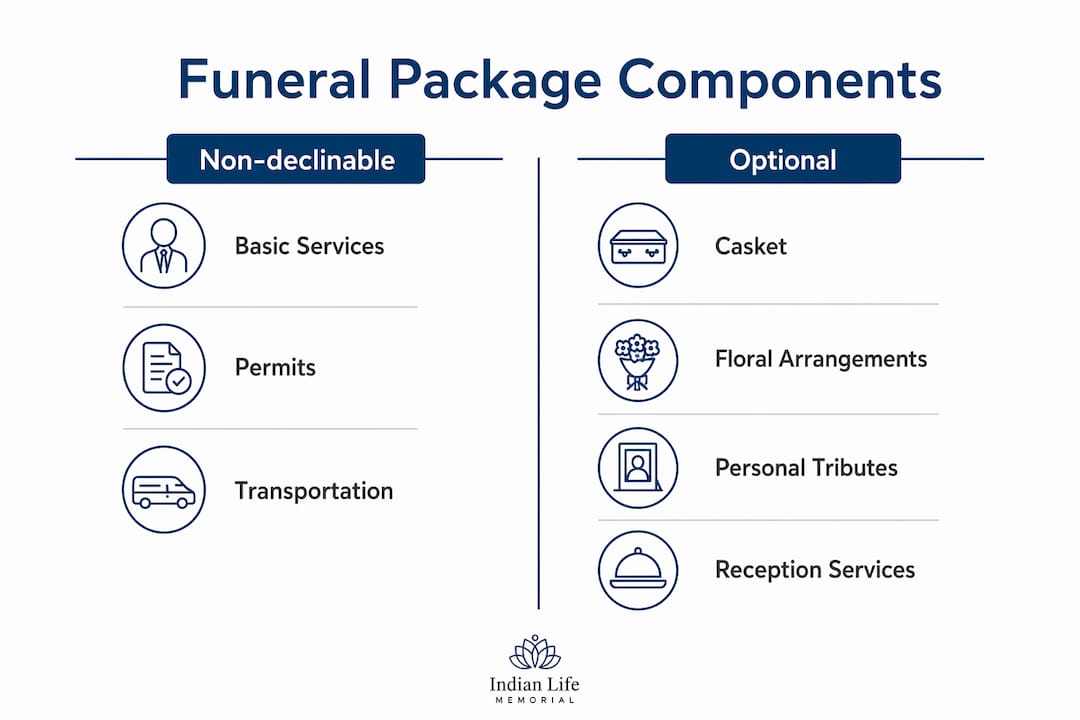
- Professional services fee. This covers the funeral director's time, planning assistance, and administrative work. It is typically non-declinable because it represents the funeral home's baseline overhead, including death certificates and regulatory permits.
- Transfer of remains. Transportation of the deceased from the place of death to the funeral home. Distance and timing can affect this cost.
- Embalming and preparation. Preservation and cosmetic preparation of the body. Embalming is not legally required in most U.S. states unless the body is being transported across state lines or burial is significantly delayed.
- Use of facilities for viewing or service. Rental of the funeral home's chapel, visitation room, or reception space for the ceremony.
- Casket or urn. Often the single largest cost in a package. Families have the right to purchase a casket from a third-party retailer, and funeral homes cannot legally refuse to use it or charge a handling fee under the FTC Funeral Rule.
- Transportation and coaches. The hearse and any family vehicles used during the procession.
- Memorial materials. Printed programs, memorial cards, guest registers, and similar items. These are almost always optional.
- Obituary and death notice services. Assistance with writing and submitting notices to newspapers or online platforms.
Knowing which of these items is non-declinable versus optional gives your family a clear picture of where flexibility exists. The professional services fee and certain administrative costs are usually fixed, but nearly everything else can be adjusted or removed from your arrangement.
How to customize and personalize your funeral package effectively
The most practical starting point is requesting the General Price List. The FTC Funeral Rule requires every funeral home to provide this document upon request, and it lists every available service with its individual price. Pre-packaged bundles are marketing constructs, not legal requirements. Your family is entitled to build a custom arrangement using only the items you genuinely want.
- Request the GPL before any other conversation. A funeral home that hesitates or deflects when you ask for itemized pricing is a red flag. Transparent providers explain every line item clearly and welcome questions.
- Identify your non-negotiables first. Decide which elements carry the most meaning for your family, whether that is a specific religious rite, a particular venue, or a meaningful procession route, and build around those.
- Communicate cultural and religious preferences directly. If your family observes Hindu traditions, specify the need for a qualified Pandit, proper Samskaras, and the correct sequence of Vedic rites. If your tradition calls for specific prayers or readings, provide them in writing.
- Decline services you do not need. Families can legally opt out of embalming in most circumstances, which reduces costs and aligns with personal or ecological values. Green burial alternatives are increasingly available.
- Put your preferences in writing. A written record of your choices protects your family from last-minute substitutions and helps the funeral director prepare accurately.
- Update your documented preferences periodically. Life circumstances, religious affiliations, and personal wishes change. Reviewing your documented preferences every few years keeps them current.
- Involve close family members early. Disagreements about arrangements are common and painful during grief. Discussing preferences before the need arises prevents conflict and honors the wishes of the person who has passed.
Pro Tip: Reputable funeral homes prioritize the most time-sensitive decisions first and give families space to make thoughtful choices on everything else. You should never feel pressured to finalize every detail in a single conversation.
Low-cost ways to create a meaningful and personal tribute
Personalization does not require expensive upgrades. The most memorable tributes often come from simple, personal touches that reflect who the person truly was.
- Personal music playlists. Choosing songs that held meaning for the deceased costs nothing beyond the time to compile them. A favorite hymn, a piece of classical music, or even a beloved song from a different era can transform the atmosphere of a service.
- Photographs and memorabilia displays. A table of framed photographs, meaningful objects, or items that represented the person's passions creates an immediate, intimate connection for everyone attending.
- Shared stories and spoken memories. Inviting family members or close friends to share a brief memory or reading adds warmth and authenticity that no purchased add-on can replicate.
- A chosen procession route. Driving past a place that held deep meaning for the deceased, whether a family home, a place of worship, or a favorite park, is a free and deeply personal gesture.
- Digital tributes and virtual memorials. Online memorial pages allow family members who cannot attend in person to share photographs, leave messages, and participate in the remembrance. Many platforms offer free basic options.
- Handwritten notes or letters. Encouraging attendees to write a short message that is placed with the deceased or kept by the family creates a lasting, tangible record of love and remembrance.
- Cultural or religious symbols. Incorporating specific flowers, colors, or symbolic objects tied to the deceased's faith or heritage adds depth and reverence without significant cost.
The emotional significance of a funeral comes from authenticity, not expense. Families who focus on meaningful personalization consistently find that these personal touches provide more comfort than costly upgrades.
What are your legal rights when customizing funeral packages in the U.S.?
The FTC Funeral Rule is the primary consumer protection governing funeral purchases in the United States. It requires funeral homes to provide an itemized General Price List to anyone who asks, either in person or by phone. This rule exists specifically to prevent families from being locked into pre-packaged bundles they do not need or want.
Your core rights under this framework include:
- The right to an itemized GPL. You can request this list at any time, and the funeral home must provide it without requiring you to commit to any purchase.
- The right to select only desired services. No funeral home can require you to purchase a package as a condition of receiving any individual service, with the exception of the non-declinable basic services fee.
- The right to use a third-party casket. If you purchase a casket elsewhere, the funeral home must accept it and cannot charge an additional handling fee.
- The right to decline embalming. Unless state law or specific circumstances require it, embalming is optional. Funeral homes must disclose this clearly.
- The right to an itemized statement before purchase. Before you pay, you are entitled to a written statement listing every item you have selected and its individual cost.
The non-declinable basic services fee deserves specific attention. This charge covers administrative tasks like filing for death certificates, obtaining permits, and coordinating with cemeteries or crematoriums. Understanding exactly what this fee includes helps you evaluate how transparent a provider truly is. Comparing funeral package pricing item by item across multiple providers is the most reliable way to avoid being misled by a low headline package price that excludes services you will ultimately need.
When comparing providers, look at the total cost of your specific selections, not the advertised package price. A provider whose headline number looks low may charge separately for items another provider includes. Honest, apples-to-apples comparison requires the GPL from each funeral home you are considering.

Indianlifememorial brings transparency and devotion to every arrangement
Families who have spent time researching funeral package options, understanding their legal rights, and thinking carefully about personalization deserve a provider who meets that preparation with equal care and honesty.
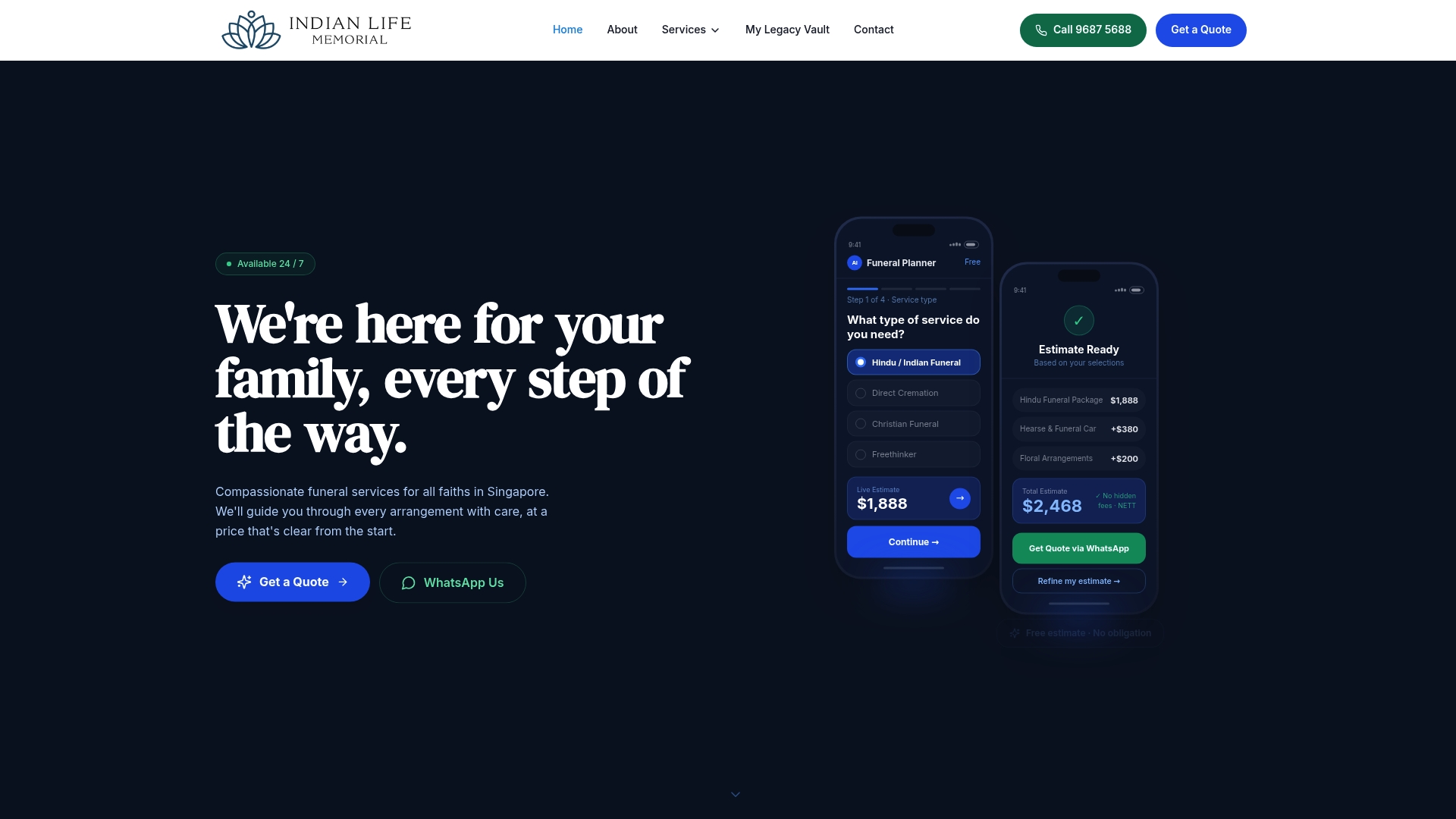
Indianlifememorial offers tailored funeral packages with upfront pricing starting at $1,888 and no hidden fees, so your family knows exactly what is included before any commitment is made. The team specializes in Hindu and Indian funeral traditions, with experienced Pandits who guide families through proper Vedic rites and Samskaras with authentic devotion. For families of other faiths, Indianlifememorial provides culturally sensitive arrangements that honor each tradition with the same reverence. Every step of the process is explained clearly, so your family is never left uncertain about what comes next. To discuss your family's specific preferences and receive a transparent, itemized overview of available services, visit Indianlifememorial's full-suite funeral services page and reach out to the team directly.
Key Takeaways
Customizing funeral package preferences is a legal right in the U.S., and families who request itemized pricing and select only the services they need create more meaningful, cost-appropriate arrangements.
| Point | Details |
|---|---|
| Request the GPL first | The FTC Funeral Rule requires funeral homes to provide an itemized General Price List upon request. |
| Packages are not mandatory | Pre-packaged bundles are optional; you can build a custom arrangement from individual services. |
| Personalization costs little | Personal music, photographs, and shared memories create meaningful tributes without significant expense. |
| Know non-declinable fees | The basic services fee covers administrative costs like death certificates and is typically unavoidable. |
| Indianlifememorial | Offers upfront pricing from $1,888 with no hidden fees and culturally sensitive arrangements for Hindu, Indian, and other faith traditions. |