
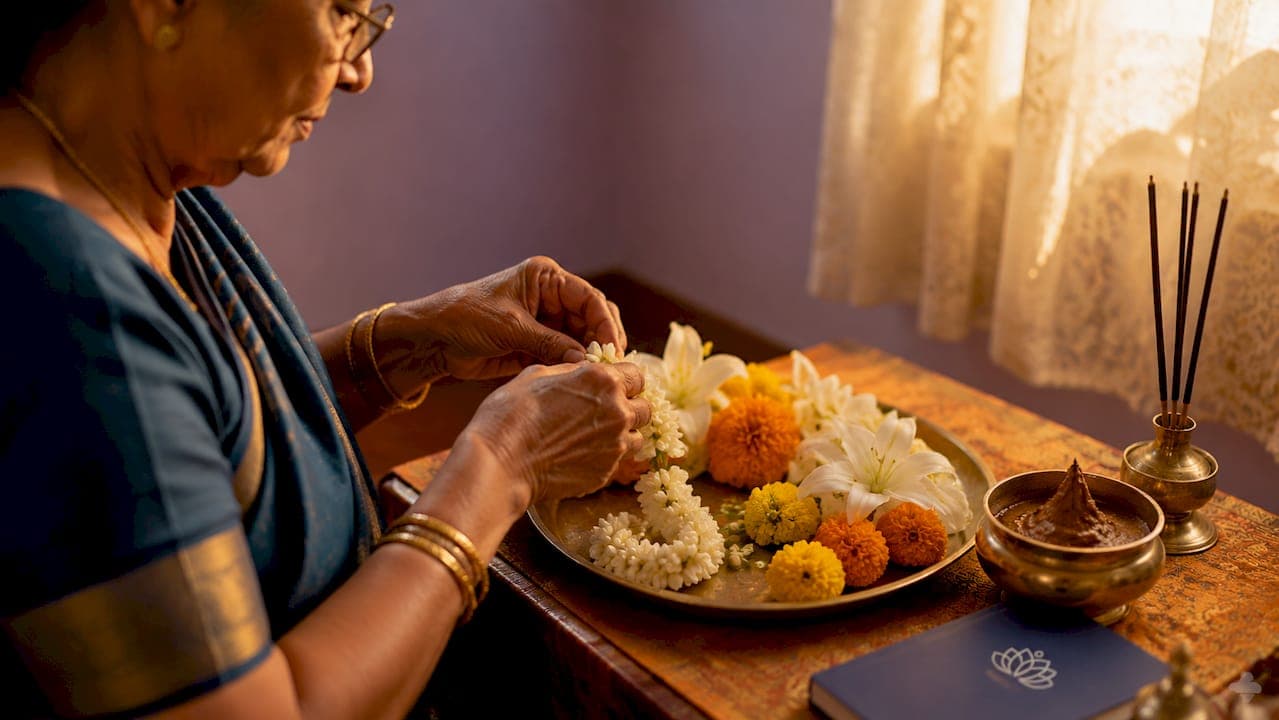
Hindu funeral flowers and offerings are defined as the sacred floral and ritual items used during Antyesti, the traditional last rites, to honor the deceased and support the soul's transition to the next life. These elements are not decorative choices. They carry deep spiritual meaning rooted in Vedic tradition. Marigolds, jasmine, white roses, and lilies are the most common flowers, while ritual offerings like rice, sesame seeds, and ghee accompany the body through cremation. Understanding the correct flowers and offerings helps your family fulfill these sacred duties with confidence and cultural respect.
1. Which flowers are most appropriate for Hindu funeral flowers and offerings
Traditional Hindu funeral flowers include marigolds, roses, jasmine, and white flowers such as lilies and chrysanthemums. Each flower carries a specific meaning within the context of Hindu death ceremonies. White flowers are the universal safe choice because they symbolize purity, peace, and the release of the soul.
Marigolds hold a particularly sacred place in Hindu ritual. Their bright orange and yellow tones represent the sun and divine energy, making them appropriate for adorning the body and the bier. Jasmine is associated with spiritual devotion and is often woven into garlands placed on the deceased.
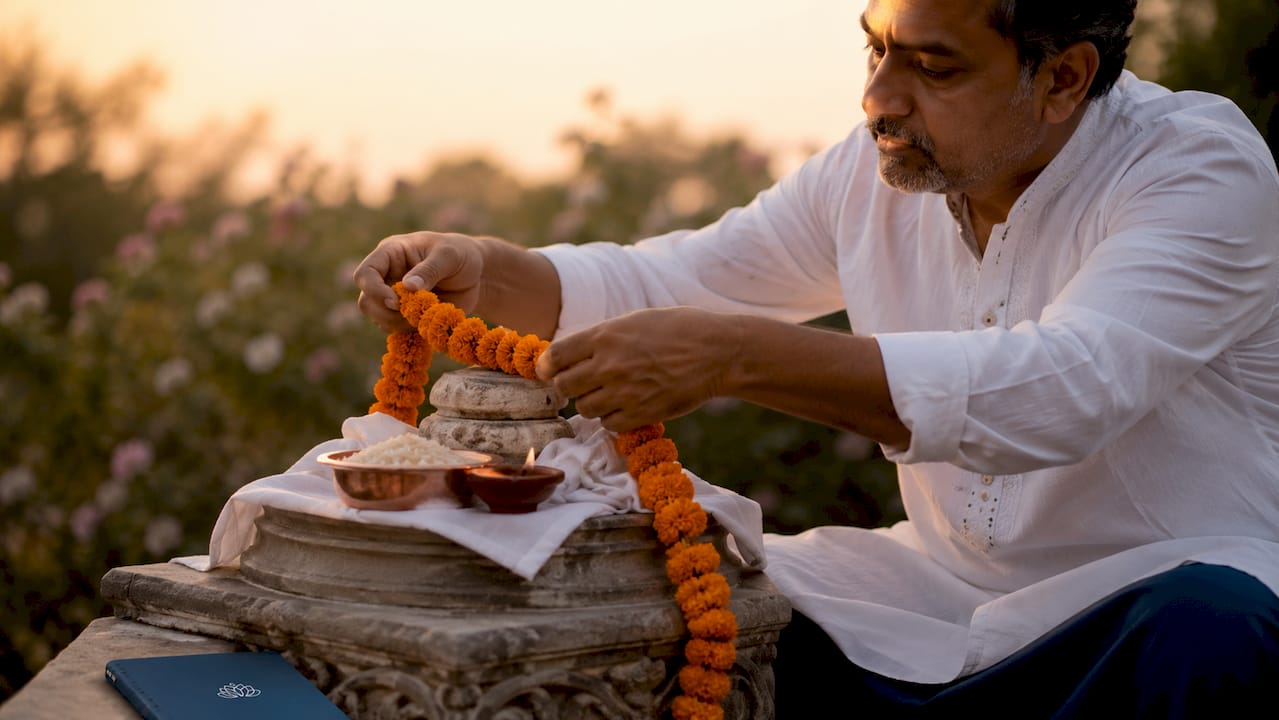
Floral garlands, known as malas, are revered symbols of respect and devotion in Hindu funerals. They are draped over the body or placed on the funeral bier as a mark of honor. Petals are also scattered around the body and the ceremonial space.
Flowers to prioritize:
- White lilies, white roses, and white chrysanthemums for universal appropriateness
- Marigold garlands for traditional adornment of the body and bier
- Jasmine strands or malas for devotional decoration
- Lotus flowers where available, as they symbolize spiritual purity and liberation
Flowers to approach with caution:
- Brightly colored mixed wreaths, which are more associated with Western funeral customs
- Red flowers, which in many Hindu traditions are reserved for auspicious celebrations
- Artificial flowers, which are generally considered inappropriate for sacred rites
Pro Tip: Always confirm flower choices with the family or the officiating priest before purchasing. Family customs vary significantly, and what is appropriate in one community may differ in another.
2. Traditional ritual offerings used alongside flowers
Ritual offerings are as central to Hindu funerals as flowers. Common ritual offerings include rice, sesame seeds, ghee, incense, and sandalwood paste. Each item carries a specific spiritual meaning tied to the elements, nourishment, and purity.
Ghee, clarified butter, is poured into the sacred fire during cremation. It feeds the ritual flame and is believed to purify the soul's passage. Sesame seeds represent the release of karma and are offered to help the Atman, the soul, move forward without attachment. Rice symbolizes nourishment for the soul on its journey beyond this life.
Incense and sandalwood paste purify the ceremonial space and honor the body. Sandalwood also has practical significance, as it was historically used in the funeral pyre itself. These offerings are not symbolic gestures alone. They are material expressions that serve a dual emotional and spiritual purpose, supporting both the bereaved and the soul.
The purohit, or family priest, guides the sequence and method of each offering. Families should not attempt to arrange these independently without priestly guidance. The purohit ensures that each offering aligns with the correct Vedic rites for the family's tradition and regional practice.
Standard ritual offerings and their meanings:
- Rice: Nourishment for the soul during its transition
- Sesame seeds: Release of karmic bonds and attachment
- Ghee: Purification and fuel for the sacred cremation fire
- Incense: Cleansing of the ceremonial space and honoring the body
- Sandalwood paste: Sacred purification with deep historical roots in Hindu cremation rites
- Water from the Ganges: Where available, used to purify the body and the space
3. Customs and etiquette for flowers and offerings at Hindu funerals
Sending flowers as condolence gifts during the actual funeral service is not a standard Hindu custom. Flowers in Hindu funerals adorn the deceased and the altar rather than being sent to the family as sympathy arrangements. This is a meaningful distinction that guests often misunderstand.
If you want to express condolences through flowers, the timing matters. Sending flowers or messages after the cremation is often more appreciated than during the funeral itself. The mourning period, which typically spans 10 to 13 days, is a more appropriate window for condolence gestures.
Guest participation in ritual acts is welcomed but never required. Guests may offer flowers or ghee during cremation ceremonies, or they may observe respectfully. Declining politely is always acceptable and will not cause offense.
Practical etiquette for guests attending a Hindu funeral:
- Arrive dressed in white or muted, subdued colors. Avoid bright or festive clothing.
- Follow the lead of the family and priest for all ritual participation.
- Do not bring flowers as a gift to the family at the funeral venue unless specifically requested.
- If invited to place flowers on the body or bier, do so gently and with reverence.
- Offer condolences quietly and briefly. Extended conversation is not expected during the ceremony.
- After the cremation, a card, a home visit, or flowers sent to the family home are appropriate gestures.
Pro Tip: If you are unsure whether to participate in any ritual act, simply observe with a respectful, attentive presence. Non-Hindus attending funerals can participate meaningfully by following family and priest guidance without any obligation to perform specific acts.
4. Regional and community variations in Hindu funeral traditions
Hindu funeral customs are not uniform across all communities. Significant differences exist between North and South Indian traditions, between different sects, and between families who have lived in the diaspora for generations. Understanding these variations prevents well-meaning guests from making assumptions.
In North Indian traditions, white is the dominant color for mourning attire and flowers. Marigold garlands are widely used. South Indian traditions may incorporate specific regional flowers and follow slightly different sequences in the Antyesti rites. Tamil, Telugu, and Malayali communities each have distinct customs around which flowers are placed on the body and how offerings are arranged.
Diaspora Hindu families often adapt customs based on what is locally available and what the family has practiced across generations. A family in Singapore may follow a blend of South Indian and contemporary practices. A family in the United Kingdom may incorporate local floral options while maintaining core Vedic ritual structure.
Key points on regional variation:
- North Indian funerals typically favor white flowers and marigold garlands
- South Indian communities may use specific regional blooms and follow distinct ritual sequences
- Diaspora families often blend traditional customs with locally available flowers and resources
- The officiating priest, or Pandit, is the most reliable guide for family-specific customs
- Contemporary or blended families may adapt certain elements while preserving core Antyesti rites
Consulting local priests is the most reliable way to honor authentic practices. Funeral rites are acts of love and release, and the priest's guidance ensures that offerings and flowers align with the family's specific tradition rather than a generalized version of Hindu custom.
Key takeaways
Hindu funeral flowers and offerings serve a sacred dual purpose: they honor the deceased with cultural reverence and provide spiritual support for the soul's transition through Antyesti rites.
| Point | Details |
|---|---|
| White flowers are universally safe | Lilies, chrysanthemums, and white roses are appropriate across most Hindu communities. |
| Marigold and jasmine garlands hold ritual significance | These traditional flowers adorn the body and bier as marks of devotion and respect. |
| Ritual offerings follow Vedic structure | Rice, sesame seeds, ghee, and incense each carry specific spiritual meaning guided by the purohit. |
| Sending flowers during the funeral is not standard custom | Condolence flowers are better sent to the family home after the cremation period. |
| Regional customs vary widely | Always consult the family or officiating priest before selecting flowers or participating in offerings. |
What I have learned from sitting with these traditions
Families often come to me overwhelmed by the details of Hindu funeral preparation. They worry about getting the flowers wrong or offending the priest with an inappropriate offering. My honest observation is that the intention behind each gesture matters more than perfection in execution.
That said, intention without knowledge can still cause unintentional hurt. The single most important thing I have seen families do well is ask. Asking the eldest family member, asking the purohit, asking a trusted community elder. That simple act of asking communicates respect more clearly than any flower arrangement ever could.
Flowers and offerings are not bureaucratic requirements. They are material expressions of grief and love that help the living process loss while honoring the departed. When a family places a marigold garland on their loved one, they are doing something ancient and deeply human. That act connects them to generations of families who have done the same.
My advice to guests who are not Hindu is simple. Come with an open heart, follow the family's lead, and do not overthink your role. Your respectful presence is the offering that matters most to a grieving family.
— Admin
Indianlifememorial: supporting your family through Hindu funeral rites
Preparing flowers and offerings for a Hindu funeral while managing grief is genuinely difficult. Indianlifememorial provides culturally sensitive Hindu funeral services in Singapore, including guidance on traditional floral arrangements and ritual offerings aligned with Vedic customs. Their experienced coordinators work with families to arrange appropriate malas, ceremonial items, and priest-led rites from the very first call.

Indianlifememorial's funeral packages are transparent, starting at $1,888 with no hidden fees. Every detail, from flowers to offerings to the officiating Pandit, is handled with care so your family can focus on honoring your loved one. Reach out to Indianlifememorial any time for compassionate, step-by-step support through every stage of the funeral process.
FAQ
What flowers are most appropriate for a Hindu funeral?
White flowers such as lilies, chrysanthemums, and white roses are the safest and most widely accepted choice. Marigold and jasmine garlands are also traditional and deeply meaningful in Hindu funeral rites.
Is it appropriate to send flowers to a Hindu family after a death?
Sending flowers to the family home after the cremation is more appropriate than bringing them to the funeral venue. Flowers during the service are used to adorn the deceased, not as condolence gifts to the family.
What ritual offerings are used during Hindu cremation?
Standard offerings include rice, sesame seeds, ghee, incense, and sandalwood paste. Each item carries a specific spiritual meaning and is administered under the guidance of the officiating purohit or Pandit.
Can non-Hindus participate in offering flowers or ghee at the funeral?
Non-Hindu guests are welcome to participate in symbolic acts such as placing flowers or offering ghee, but participation is entirely voluntary. Following the family and priest's guidance is the most respectful approach.
How do Hindu funeral flower customs differ by region?
North Indian traditions typically favor white flowers and marigold garlands, while South Indian communities may use regionally specific blooms and follow distinct ritual sequences. Diaspora families often adapt these customs based on local availability and generational practice.