
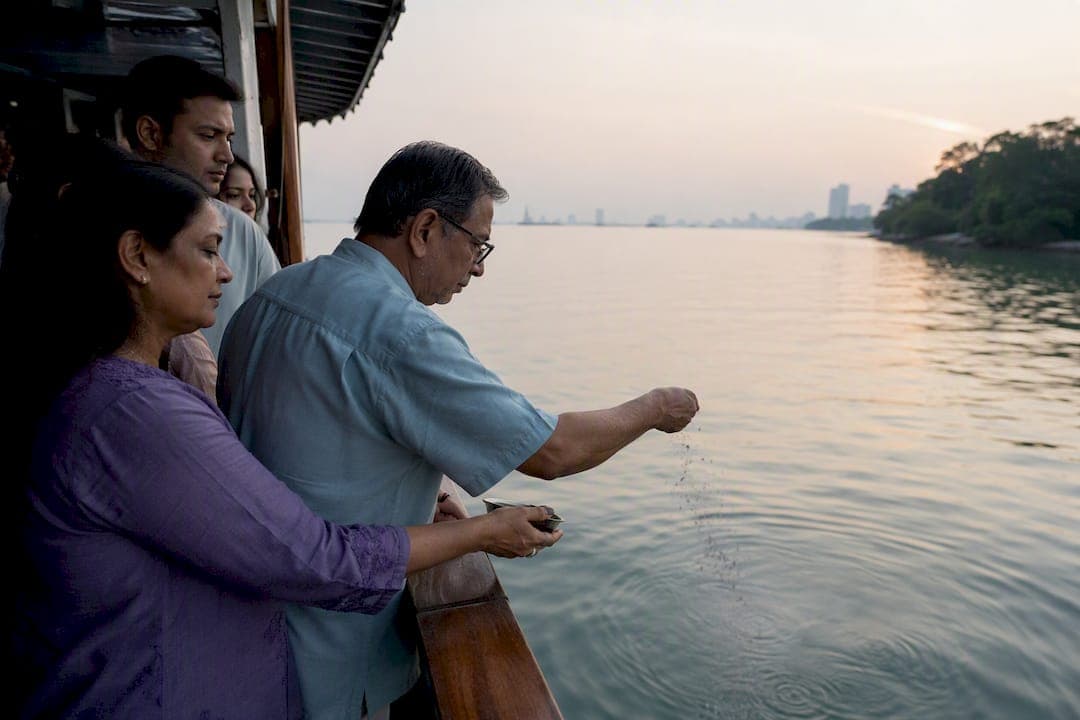
Sea burial in Singapore is legal, but only in a specific, narrow form: scattering cremated ashes at a designated sea area, never a full-body burial. Two authorities govern the process. The National Environment Agency (NEA) manages ash-related bookings and inland scattering sites, while the Maritime and Port Authority of Singapore (MPA) oversees vessel safety and the approved sea zone near Pulau Semakau. Most families work through a licensed funeral director rather than navigating both agencies alone.
- Only cremated remains may be scattered, and only at an approved location.
- Contact NEA for inland scattering bookings, or a licensed funeral director for a sea scattering voyage.
- MPA regulates the vessel and the designated maritime zone.
- The land-based alternative, NEA's Inland Ash Scattering (IAS) service, has a fixed booking fee per session.
Pro Tip: If you're deciding between land and sea, ask your funeral director for both quotes side by side. The S$320 NEA fee is fixed and public. Sea scattering pricing varies by vessel, so getting it in writing upfront avoids surprises during an already difficult week.
Key Takeaways
Sea burial in Singapore means scattering cremated ashes at a government-designated sea zone, and it requires coordination between NEA, MPA, and typically a licensed funeral director.
| Point | Details |
|---|---|
| Only ashes, only approved sites | Full-body sea burial is not permitted; scattering is limited to cremated remains at designated locations. |
| Two regulators, one process | NEA manages bookings and inland sites; MPA licenses vessels and the sea scattering zone. |
| Inland option costs S$320 | NEA's Garden of Peace and Garden of Serenity charge a fixed S$320 per scattering session. |
| Sea scattering costs vary | Private vessel charters have no fixed government fee, so quotes depend on the funeral director and boat. |
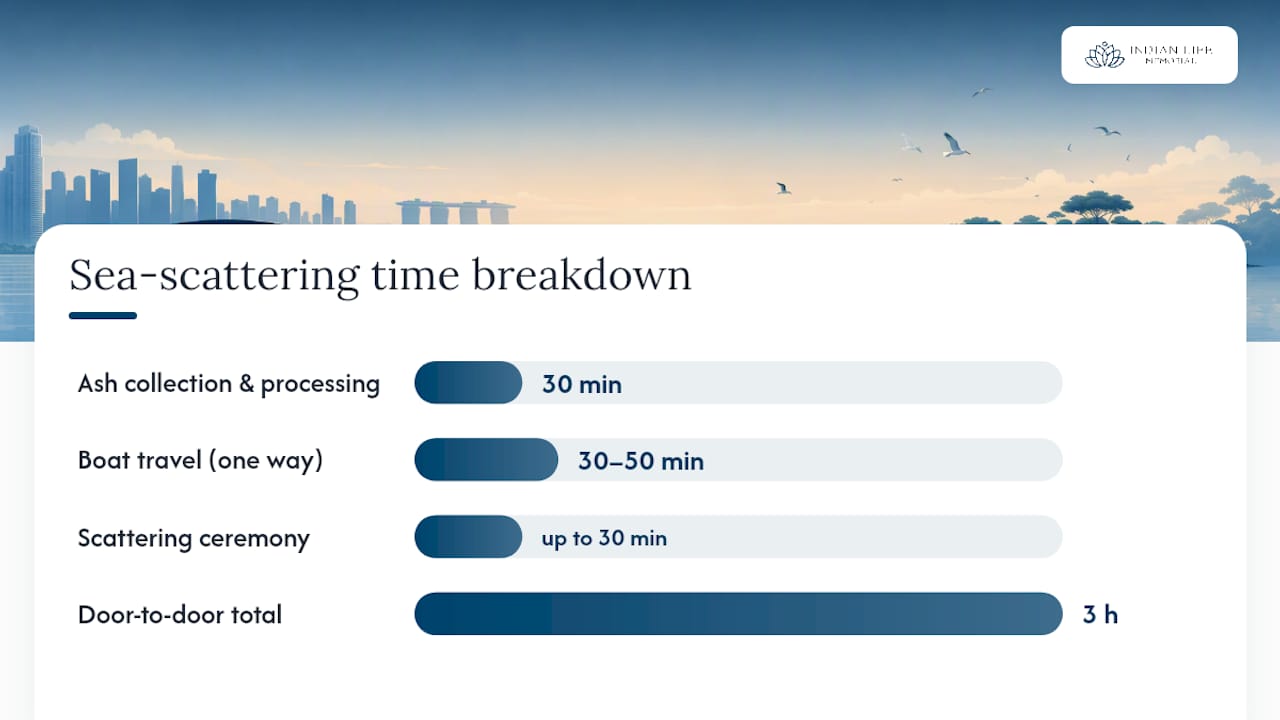
| Plan for a half-day timeline | Ash collection, travel, and ceremony together often take about three hours from start to finish. |
Where to Confirm Official Rules and Book a Session
- NEA ePortal: the booking portal for Inland Ash Scattering sessions and required documents.
- MyLegacy@LifeSG: government guidance on sea burial and inland scattering, plus the Port Marine Safety Control Centre contact.
- NEA's instructions PDF for Garden of Peace: covers lane procedures and ash transfer scheduling.
For help arranging any part of this process, including priest coordination and vessel charter, Indian Life Memorial's full-service funeral packages walk families through each step with fixed, upfront pricing.
Table of Contents
- What Singapore Law Requires for Sea Burial
- Where You Can Actually Scatter Ashes in Singapore
- How to Arrange a Sea Scattering, Step by Step
- Sea Scattering Costs vs. Inland Ash Scattering and Columbarium Niches
- Faith and Cultural Considerations for Scattering Ceremonies
- How Indian Life Memorial Supports Families Through Sea Scattering
What Singapore Law Requires for Sea Burial
Singapore does not permit full-body burial at sea. The law allows only the scattering of cremated ashes, and only within areas the government has designated for that purpose. This distinction trips up a lot of families who assume "sea burial" means what it does in some other countries.
NEA handles the administrative side of ash-related services: booking inland scattering sessions, processing ashes into fine powder, and issuing the procedural guidance funeral directors follow. MPA's role sits on the water. It licenses vessels, enforces safety rules for anyone traveling out to the scattering zone, and keeps the designated area clear of unauthorized activity.
A few operational realities matter here:
- Scattering in public parks, beaches, or unapproved coastal waters is not allowed under any circumstances.
- Vessels used for sea scattering must meet MPA licensing and passenger capacity rules, which is why most families charter through an operator rather than a private boat.
- NEA facilities run on fixed hours, and lanes at inland sites occasionally close temporarily for maintenance or ash soil transfer.
- Funeral directors typically handle the paperwork and liaison with both agencies, since coordinating NEA and MPA requirements separately can eat up time families don't have.
Where You Can Actually Scatter Ashes in Singapore
Singapore has one government-designated sea scattering area, located roughly 3.2 kilometers east of Raffles Lighthouse, in the waters near Pulau Semakau. It's the only maritime zone officially sanctioned for ash scattering, and vessels operating there answer to MPA's safety rules.
For families who prefer solid ground, NEA runs two Inland Ash Scattering facilities:
- Garden of Peace (Choa Chu Kang): the original NEA scattering garden, open daily from 9:00am to 5:30pm.
- Garden of Serenity (Mandai North): opened in August 2025, to meet growing demand for land-based scattering.
Both sites charge a booking fee per session, and NEA processes the ashes into fine powder before placing them in a one-time canister for scattering. Private boats for sea scattering carry limited passenger capacity, so if your family is large, confirm numbers with the operator before booking. Most funeral directors cap attending family members based on the vessel's licensed limit, not personal preference.
How to Arrange a Sea Scattering, Step by Step
Once cremation is complete, the process moves fast if you know the sequence. Here's the practical order most families follow:
- Confirm cremation and ash release. If ashes need to move to a processing point, arrange transport to the Ash Collection Centre, where they're refined into fine powder and sealed into a one-time canister.
- Choose your site and book. For inland scattering, book directly through the NEA ePortal. For sea scattering, your funeral director arranges a licensed vessel that meets MPA's voyage and safety requirements.
- Confirm timing. Ash collection and processing usually takes up to 30 minutes. Boat travel to the designated sea zone commonly runs 30 to 50 minutes one way, depending on the departure terminal and sea traffic.
- Attend the ceremony. The scattering itself typically takes up to 30 minutes, whether at sea or at an NEA garden.
- Bring the right items. Your booking confirmation slip, the ash canister or urn, and identification for the lead family member are standard requirements.
Pro Tip: Build in a buffer. Between collection, travel, and the ceremony, a sea scattering morning can easily run three hours door to door. Families who rush this often feel like the day slipped past them. Give it room.
The Port Marine Safety Control Centre is the point of contact if questions come up about vessel scheduling or maritime conditions on the day of the voyage.
Sea Scattering Costs vs. Inland Ash Scattering and Columbarium Niches
NEA's Inland Ash Scattering fee is fixed per session, covering ash processing, the canister, and use of the garden facility for your allotted time window. It's the most predictable cost on this list, since the government sets the rate and it doesn't fluctuate with demand.
Sea scattering has no fixed government fee because you're paying for a private vessel charter, not a facility booking. Costs vary based on the boat size, the funeral director's service package, and how far the voyage runs. Expect a wider price range than inland scattering, and always ask for a written quote before committing.
Columbarium niches sit at the other end of the spectrum entirely:
- Inland ash scattering: fixed fee, no lasting physical marker.
- Sea scattering: variable cost tied to vessel charter and funeral director services, no permanent site to revisit.
- Columbarium niche: higher upfront cost, but a permanent, visitable memorial location.
The trade-off comes down to whether your family values a fixed place to return to, or whether the symbolism of scattering matters more than permanence. Neither choice is more correct. Some families choose scattering specifically because they don't want an obligation tied to a physical site for future generations.
Faith and Cultural Considerations for Scattering Ceremonies
Different faiths approach ash scattering differently. Some Hindu families prefer to have a Vedic priest present to complete final rites before or during scattering, while other families opt for a simple, private moment with no formal ritual at all. Christian families sometimes prefer a short chapel blessing beforehand rather than clergy on the water itself, given how burial and memorial norms vary across communities in Singapore.
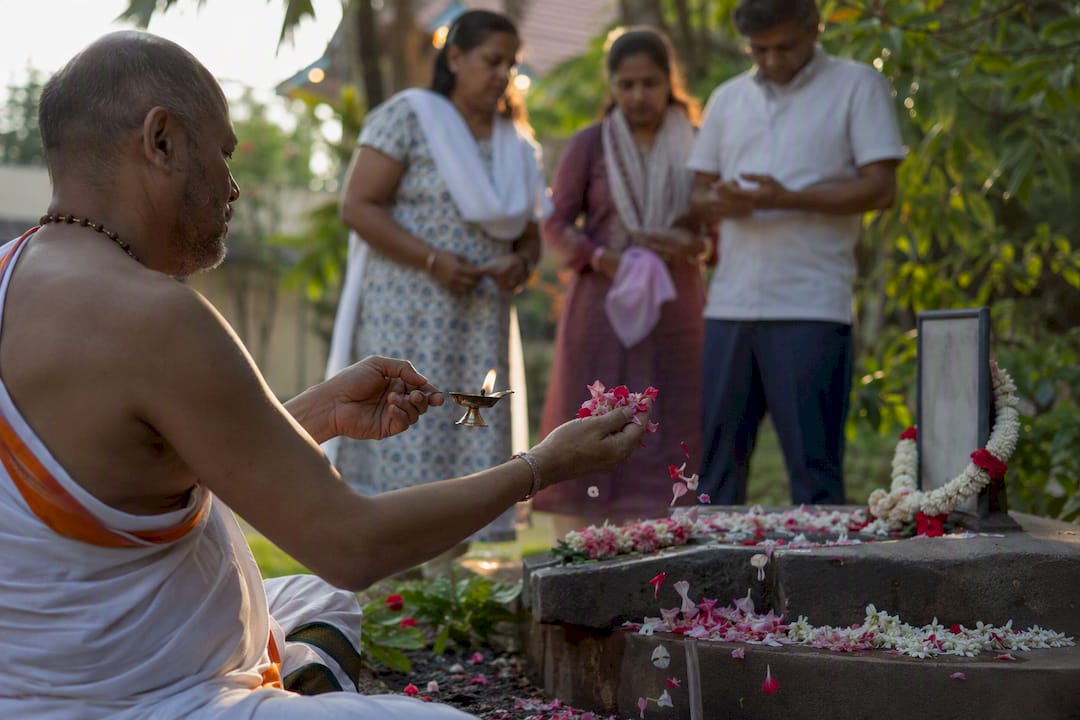
Vessel capacity limits how many people, including religious officiants, can join a sea voyage. If your rites require a priest or chaplain on board, mention this when booking so the funeral director accounts for it in the passenger count. For families who want ritual elements but face space constraints, a short prayer, a reading, or a portable rite performed just before departure often works better than trying to conduct a full ceremony on a moving boat.
How Indian Life Memorial Supports Families Through Sea Scattering
Arranging a sea scattering involves two government agencies, a licensed vessel, and often a religious rite, all within a compressed timeline. Indianlifememorial handles that coordination directly, so families aren't left tracking down NEA booking slots and MPA vessel requirements on their own during a bereavement.
- Available 24/7, with transparent fixed pricing starting at a set amount and no hidden fees.
- Coordinates the Ash Collection Centre process, NEA liaison, and MPA-compliant vessel charter as one arranged service.
- Provides experienced priests and proper Vedic rites for Hindu and Indian families who want faith-specific ceremony elements included.
Pro Tip: When comparing funeral directors, ask for a written timeline covering booking to ceremony completion, not just a price. A provider who can name the exact steps, from ash collection to vessel departure, usually has the process down cold.
What Families Prioritize Most When Planning a Scattering
Most families we hear from care about three things above all: doing this legally, doing it with dignity, and honoring their faith's expectations. Weather, boat capacity, and budget often force compromises, but those three priorities rarely do.
— Admin