

A full funeral package is a bundled set of funeral services sold at a fixed price, covering transportation, body preparation, viewing, the funeral ceremony, and administrative tasks like death certificates. The industry term for this offering is a "full-service funeral," and understanding what it includes, what it excludes, and how it is priced gives your family the clarity needed to make decisions with confidence rather than grief-driven urgency. Prices in 2026 range from roughly $5,500 for full-service cremation to over $17,000 for traditional burial with premium selections. This guide breaks down every component, compares package types, and addresses the cultural considerations that matter most to families honoring specific religious traditions.
What is a full funeral package and what does it include?
A full funeral package, also called a full-service funeral, bundles all the core services a family needs into one quoted price. The goal is to remove the burden of sourcing each element separately during an already difficult time.
Standard services included across most full packages are:
- Transportation: Collection of the deceased from the place of death, transfer to the funeral home, and final transport to the crematory or cemetery.
- Body preparation: Embalming, dressing, and cosmetic work to prepare the deceased for viewing. Basic packages include embalming and body preparation as standard.
- Facilities use: Access to the funeral home's viewing room, visitation space, and chapel for the funeral service.
- Administrative services: Filing for permits, obtaining certified death certificates, and submitting obituary notices to relevant registries.
- Casket or urn: A standard casket or urn is typically included, with upgrade options available at additional cost.
What full packages commonly exclude is just as important to know. Flowers, printed memorial programs, upgraded caskets, cemetery plot fees, grave liners, and headstones are usually billed separately. Families often encounter unexpected costs because they assume these items are covered. Always request a written itemized breakdown before signing any agreement.
The difference between a full-service cremation package and a traditional burial package is primarily in the final disposition. Full-service cremation includes embalming, viewing, and a formal service before the cremation takes place, then returns the cremated remains in a basic urn. A burial package replaces cremation with interment, which adds cemetery-related costs.
Pro Tip: Ask the funeral home to walk you through the General Price List (GPL) line by line. Federal regulations in the United States require funeral homes to provide this list on request, and it reveals exactly which services are bundled versus billed separately.
How much does a full funeral package cost in 2026?
Pricing for full-service funerals varies by package type, region, and the specific services selected. The figures below reflect 2026 market ranges.
| Package type | Typical price range | Key inclusions |
|---|---|---|
| Full-service cremation | $5,500 to $6,300 | Embalming, viewing, service, cremation, basic urn |
| Traditional burial (funeral home fees only) | Around $8,300 | Embalming, viewing, formal service, casket |
| Traditional burial (total with cemetery) | $12,000 to $17,000+ | All above plus plot, grave liner, headstone |
| Direct cremation | $1,000 to $3,600 | No viewing or service; simple container |
Full-service cremation costs between $5,500 and $6,300 on average, making it the most accessible option for families who want a formal farewell without the full expense of burial. Traditional burial packages, excluding cemetery fees, average around $8,300, but total costs exceed $12,000 once the cemetery selects a plot, grave liner, and headstone.
Several factors drive price differences beyond the base package:
- Geographic location: Urban funeral homes in high-cost cities charge significantly more than rural providers.
- Casket or urn selection: Upgrading from a standard casket to a premium hardwood or metal model can add $2,000 to $5,000 to the total.
- Permit and cemetery fees: These are almost never included in the quoted package price and must be budgeted separately.
- Third-party vendors: Florists, obituary publications, and limousine services are billed directly by those vendors, not the funeral home.
Itemized General Price Lists allow families to select only the services they need, which can reduce total cost if certain bundled items are unnecessary. For example, a family that holds a religious ceremony at a temple may not need the funeral home's chapel, making an à la carte approach more economical.
Pro Tip: When comparing quotes from multiple providers, ask each one to quote the same list of services. Comparing a full package from one home against an à la carte quote from another creates a misleading price difference.
How does a full package differ from other funeral options?
Understanding the spectrum of funeral options helps your family choose the right level of service without overpaying or under-planning.
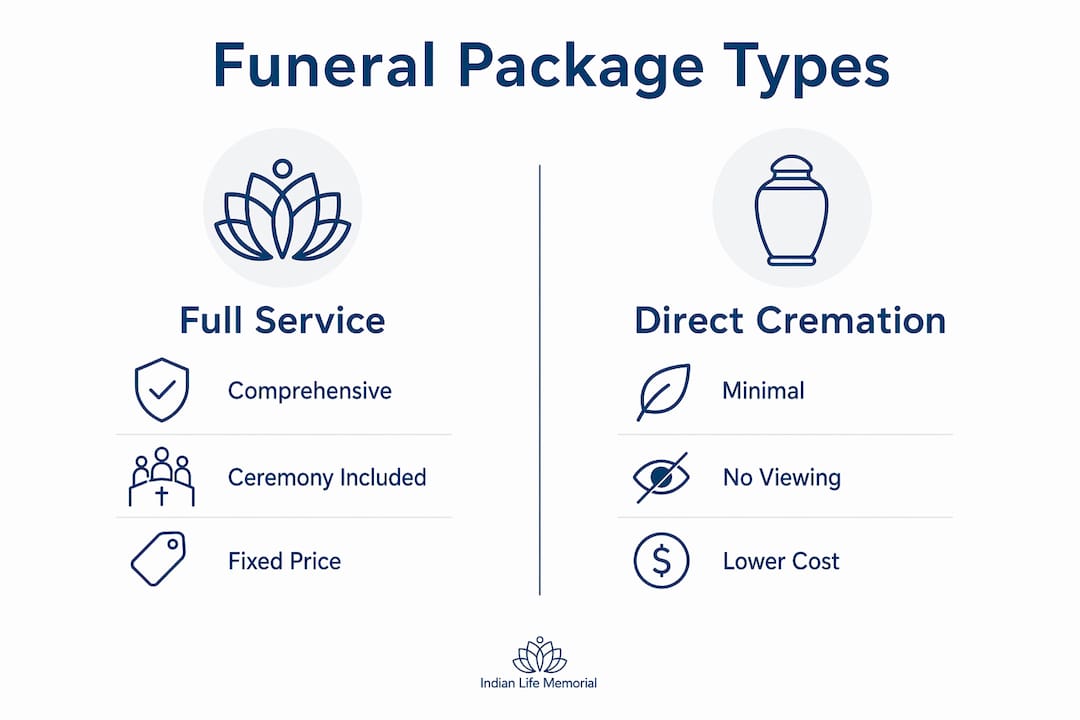
Direct cremation sits at the most minimal end. Direct cremation costs between $1,000 and $3,600, with no embalming, no viewing, and no formal service with the body present. The body is placed in a simple container and cremated. Families may hold a separate memorial service afterward, but the ceremony is disconnected from the physical presence of the deceased. This option suits families with limited budgets or those whose traditions do not require a formal viewing.
Basic funeral packages occupy the middle ground. They include transportation, embalming, facility use, a simple casket, and administrative services, but exclude flowers, obituary notices, and specialized add-ons. The experience is dignified but stripped of the personalized elements that characterize a full-service funeral.

Full-service funeral packages provide the most complete experience. Every logistical and ceremonial element is coordinated by one provider, reducing the number of decisions your family must make independently. The trade-off is cost. You pay for convenience, coordination, and the full use of the funeral home's facilities and staff.
À la carte or partial service options let families build a custom package using the funeral home's GPL. This approach works well when a family already has a venue for the ceremony, a religious institution handling the rites, or a community providing flowers and catering. Reviewing funeral quote estimates before committing to any structure helps clarify which approach delivers the most value for your specific situation.
The right choice depends on three factors: budget, the family's need for a formal ceremony, and whether cultural or religious rites require specific services that a standard package may not cover.
How do cultural and religious traditions shape funeral package contents?
Cultural and religious requirements directly affect which services belong in a full funeral package and which must be added, substituted, or removed entirely.
Hindu, Christian, and Freethinker funerals each carry distinct requirements that a standard Western-style package does not automatically accommodate. Families who do not communicate these needs upfront often find that the package they purchased does not align with their traditions.
Key cultural considerations include:
- Hindu funerals (Antyesti): The Antyesti rites, part of the Samskaras, require a qualified Pandit to conduct prayers and Vedic rites. The timing of the funeral is often determined by astrological considerations. The body may need to be bathed and dressed in specific garments before viewing. Cremation is the standard final rite, with the Atman believed to continue its journey after the body is released.
- Christian funerals: Services typically include a church or chapel ceremony with a priest or pastor, scripture readings, and hymns. Burial is traditional in many Christian denominations, though cremation is increasingly accepted. The package should include coordination with the church and any religious officiant fees.
- Freethinker or secular funerals: These ceremonies prioritize personal tributes over religious rites. Music, eulogies, and personalized readings replace prayers. The package should allow flexibility in venue and ceremony structure.
Funeral providers who specialize in culturally specific services, such as Hindu Indian funeral services or Christian funeral packages, build these requirements into their standard offerings rather than treating them as add-ons. This reduces the risk of missing a sacred step during an already emotionally demanding time.
Communicating your family's traditions clearly before signing any agreement is the single most effective way to avoid both logistical gaps and unexpected costs. Ask the provider directly: "Does your package include a Pandit?" or "Can your team accommodate a church-based ceremony?" The answers will tell you whether the provider is genuinely equipped or simply willing to try.
Key takeaways
A full funeral package covers every core service from transportation to the final ceremony at one fixed price, but cemetery fees, flowers, and cultural add-ons are almost always billed separately.
| Point | Details |
|---|---|
| Core services bundled | Transportation, body preparation, viewing, ceremony, and admin are standard inclusions. |
| Pricing range in 2026 | Full-service cremation runs $5,500 to $6,300; burial totals can exceed $17,000 with cemetery costs. |
| Exclusions matter | Cemetery fees, flowers, upgraded caskets, and third-party vendors are rarely included in quoted prices. |
| Cultural needs require communication | Hindu, Christian, and Freethinker rites each require specific services that must be confirmed with the provider upfront. |
| GPL is your best tool | Reviewing the itemized General Price List lets your family compare packages accurately and avoid paying for unused services. |
Why the fine print in a funeral package matters more than the headline price
Most families focus on the total package price and stop there. That instinct is understandable, but it is also where most budget surprises originate. After years of observing how families work through funeral planning, the pattern is consistent: the families who feel most at peace with their decisions are the ones who asked the uncomfortable questions early.
The General Price List is not just a regulatory formality. It is the clearest window into how a funeral home structures its pricing and where it makes its margins. When you see a package quoted at $6,000, the GPL will show you whether that includes a $1,200 casket or a $3,500 one, whether embalming is itemized separately, and whether the "administrative fee" covers two death certificates or ten.
Cultural families face an additional layer of complexity. A package designed for a standard Western funeral may include a chapel service your family will not use, while excluding the Pandit coordination or specific ritual bathing that your tradition requires. The result is a package that costs more than it should and still leaves gaps your family must fill at the last minute.
My honest advice: treat the package price as a starting point, not a final answer. Ask for the GPL, mark every line item that does not apply to your family, and ask what it would cost to add the cultural services you do need. That conversation, held calmly before the funeral, is far better than discovering the gaps on the day itself.
— Admin
How Indianlifememorial supports your family with full funeral packages
Indianlifememorial provides full-suite funeral services designed for families who need both logistical completeness and cultural authenticity. Every package is built around transparent, upfront pricing with no hidden fees, starting from $1,888, so your family knows exactly what is covered before any commitment is made.

Whether your family follows Hindu Vedic traditions, Christian customs, or a Freethinker approach, Indianlifememorial's team is available 24/7 to guide you through each step. Experienced Pandits, culturally appropriate rites, and compassionate coordinators are part of the service, not add-ons. Explore the full range of funeral package options or contact the team directly to discuss arrangements tailored to your family's needs and traditions.
FAQ
What does a full funeral package typically include?
A full funeral package includes transportation of the deceased, embalming and body preparation, use of facilities for viewing and the ceremony, administrative services like death certificates, and a standard casket or urn. Flowers, cemetery fees, and upgraded caskets are usually billed separately.
How much does a full funeral package cost in 2026?
Full-service cremation packages typically cost between $5,500 and $6,300, while traditional burial packages average around $8,300 for funeral home services alone, with total costs exceeding $12,000 once cemetery fees are added.
What is the difference between a full package and direct cremation?
Direct cremation costs between $1,000 and $3,600 and includes no viewing, no embalming, and no formal service with the body present. A full funeral package includes all of those elements, providing a complete ceremonial experience before final disposition.
Can a full funeral package be customized for Hindu or other religious traditions?
Yes. Providers who specialize in culturally specific funerals build rites like Antyesti prayers, Pandit coordination, and ritual preparation into their packages. Families should confirm these inclusions explicitly before signing, as standard packages may not cover them.
What is a General Price List and why does it matter?
A General Price List (GPL) is an itemized document funeral homes provide that lists every available service and its individual cost. Reviewing the GPL lets your family compare packages accurately, identify exclusions, and avoid paying for services you do not need.