
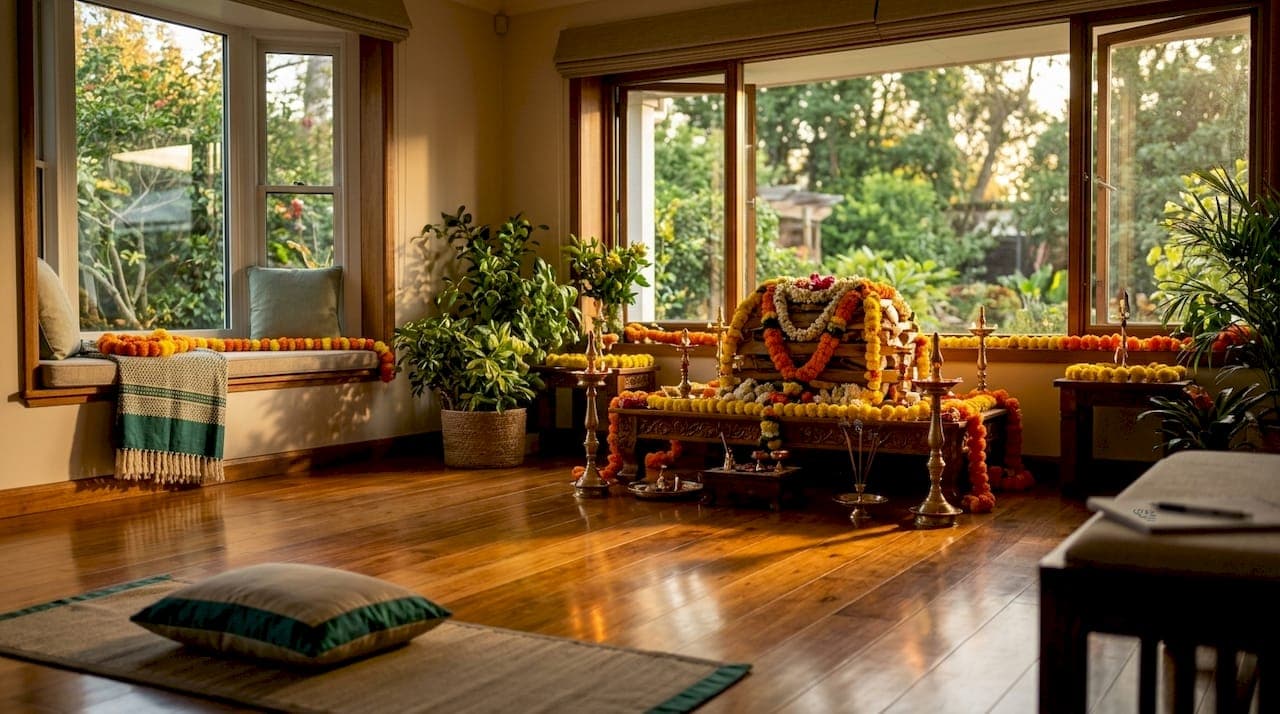
Cremation is defined in Hinduism as the sacred act of releasing the eternal soul, known as the Atman, from its temporary physical body by returning it to the five elemental forces of nature. This practice, formally called Antyesti, is the final of the sixteen Samskaras, or life rites, prescribed in Vedic scripture. Understanding why cremation is preferred in Hinduism requires looking at theology, ritual, and a worldview that treats death not as an ending but as a transition toward Moksha, the ultimate spiritual liberation. For families navigating this sacred process, that understanding brings both clarity and comfort.
Why is cremation preferred in Hinduism? The theological foundation
Hindu theology teaches that the physical body is a temporary vessel. The Atman, the eternal soul within, is what truly defines a person. When the body dies, the Atman must be freed quickly so it can continue its spiritual journey without remaining bound to the earthly realm.
The theological rationale centers on the concept of the Pancha Bhutas, the five elements: earth, water, fire, air, and space. Every physical body is composed of these five elements. Cremation efficiently returns the body to those elemental origins, completing a cosmic cycle that burial cannot replicate as directly or as swiftly.
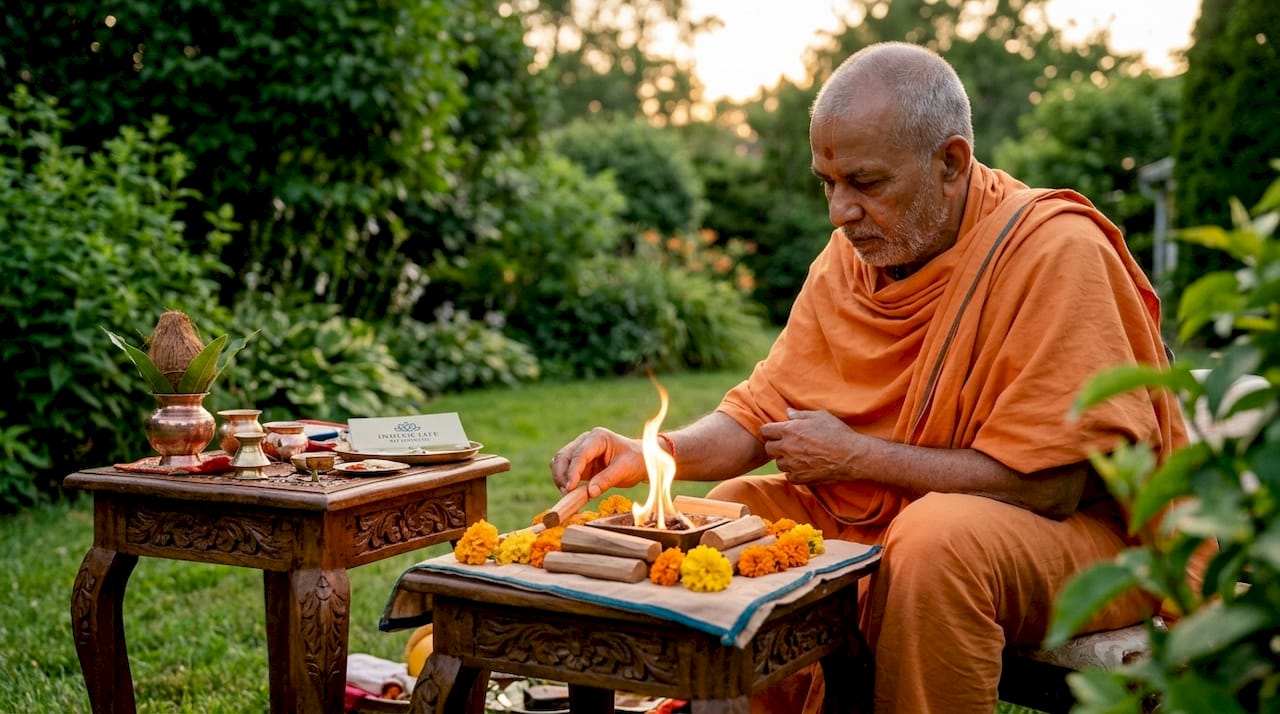
Fire holds a special place in this theology. The deity Agni, the god of fire, is considered both a purifier and a divine messenger. When the funeral pyre is lit, Agni is understood to carry the soul's release, burning away physical attachments and purifying the transition. The Garuda Purana, one of the eighteen Mahapuranas of Hindu scripture, teaches that cremation prevents the soul from remaining earthbound by severing its ties to the temporary physical body.
Key theological reasons for cremation in Hinduism include:
- Soul liberation: Fire destroys the physical form quickly, freeing the Atman from earthly attachment.
- Elemental return: The Pancha Bhutas theory requires the body to dissolve back into nature's five elements.
- Purification: Agni purifies the soul's passage, removing karmic residue from the physical form.
- Scriptural authority: The Vedas and Garuda Purana both prescribe Antyesti as the proper final rite.
- Preventing earthbound spirits: Cremation removes the physical anchor that could keep a soul tied to the material world.
Pro Tip: If you are supporting a Hindu family through bereavement, knowing that cremation is an act of love rather than loss helps you offer more meaningful comfort. Cremation is not destruction. It is a sacred passage.
How do Hindu cremation rituals assist the soul's journey?
The Antyesti rite is a structured, step-by-step process. Each act carries spiritual weight, and the sequence matters as much as the individual rituals themselves.
- Preparation of the body. The body is bathed, wrapped in white cloth, and anointed with sandalwood paste. The head is typically positioned facing south, the direction associated with Yama, the god of death.
- The funeral procession. Family members carry the body to the cremation site, traditionally chanting "Ram Nam Satya Hai," meaning "the name of God is truth."
- Lighting the pyre. The lead mourner, traditionally the eldest son, lights the funeral pyre. This act is considered a final act of devotion and duty to the deceased.
- Kapala kriya. This ritual involves the symbolic piercing of the skull to release the soul from the body. The kapala kriya ritual is emotionally significant and is understood to free the soul completely. Families should be prepared for this moment, as it can be unexpected and deeply affecting.
- Ash collection and immersion. On the third day after cremation, the ashes are collected. Ash immersion in sacred rivers reinforces the impermanence of the physical form and completes the cycle of elemental return. The Ganges River is the most sacred destination, though any flowing body of water is accepted.
- Shraddha rites. In the days and weeks following cremation, Shraddha rites generate spiritual merit that aids the deceased soul's journey toward higher realms based on accumulated karma.
Timing is critical throughout this process. Antyesti should ideally occur within 24 hours of death to facilitate the rapid release of the soul. Delay is believed to cause the soul unnecessary suffering as it remains attached to the physical body.
Pro Tip: Families unfamiliar with rituals like kapala kriya benefit greatly from speaking with an experienced Pandit beforehand. Prior awareness reduces shock and allows the family to participate with intention rather than distress.
Why is cremation preferred over burial in Hinduism?
Cremation is the standard because it fulfills the Pancha Bhutas requirement most completely. Fire transforms the body rapidly and thoroughly, returning all five elements to nature in a way that burial, which relies on slow decomposition, does not replicate with the same spiritual efficiency.
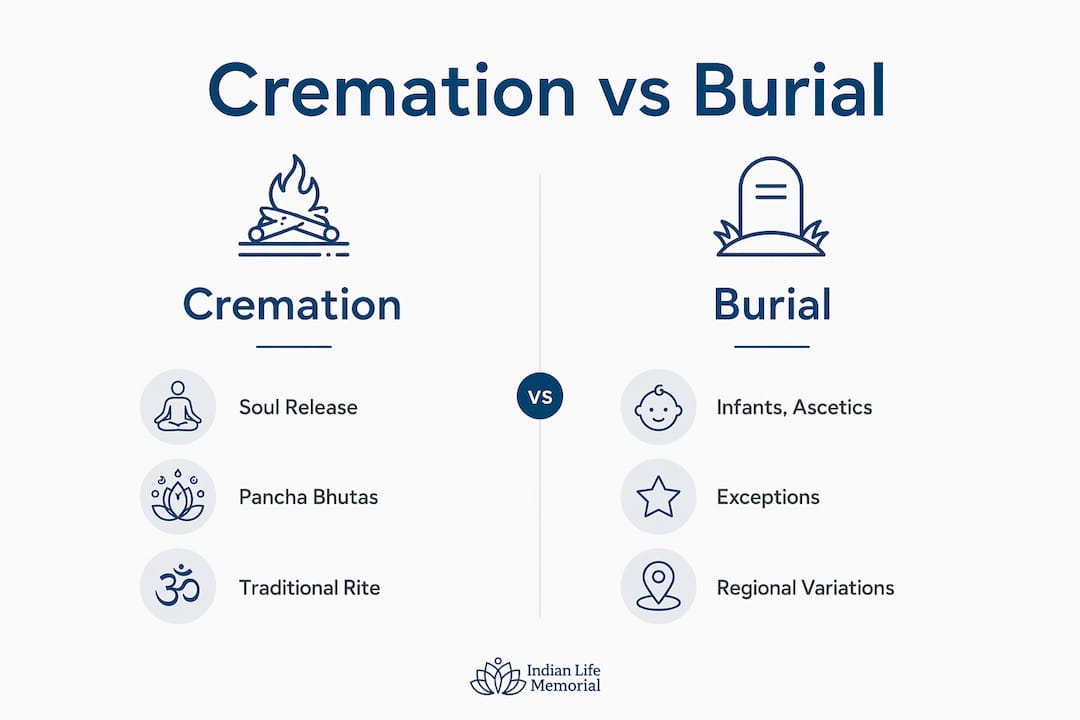
| Aspect | Cremation | Burial |
|---|---|---|
| Soul release speed | Immediate, aided by fire | Gradual, tied to decomposition |
| Elemental return | Complete and swift | Slow and partial |
| Scriptural prescription | Mandated by Vedas and Garuda Purana | Not prescribed for most Hindus |
| Risk of earthbound soul | Minimized | Considered higher in Hindu belief |
| Standard practice | Yes, for most adult Hindus | No, with specific exceptions |
Exceptions to cremation do exist and are well established within Hindu tradition. Certain categories such as infants, young children, and ascetics are traditionally buried rather than cremated. Infants are considered spiritually pure and not yet bound by karma in the same way adults are. Ascetics, or renunciants, have already achieved a state of spiritual detachment during life, so cremation's purifying function is considered unnecessary for them. In some regions, individuals who died of certain diseases were also buried historically, though this practice varies widely.
Regional and cultural variation within Hinduism is significant. South Indian traditions, North Indian customs, and diaspora communities in places like Singapore each carry their own adaptations. The core theological intent, however, remains consistent: free the soul, return the body to nature, and support the Atman's onward journey.
How do modern practices affect Hindu cremation today?
Contemporary life has required thoughtful adaptation of Antyesti without compromising its spiritual core. The most significant shift is the acceptance of electric and gas crematoriums. Electric or gas crematoriums are fully accepted by Hindu priests when traditional open-air pyres are not practical, provided all rites and intentions are preserved. The fire's source changes; the ritual's meaning does not.
Modern adaptations families commonly encounter include:
- Crematorium scheduling: Urban facilities operate on fixed schedules, which can affect the 24-hour ideal. Priests provide guidance on maintaining ritual integrity when timing must flex.
- Ash immersion delays: Families living abroad or far from sacred rivers may delay immersion. Priests provide guidance for ritual efficacy even when immersion is delayed or performed remotely at a later date.
- Remote participation: Video calls now allow family members overseas to witness and participate in key moments of the Antyesti, preserving communal mourning across distances.
- Environmental regulations: Some jurisdictions restrict open-air burning. Families work with funeral providers to find compliant alternatives that honor the ritual's intent.
- Documentation requirements: Death certificates, cremation permits, and ash transport regulations vary by country and city. A knowledgeable funeral provider handles these logistics so families can focus on the rites themselves.
The swift transformation of the body to ashes also serves the family's emotional healing. Visible cremation helps relatives accept death and begin the grieving process with a clear sense of finality. This psychological benefit aligns with the spiritual one, making cremation a practice that serves both the soul and the living.
Pro Tip: When planning a Hindu funeral in Singapore or any urban setting, confirm with your funeral provider that the crematorium accepts traditional ritual items such as ghee, sesame seeds, and sacred wood. Not all facilities accommodate these, and knowing in advance prevents last-minute disruption to the rites.
For families wanting to understand the full scope of what these rites involve, the Hindu funeral rites guide from Indianlifememorial offers a clear, step-by-step overview.
Key Takeaways
Cremation is preferred in Hinduism because it releases the Atman swiftly, returns the body to the Pancha Bhutas, and fulfills the Vedic prescription of Antyesti as the soul's final sacred passage.
| Point | Details |
|---|---|
| Cremation releases the Atman | Fire severs the soul's earthly ties quickly, preventing the spirit from remaining bound to the physical world. |
| Pancha Bhutas governs the body | The five elements theory requires the body to return to nature; cremation fulfills this most completely. |
| Antyesti must happen within 24 hours | Timely cremation reduces the soul's suffering and supports its swift transition toward Moksha. |
| Exceptions to cremation exist | Infants, ascetics, and some disease victims are traditionally buried rather than cremated. |
| Modern crematoriums are accepted | Electric and gas facilities fulfill the ritual's intent when traditional pyres are not available. |
What I have learned from witnessing Hindu cremation rites
Most outsiders approach Hindu cremation with a sense of solemnity mixed with confusion. They see fire and assume destruction. What they are actually witnessing is one of the most logically consistent and compassionate ritual frameworks any tradition has ever developed.
What strikes me most is how the theology and the ritual reinforce each other at every step. The Pancha Bhutas concept is not abstract philosophy. It shows up in the physical act of lighting the pyre, in the ash immersion, in the timing of the Shraddha rites. Every element of the process maps directly onto a belief. That coherence is rare, and it deserves genuine respect.
The misconception I encounter most often is that cremation is chosen for practical reasons, as if Hindus simply find it convenient. The reality is the opposite. Cremation is chosen because it is spiritually demanding. It asks the family to witness transformation directly, to perform rituals that are emotionally difficult, and to trust that what looks like an ending is actually a release. That takes courage and faith.
What I find most meaningful is how the rites serve the living as much as the deceased. The visible finality of cremation helps families accept loss and begin healing. Grief does not disappear, but it has a clear container. The ritual gives sorrow a shape and a direction.
For anyone supporting a Hindu family through bereavement, the most respectful thing you can do is learn the "why" before you ask about the "what." The theology is accessible, the compassion is evident, and the tradition deserves more than surface-level curiosity.
— Admin
Indianlifememorial: compassionate Hindu funeral support in Singapore
Losing someone is never simple. When your family needs to honor a loved one according to Hindu tradition, having the right support makes every step more manageable.

Indianlifememorial specializes in Hindu cremation services in Singapore, with experienced Pandits, proper Vedic rites, and transparent pricing starting at $1,888 with no hidden fees. The team is available 24/7 and guides families through every stage of Antyesti, from body preparation to ash immersion arrangements. For families who want a complete, faith-honoring service, the full-suite funeral package covers all ritual and logistical needs with compassion and clarity. Reach out to Indianlifememorial any time for respectful, knowledgeable support.
FAQ
Why is cremation the preferred practice in Hinduism?
Cremation is preferred because it releases the Atman from the physical body quickly and returns the body to the five elements (Pancha Bhutas), fulfilling the Vedic prescription of Antyesti as the soul's final rite.
What is the significance of the 24-hour cremation window?
Hindu tradition holds that Antyesti should occur within 24 hours of death to minimize the soul's suffering and accelerate its release from earthly attachment.
Are there Hindus who are buried instead of cremated?
Yes. Infants, young children, and ascetics are traditionally buried rather than cremated, as they are considered spiritually pure or already detached from worldly karma.
What happens to the ashes after a Hindu cremation?
The ashes are collected on the third day and immersed in a sacred river, ideally the Ganges, to complete the cycle of elemental return and support the soul's onward journey.
Are electric crematoriums acceptable for Hindu funeral rites?
Electric and gas crematoriums are fully accepted by Hindu priests when open-air pyres are not available, provided all ritual intentions and rites are properly observed.
Recommended
- What Are Hindu Funeral Rites: A Family Guide
- Indian Life Memorial | Funeral Services Singapore | 24/7 Hindu, Christian, All Faiths
- Indian Life Memorial | Funeral Services Singapore | 24/7 Hindu, Christian, All Faiths
- Indian Life Memorial | Funeral Services Singapore | 24/7 Hindu, Christian, All Faiths