

Funeral payment options are the financial methods families use to cover the cost of a loved one's final arrangements, ranging from life insurance assignments to government assistance programs. A traditional funeral costs between $7,000 and $12,000, making it one of the largest unplanned expenses a family will face. Understanding the types of funeral payment options before you need them gives your family the clarity to make sound decisions during an already painful time. Transparency in pricing and early preparation are the two factors that protect families from unnecessary debt.
1. Types of funeral payment options: life insurance assignment
Life insurance assignment is the fastest and most cost-effective method for paying funeral costs. The process works by transferring the policy's death benefit directly to the funeral home, which then collects payment from the insurer. Your family avoids any out-of-pocket expense upfront, and no interest accrues on the amount.
The transaction completes in 24–48 hours in most cases, compared to the 30 days or more that standard insurance claims typically require. That speed matters when funeral homes require payment before services begin.
- How it works: The funeral home verifies the policy, submits an assignment form, and the insurer pays the home directly.
- Pros: No upfront cost, no interest, and no loan application required.
- Cons: Requires an existing policy with sufficient coverage, and not every funeral home accepts assignments.
- Watch for: Policies with outstanding loans against them may reduce the available benefit.
Pro Tip: Ask the funeral home's financial coordinator to confirm policy acceptance before you select any services. Some homes only accept assignments from specific insurers.
2. Funeral home payment plans

Funeral home installment plans let families spread the cost of services over time rather than paying a lump sum at once. Plans typically span 12–60 months with interest rates ranging from 0% to 18% APR, depending on the provider. Most homes require a down payment of 25%–50% before services begin.
Availability varies widely. Not every funeral home offers in-house financing, and those that do often work through a third-party lender. The terms can differ significantly from one provider to the next.
- Zero-interest plans: Some homes offer short-term, interest-free arrangements for families with good credit.
- Extended plans: Longer terms lower monthly payments but increase total cost when interest applies.
- Down payment: Budget for at least 25% of the total cost due at the time of arrangement.
- Get it in writing: Request a written agreement that lists every fee, the APR, and the total repayment amount.
Pro Tip: Review the funeral service fees breakdown before signing any payment plan. Financing optional services like premium caskets or elaborate floral arrangements adds cost without adding meaning.
Financing changes when you pay, not how much. Families should demand itemized pricing and remove non-essential services before agreeing to any plan.
3. Personal loans and credit cards for funeral expenses
Personal loans and credit cards are widely available but carry the highest cost of any funeral financing option. Personal loans carry 6%–36% APR, and credit cards range from 15%–29% APR. Those rates compound quickly on a $10,000 balance.
Credit cards work best for families who can pay the balance within one billing cycle, avoiding interest entirely. Personal loans make more sense when a family needs 12–24 months to repay and can qualify for a rate below 12%.
- Personal loans: Fixed monthly payments and a defined payoff date make budgeting predictable.
- Credit cards: Useful for immediate, smaller expenses when full repayment is realistic within 30 days.
- Caution: High-interest debt taken on during grief can create financial hardship for months or years after the funeral.
- Better alternative: Funeral-specific financing options are preferable over general personal loans because they match the urgency and timelines of funeral arrangements more closely.
Grief complicates financial decisions. Families often underestimate how long repayment will take, which is why exhausting lower-cost options first is the responsible approach.
4. Government assistance and community funding
Several public programs exist specifically to help families cover burial costs when personal funds fall short. Eligibility requirements vary, but the programs below are the most widely accessible.
- Social Security lump-sum death payment: The Social Security Administration pays a $255 one-time benefit to eligible surviving spouses or dependent children. The amount is modest but requires no application fee.
- Veterans Affairs burial allowances: VA burial benefits cover a portion of funeral and burial costs for eligible veterans and their families. The allowance amount depends on the cause of death and whether burial occurs in a national cemetery.
- County and state indigent burial programs: Most counties operate programs that cover basic burial or cremation costs for families who cannot afford services. Contact your local county health or social services department to apply.
- Bank bereavement programs: Many banks release funds directly to funeral homes from the deceased's account, bypassing probate, when presented with a certified death certificate and a funeral home invoice.
- Crowdfunding: Platforms like GoFundMe allow families to raise funds quickly with community support. Most platforms charge a small processing fee on donations received.
Combining two or three of these sources often covers a meaningful portion of total costs before any loan becomes necessary.
5. Pre-need funeral contracts
Pre-need contracts are agreements made with a funeral home before a death occurs, locking in current service prices and spreading payment over years. Pre-need plans offer monthly installments typically spanning 3–10 years, making them one of the most financially gentle options available.
The contrast with at-need arrangements is significant. At-need plans require large immediate payments under emotional pressure. Pre-need plans remove both the financial shock and the decision-making burden from grieving family members.
- Price lock: Services purchased today are honored at today's price, regardless of future cost increases.
- Flexible terms: Payment durations of 3, 5, or 10 years allow families to choose a monthly amount that fits their budget.
- Emotional benefit: Families who pre-plan report less conflict and stress during the actual bereavement period.
- Transferability: Many contracts are transferable if you relocate, though terms vary by provider.
Learning how to negotiate funeral costs before signing a pre-need contract helps you lock in the fairest price possible.
Key Takeaways
The most effective approach to paying for funeral costs combines low-interest or no-interest options first, exhausts available government benefits, and uses personal loans only as a last resort.
| Point | Details |
|---|---|
| Life insurance assignment is fastest | Assignments complete in 24–48 hours with no out-of-pocket cost or interest. |
| Payment plans require scrutiny | Always get terms in writing and remove optional services before financing. |
| Government benefits reduce debt | Social Security, VA allowances, and bank bereavement programs lower what families must borrow. |
| Pre-need contracts protect budgets | Locking in prices today eliminates financial shock for the family later. |
| Demand itemized pricing first | The FTC Funeral Rule requires a General Price List in writing before you commit to any service. |
Why I always tell families to ask for the price list first
The single most protective thing a family can do is request the General Price List before discussing any services. The FTC Funeral Rule mandates that funeral homes provide this document in writing the moment you inquire. That one document changes the entire conversation.
Families in grief are vulnerable to upselling. A funeral director who presents a package before showing the GPL is steering you toward a higher total. Asking for the list first puts the family in control of what they actually select and pay for.
The other pattern I see cause real harm is reaching for a credit card or personal loan before checking every lower-cost option. Social Security benefits, VA allowances, bank bereavement programs, and life insurance assignments are all faster and cheaper than a 24% APR credit card. The price list guide from Indianlifememorial walks families through exactly how to read and use that document.
Grief genuinely impairs financial judgment. That is not a criticism of families. It is a documented reality. The best protection is a plan made before the need arises, or at minimum, a trusted person who can review the contract before it is signed.
— Admin
Transparent funeral packages from Indianlifememorial
Indianlifememorial provides families in Singapore with clear, itemized pricing starting at $1,888 with no hidden fees, so you know exactly what you are paying for before you commit to anything.
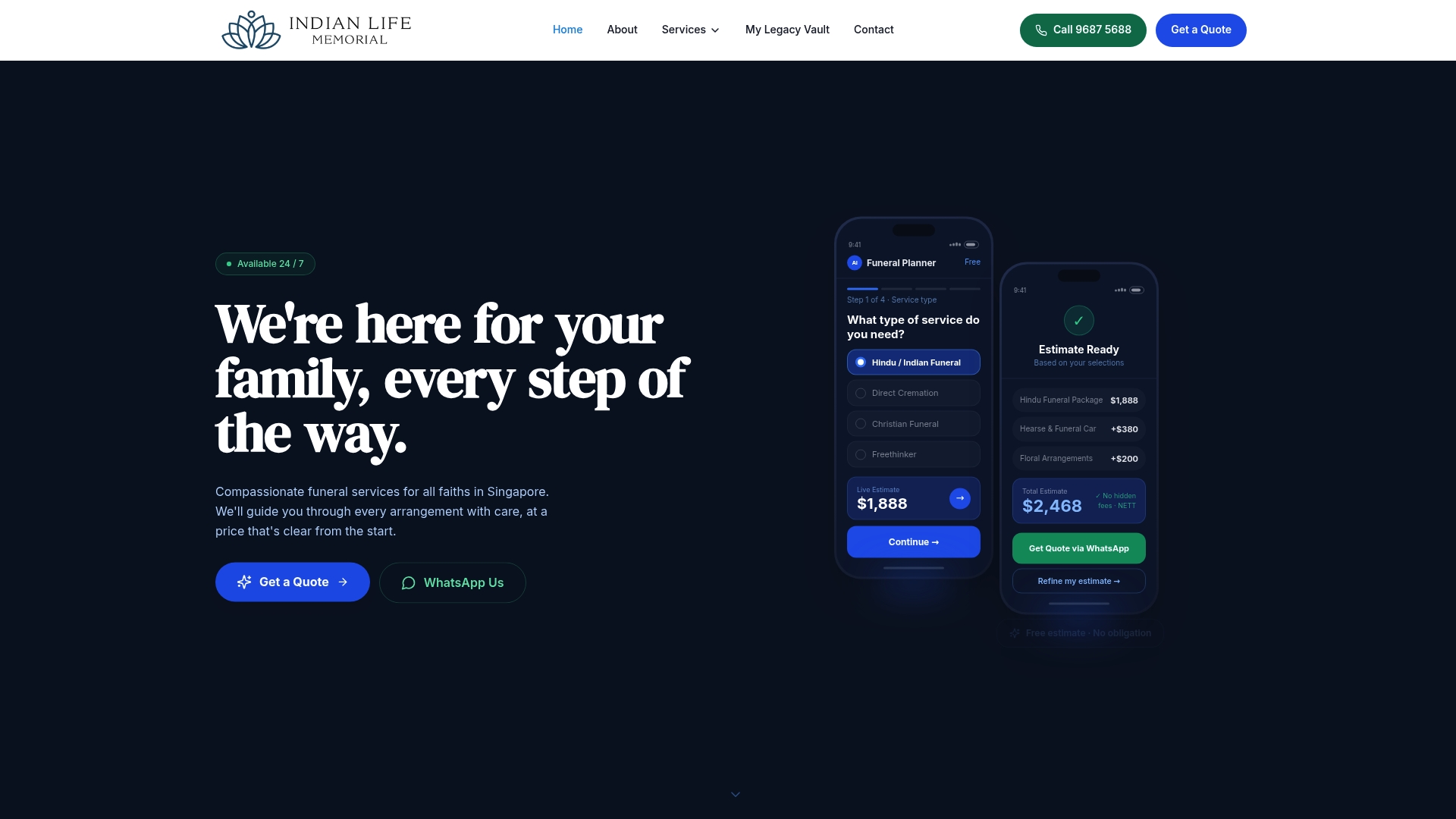
Every package on the Indianlifememorial packages page lists services individually, making it straightforward to match your budget to your family's needs. The team is available 24/7 to walk you through payment options and answer questions at any hour. Whether your family follows Hindu, Christian, or another faith tradition, Indianlifememorial's full-suite funeral services are designed to honor your loved one with dignity and respect, without financial surprises.
FAQ
What is the fastest way to pay for a funeral?
Life insurance assignment is the fastest method, completing in 24–48 hours by transferring the death benefit directly to the funeral home with no out-of-pocket cost to the family.
Can I pay for a funeral with no money upfront?
Yes. Life insurance assignment, VA burial allowances, Social Security death benefits, and bank bereavement programs can all cover costs without requiring immediate cash from the family.
What does the FTC Funeral Rule require?
The FTC Funeral Rule requires funeral homes to provide a General Price List in writing whenever a family inquires about services, protecting families from upselling and hidden fees.
Are funeral home payment plans a good idea?
Funeral home payment plans are useful when a family cannot pay in full upfront, but families should confirm the APR in writing, since rates can reach 18%, and remove optional services before financing.
How do pre-need funeral contracts work?
Pre-need contracts let families pay for funeral services in advance through monthly installments over 3–10 years, locking in today's prices and reducing financial and emotional stress at the time of death.