

Negotiating funeral service costs is the practice of using itemized pricing, consumer rights, and direct communication to reduce what your family pays while preserving every element that matters most. The FTC Funeral Rule, enforced by the Federal Trade Commission, gives every consumer the legal right to receive a General Price List (GPL) from any funeral home, either in person or by phone. That single document is the foundation of every effective negotiation. Average funeral costs vary widely by provider and region, but understanding which fees are fixed and which are optional can save your family hundreds or even thousands of dollars without compromising the dignity or cultural integrity of the service.
How to obtain and use the General Price List for funeral cost negotiation
The GPL is the most powerful tool in any funeral cost negotiation tips strategy. The FTC Funeral Rule requires funeral providers to give you a complete, itemized list of all goods and services with individual prices. You do not need to make an appointment or commit to anything to receive it. Call any funeral home and ask for the GPL by name.
The GPL breaks down into four main categories:
- Basic services fee: The non-declinable charge covering the funeral director's professional time, overhead, and compliance. This fee is fixed per provider but varies across providers.
- Merchandise: Caskets, urns, outer burial containers, and related items. These are almost always optional in terms of grade and style.
- Services: Embalming, body preparation, use of facilities, transportation, and viewings. Many of these are optional.
- Cash advances: Third-party fees the funeral home pays on your behalf, such as death certificates, obituary notices, and clergy fees. These may carry a markup.
Reading the GPL carefully reveals which charges are truly required and which are presented as defaults. Package pricing, for example, often bundles optional services with required ones, making the total appear fixed when it is not. Request the GPL as a line-item list, not a package summary, so you can see exactly what each element costs.
Pro Tip: Ask the funeral home to confirm in writing which items on the GPL are legally required versus simply standard practice. This one question often reveals several hundred dollars in optional charges.

The GPL functions as a pricing menu, transforming your family from passive payers into informed buyers. That shift in dynamic is the starting point for every productive conversation about cost.
Which funeral costs are negotiable and which are fixed
Understanding the boundary between fixed and negotiable fees prevents wasted effort and builds realistic expectations before you begin. Here is how the two categories break down in practice.
Fixed fees (non-declinable):
The basic services fee is the one charge no funeral home is required to waive. It typically ranges from $2,100 to $2,500 nationwide, though it varies significantly from one provider to the next. Comparing this single fee across three funeral homes in your area can produce meaningful savings before you negotiate anything else.
Negotiable fees (step-by-step):
- Embalming. Embalming is not required by law in most cases and can be declined. If there is no public viewing or if the service occurs within a short timeframe, refrigeration is often a lower-cost substitute.
- Facility use fees. Charges for the viewing room, chapel, or reception space are optional if you choose not to hold those events at the funeral home. A graveside service or a ceremony at your place of worship eliminates these fees entirely.
- Transportation. Local transportation is often bundled, but long-distance or multiple-vehicle charges are negotiable. Ask specifically what each vehicle trip costs.
- Merchandise. Caskets and urns carry some of the highest markups in the industry. You have the legal right to supply your own casket from a third-party retailer, and the funeral home cannot charge a handling fee for accepting it.
- Printed materials and extras. Memorial cards, register books, and flower arrangements are almost always optional add-ons.
After identifying which items you want to remove, request a re-quoted price from the funeral home. Removing embalming, then the viewing facility, then upgrading to a simpler container in sequence produces a transparent, step-by-step reduction in the total cost. Each re-quote confirms the savings and keeps the conversation grounded in the GPL rather than in general impressions.
How to negotiate costs while honoring cultural and religious requirements
Balancing cost-effective funeral planning with sacred traditions requires a clear separation between what your faith requires and what is simply conventional. This distinction is not disrespectful. It is the most focused way to protect both your budget and the integrity of the service.
Start by listing the elements your tradition considers non-negotiable. For Hindu families observing Antyesti rites, this includes the presence of a qualified Pandit, proper Vedic prayers, and specific ritual items tied to the Samskaras. For Christian families, it may include a specific order of service or the presence of a minister. These are your protected items. Everything else is open for review.
- Use the GPL as a customization menu. Match each required ritual element to a specific line item on the GPL. If an item on the list does not correspond to a required rite, it is a candidate for removal.
- Communicate your cultural needs clearly and early. Funeral directors who understand your requirements can often suggest lower-cost alternatives that still meet the standard. A provider experienced with your tradition is more likely to offer relevant substitutions.
- Avoid pressure to upgrade. Upselling during grief is common. Phrases like "most families choose" or "this is what we recommend" are not obligations. Politely redirect to the GPL and ask for the cost of the specific item being discussed.
- Ask about culturally appropriate alternatives. Some traditions permit simpler containers or shorter timeframes that naturally reduce costs. A knowledgeable provider will confirm these options without requiring you to advocate against your own beliefs.
Pro Tip: Frame your negotiation as building a customized, culturally appropriate service package rather than asking for a discount. Providers respond more positively to families who know what they need than to families who simply ask for a lower price.
Transparent price disclosure early in the process reduces family stress and prevents unexpected financial burdens during an already difficult time. Approaching the conversation with clarity and respect produces better outcomes for everyone.
Comparing traditional funerals, direct cremation, and other affordable funeral options
Funeral cost comparison across service types reveals dramatic differences that directly affect your negotiating position. The table below reflects general 2026 pricing ranges and typical inclusions.
| Service type | Typical cost range | What's included | Common optional add-ons |
|---|---|---|---|
| Traditional burial | $7,000–$12,000+ | Basic services fee, embalming, casket, burial plot, graveside service | Viewing, reception, flowers, obituary |
| Cremation with service | $3,000–$6,000 | Basic services fee, cremation, urn, memorial service | Viewing, reception, death certificates |
| Direct cremation | $1,000–$3,000 | Transportation, cremation fee, permits, basic urn | Memorial gathering, upgraded urn, obituary |
Direct cremation is the lowest-cost option, typically totaling between $1,000 and $3,000. It excludes embalming, visitation, and most facility charges. For families whose traditions permit cremation without an elaborate ceremony, or who plan a separate memorial gathering at home or at a place of worship, direct cremation provides full dignity at a fraction of the cost of a traditional service.
When comparing providers, verify that each quote covers the same scope of services. A lower headline price that excludes death certificates, transportation, or permits may end up costing more than a higher quote that includes everything. Always request the full itemized total, not a starting price.
Step-by-step guide to negotiating funeral service costs effectively
This process works whether you are planning in advance or responding to an immediate need. Follow each step in order for the clearest results.
- Request GPLs from at least two or three funeral homes. Comparing multiple GPLs within your area reveals price variations for identical services. You can request GPLs by phone without visiting in person.
- Compare basic services fees first. This non-declinable charge sets the floor for each provider. A provider with a lower basic services fee starts the negotiation at an advantage.
- Identify optional services to remove or substitute. Using the GPL as your reference, mark every item that is not required by law or by your cultural tradition.
- Request itemized re-quotes after removing optional items. Remove one category at a time, starting with embalming, then facility use, then merchandise. Each re-quote confirms the savings and keeps the total transparent.
- Clarify cash advance fees. Ask whether the funeral home charges a markup on third-party cash advances such as death certificates or clergy fees. Some providers add a service charge; others pass costs through at face value.
- Confirm culturally required services are included. Verify that every required ritual element, from the Pandit's fee to specific ritual items, appears as a named line item in the quote.
- Request a written, itemized final statement. A written itemized statement after your selections are confirmed differentiates funeral home charges from third-party cash advances and protects your family from surprise charges at the time of payment.
Learning how to compare funeral service quotes across providers gives your family the clearest picture of true costs before committing to any arrangement.
Key takeaways
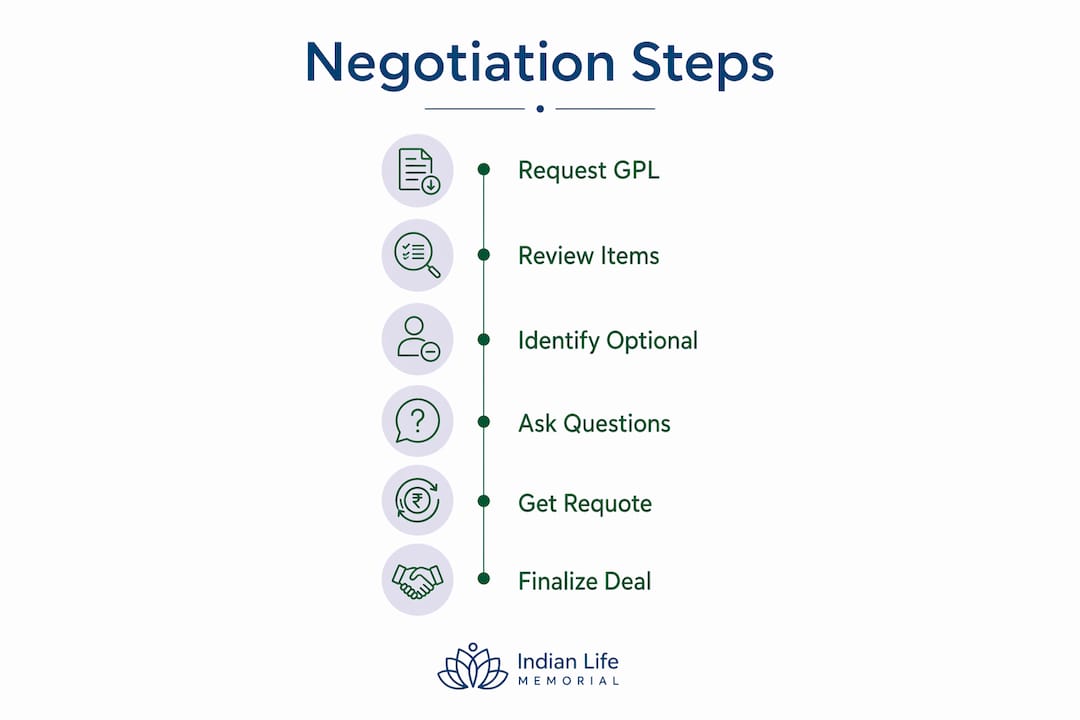
Families who request itemized GPLs from multiple providers, remove optional services sequentially, and confirm culturally required elements in writing achieve the most transparent and respectful reductions in funeral costs.
| Point | Details |
|---|---|
| GPL is your starting point | Request it by phone from any funeral home before making any decisions. |
| Basic services fee varies | Compare this non-declinable charge across providers to find the lowest floor cost. |
| Most fees are optional | Embalming, facility use, and merchandise can be declined or substituted to reduce the total. |
| Cultural needs are protected | Separate required rites from optional extras using the GPL as a line-item menu. |
| Written statements prevent surprises | Always request an itemized final statement that separates funeral home charges from third-party fees. |
What I've learned about negotiating funeral costs with dignity
Families often arrive at a funeral home in the most vulnerable state of their lives, and the industry knows it. The most common mistake I see is treating the first quote as the final price. It almost never is. The GPL exists precisely because Congress recognized that grief creates conditions where people agree to things they would not otherwise accept.
The families who navigate this process best are not the ones who argue or demand discounts. They are the ones who come prepared with a list of required elements, a copy of the GPL, and a calm, respectful tone. When you frame the conversation as "we need to build a service that honors our tradition within a specific budget," most funeral directors respond with genuine help rather than resistance.
Cultural sensitivity is not a barrier to negotiation. It is actually an asset. A family that clearly articulates its Vedic requirements, for example, gives the funeral director a precise brief to work from. That clarity reduces back-and-forth and often surfaces options the family would never have known to ask about.
One thing I would add that most guides skip: ask about the cash advance markup before you agree to anything. Some funeral homes add 10 to 20 percent to every third-party fee they manage on your behalf. On a service with multiple death certificates, clergy fees, and transport permits, that markup adds up quickly. A single question eliminates the surprise.
— Admin
How Indianlifememorial supports your family with transparent pricing
Indianlifememorial was built on the belief that your family should never have to guess what a funeral will cost. Their full-suite funeral services are available 24/7 for all faiths, with transparent pricing starting at $1,888 and no hidden fees. Every package is itemized so your family can see exactly what is included before making any decision.
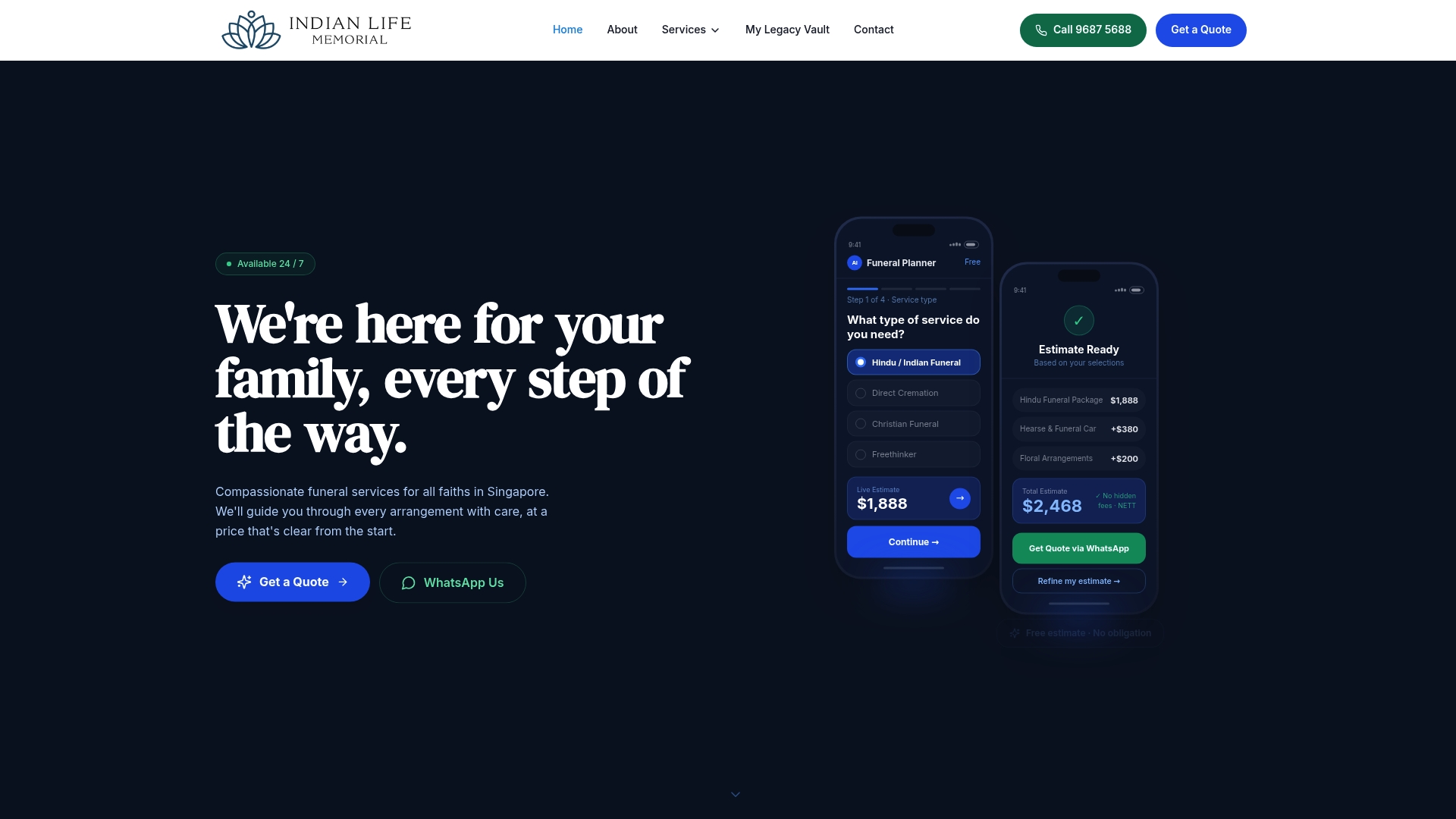
For Hindu families, Indianlifememorial provides experienced Pandits, authentic Vedic rites, and proper observance of Antyesti Samskaras. For families of other faiths, the team adapts with the same level of care and cultural respect. Reviewing their funeral packages gives your family a clear baseline for budgeting and a trusted reference point when comparing other providers. When you are ready to plan, Indianlifememorial is available to guide you through every step with compassion and clarity.
FAQ
What is the FTC Funeral Rule and how does it help families?
The FTC Funeral Rule requires funeral providers to give consumers a General Price List with itemized prices for all goods and services. This legal protection means you can request pricing by phone from any funeral home without obligation, giving you the information needed to compare providers and negotiate effectively.
Can you negotiate the basic services fee at a funeral home?
The basic services fee is non-declinable at any individual funeral home, meaning you cannot remove it from your bill. However, this fee varies significantly across providers, so comparing it across two or three funeral homes is one of the most effective ways to reduce your total cost.
Is embalming legally required?
Embalming is not required by law in most cases and can be declined. If there is no public viewing or if the service takes place within a short timeframe, refrigeration is a lower-cost alternative that most funeral homes offer.
What is direct cremation and when does it make sense?
Direct cremation covers transportation, the cremation itself, required permits, and a basic urn, typically totaling between $1,000 and $3,000. It is a respectful and cost-effective option for families whose traditions permit cremation without an elaborate ceremony, or who plan a separate memorial gathering at home or at a place of worship.
How do you avoid surprise charges from a funeral home?
Request a written, itemized final statement after confirming your selections, and ask the funeral home to separate its own charges from third-party cash advances such as death certificates and clergy fees. This document protects your family from unexpected additions at the time of payment.