
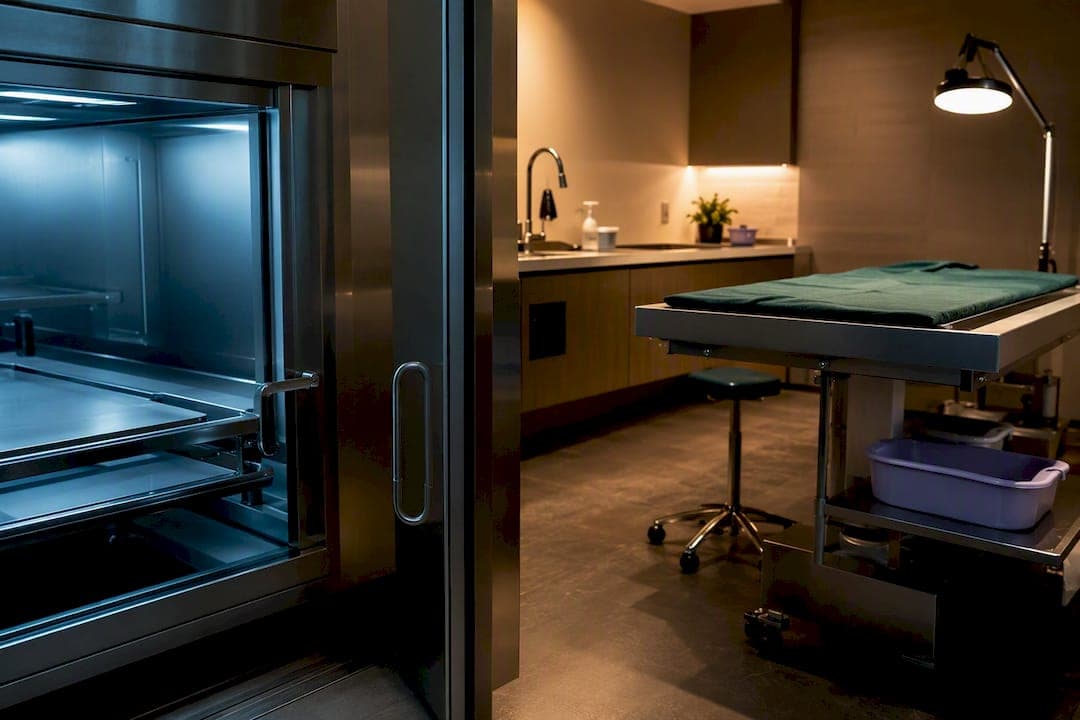
If your family needs an open-casket viewing or your loved one is being transported across borders, embalming is usually the practical choice. If the timeline is short, the service will be closed-casket, or cremation is planned, refrigeration is often enough on its own. Embalming relies on preservative chemicals and carries a higher cost and occupational safety burden; refrigeration avoids chemicals but depends on facility capacity and continuous cooling. Check NEA licensing and ask Indianlifememorial about your specific timeline before deciding.
TL;DR:
- Embalming is essential for open-casket viewings and international transport, but it is costly, chemical-based, and requires licensed professionals.
- Refrigeration effectively delays decomposition for short durations, especially when no extended viewing or transport is planned, but depends on equipment reliability.
- Environmental impacts vary: embalming involves formaldehyde hazards, while refrigeration consumes continuous electricity with its own footprint, influenced by equipment age and energy sources.
- Pricing typically involves a single embalming fee or daily refrigeration charges, so families should request detailed, itemized quotes to avoid unnecessary costs.
- Verify licensing, capacity, and legal requirements early with providers to prevent surprises, especially for off-site refrigeration or high-volume facilities.
Table of Contents
- Embalming vs Refrigeration: How Do They Actually Work?
- What Are the Environmental Trade-Offs Between Chemicals and Cold?
- How Do Funeral Homes Typically Price Embalming and Refrigeration?
- When Does Embalming Make the Most Sense?
- When Is Refrigeration a Sufficient Alternative?
- What Local Rules and Logistics Should Families Check?
- What Questions Should You Ask Before Deciding?
- How Indian Life Memorial Handles Preservation, Transport, and Faith-Specific Needs
- Is There a "Right" Choice Between Embalming and Refrigeration?
- Ready to Talk Through Your Family's Options?
- Where to Verify These Details Yourself
Embalming vs Refrigeration: How Do They Actually Work?
Both methods buy time. They just buy it in very different ways.
Embalming replaces the body's fluids with preservative chemicals through arterial injection and cavity treatment, then drainage removes what the chemicals displace. The process slows decomposition and restores a lifelike appearance, which is why it remains the standard choice for families who want an open casket. A trained embalmer also does light cosmetic work: setting features, managing skin tone, and addressing any visible trauma so a viewing feels peaceful rather than clinical.
Refrigeration works on a simpler principle: cold slows the biological processes that cause decomposition. Most holding rooms target temperatures below 4°C (40°F), and facilities use anything from dedicated mortuary coolers to hospital-grade units depending on their size and licensing. Funeral Consumers Alliance points out that embalming is not required for public health purposes, and refrigeration is widely accepted as a legitimate way to delay disposition without chemicals.
Here's what each method reliably controls, and what it does not:
- Embalming slows decomposition for days to weeks and preserves a natural appearance for viewing, but it cannot stop decomposition indefinitely and requires trained, licensed hands.
- Refrigeration slows decomposition effectively for shorter windows but does not restore or maintain a "viewing ready" appearance the way embalming does.
- Neither method is permanent. Both are about managing a window of time, not stopping the clock altogether.
- Refrigeration depends entirely on equipment reliability. A facility without adequate cooler capacity cannot substitute willpower for cold.
What Are the Environmental Trade-Offs Between Chemicals and Cold?
Neither option is environmentally free, and the "greener" choice depends on details most families never think to ask about.
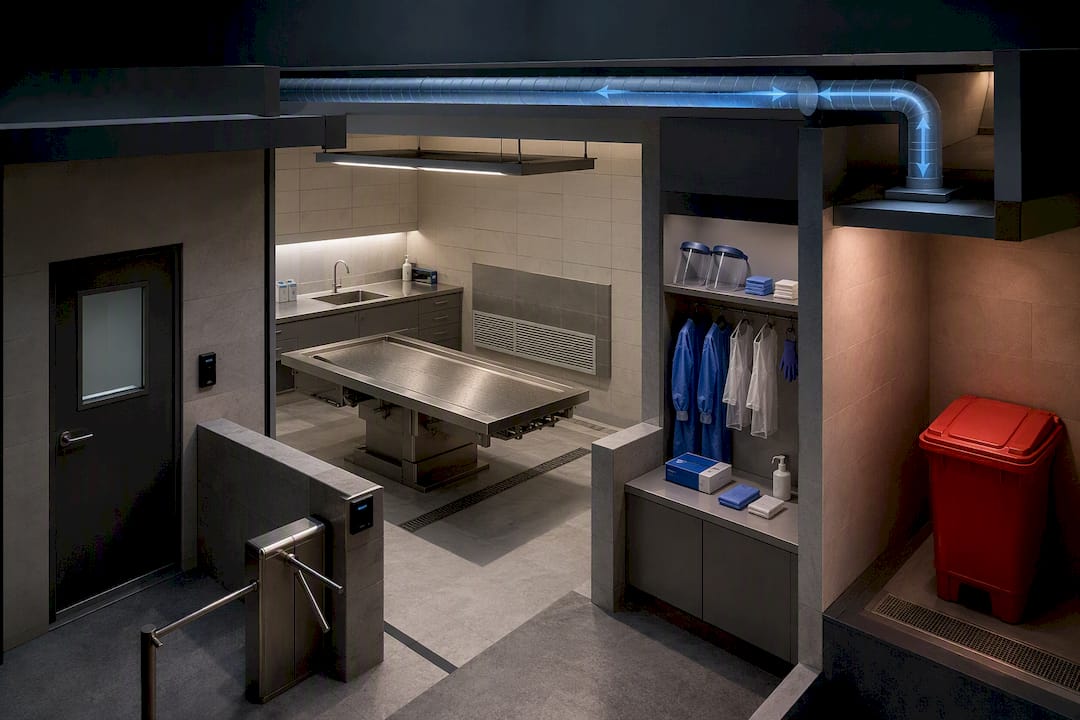
Embalming's main environmental and occupational concern is formaldehyde, the primary preservative chemical used in the process. OSHA and NIOSH both classify formaldehyde as a recognized occupational hazard, requiring specific ventilation, personal protective equipment, and exposure controls in any facility that performs embalming. This is not a fringe concern. It's why licensed embalming rooms look and operate more like a controlled clinical space than a simple back office.
Refrigeration sidesteps the chemical question entirely, but it trades one input for another: continuous electricity. A mortuary cooler runs around the clock for as long as the body is held, and its environmental footprint depends on the refrigerant used and the local energy mix powering the grid.
The trade-off in plain terms: embalming concentrates its environmental cost into a single chemical event with clear occupational exposure risks, while refrigeration spreads its cost out as ongoing energy draw with a smaller but continuous footprint.
For greener funeral planning, refrigeration-first is often the preferred instinct. But equipment efficiency and local energy mix can shift that calculus more than people expect. A poorly maintained, older cooler running for two weeks straight may not be automatically lighter on the environment than a single embalming procedure. A few things worth weighing:
- Ask whether the facility's refrigeration units are energy-efficient or older equipment running longer to compensate.
- Ask what preservative concentration and disposal protocol an embalming provider follows.
- Recognize that "chemical-free" and "lower environmental impact" are not always the same claim.
How Do Funeral Homes Typically Price Embalming and Refrigeration?
Pricing structure differs sharply between the two, and understanding the shape of the bill matters as much as the number itself.
Embalming is usually billed as a single procedural fee, often bundled with preparation and light cosmetic work. That single line item can create confusion when families assume it includes everything, from dressing to casketing, when in fact those may be itemized separately. Refrigeration, by contrast, is typically billed per day, or wrapped into a broader "care of remains" fee that includes a set number of included days before additional daily charges kick in.
The FTC's Funeral Rule requires providers to disclose when embalming is not required by law and prohibits charging for it without your authorization. That protection only works if you actually ask the question, so don't assume silence means embalming is mandatory.
Here's what to look for on any quote:
- A separate line for embalming versus preparation and cosmetic work, not a single vague "preparation" charge.
- The number of refrigeration days included before per-day charges begin.
- Whether refrigeration is on-site or requires transfer to an off-site cooler, which can add transport fees.
- Written confirmation of whether embalming is legally required for your specific plan, or simply the provider's standard policy.
Pro Tip: Ask for a written itemized price list before signing anything. If a provider hesitates to separate embalming from preparation fees, that's your cue to ask why, not to assume it's standard practice.
Requesting that itemized breakdown, paired with the direct legal-requirement question, is the single most effective protection against upsells you don't need.
When Does Embalming Make the Most Sense?
Certain circumstances tilt the decision clearly toward embalming, and recognizing them early saves a lot of last-minute stress.
- Open-casket viewing. If your family wants an open casket for a wake or visitation, embalming supports the appearance needed for that setting, particularly across multiple days of viewing.
- Long-distance or international transport. Airlines and destination countries often set their own carriage requirements, and many require embalming before accepting remains for transport. Check specific air freight requirements well before booking, since rules vary by carrier and destination.
- Delayed services with a fixed schedule. When family members are flying in from overseas or a temple date needs coordinating around a priest's availability, embalming buys the scheduling flexibility a purely refrigerated timeline can't guarantee.
In each of these cases, embalming isn't about tradition for its own sake. It's about matching a preservation method to a real logistical constraint: appearance, distance, or time.
When Is Refrigeration a Sufficient Alternative?
Refrigeration fits a narrower but very common set of circumstances, and for many families it's genuinely all that's needed.
Short timelines are the clearest fit. If the funeral or cremation will happen within a few days and there's no extended public viewing planned, refrigeration alone typically holds the body appropriately without any chemical intervention. Closed-casket services and direct cremation plans fall into this category most often, since there's no need to preserve a viewable appearance over an extended period.
Refrigeration also aligns naturally with families who prefer to avoid embalming chemicals for personal, religious, or environmental reasons. That preference is valid and increasingly common, but it comes with a practical catch.
- Confirm the facility actually has adequate cooler capacity for the number of days you need.
- Ask whether refrigeration happens on-site or requires transfer to an off-site or hospital cooler, which can affect both timing and cost.
- Smaller providers sometimes rely on borrowed or shared cooler space, which can create scheduling friction you don't want to discover at the last minute.
- Clarify whether per-day charges apply from day one or only after a included grace period.
Refrigeration's simplicity is its strength, but that simplicity only holds up if the facility's equipment and capacity actually match your timeline.
What Local Rules and Logistics Should Families Check?
Regulatory details rarely make it into casual conversations about funeral planning, but they shape what's actually possible.
The NEA requires that any funeral parlour offering embalming facilities be licensed, and it sets specific embalming-room and handling standards, including formal registration for embalmers themselves. That licensing isn't a bureaucratic formality. It governs access control to preparation rooms, personal protective equipment protocols, and biohazard waste handling, all of which protect both the deceased and the staff performing the work.
Families who prefer to skip embalming entirely have a legitimate path: NEA guidance permits holding a wake without embalming as long as the body is kept in a hermetically sealed coffin, with the wake not exceeding seven days. That single detail resolves a lot of the "is this even allowed" anxiety families carry into these conversations.
A few logistics worth confirming directly with any provider:
- Whether their embalming room and embalmer registration are current and verifiable.
- Storage capacity for refrigeration, and whether it's on-site or requires an off-site mortuary transfer.
- Realistic transfer timelines if refrigeration is off-site, since that adds hours to any transport plan.
- Whether a licensed embalming facility is available in-house or requires an outside partner.
Confirming these details up front avoids the worst kind of surprise: discovering a capacity or licensing gap the day before a service.
What Questions Should You Ask Before Deciding?
A short, direct conversation with any funeral provider can resolve most of the uncertainty around embalming versus refrigeration. Use this as a practical script.
- Is embalming legally required for what we're planning, or is it your standard policy? The FTC's Funeral Rule requires providers to disclose this honestly, and a vague answer here is a warning sign.
- How many refrigeration days are included before additional per-day charges apply? Get the exact number, not an estimate.
- Is refrigeration on-site or off-site? Off-site storage adds transfer time and cost you should plan around.
- Can we get a written, itemized price list before we sign anything? This is your single best protection against upsells.
- Are there transport constraints if we need embalming for travel? Ask specifically about the airline or destination country's requirements.
Three simple questions tend to cut through most of the noise: will there be an open-casket viewing, how many days until the service, and is long-distance transport involved? Answer those honestly and the embalming-versus-refrigeration decision usually becomes obvious.
Red flags worth walking away from: pressure to sign immediately, hesitation or vague answers about licensing, and any refusal to itemize embalming separately from general preparation fees.
Pro Tip: For an immediate service with no travel involved, ask about refrigeration-only pricing first; you may be able to skip embalming entirely and save both cost and chemical exposure.
How Indian Life Memorial Handles Preservation, Transport, and Faith-Specific Needs
Indianlifememorial operates licensed facilities equipped for both embalming and refrigeration, so families don't have to choose a provider based on which service happens to be available that week. Pricing is transparent and starts at $1,888, with no hidden fees layered onto the quote after the fact.
Because the team specializes in Hindu and Indian funeral rites, families arranging Antyesti or other Vedic rites get guidance from experienced priests who understand exactly how preservation choices interact with ceremonial timing. If a wake needs to accommodate relatives flying in from abroad, or a body needs to travel internationally for burial, the same team coordinates transport logistics alongside the preservation decision, rather than treating them as separate problems for the family to manage.
For families weighing embalming against refrigeration under real time pressure, having one provider handle both options, plus the ceremonial and transport pieces, removes a significant layer of coordination stress. That's worth considering when peace of mind matters as much as the technical decision itself.
Is There a "Right" Choice Between Embalming and Refrigeration?
Both options can honor a loved one with equal dignity when performed properly. The real decision isn't about which method is superior; it's about matching the method to what your family actually needs: a viewable presentation, a compressed timeline, cross-border transport, or a preference for avoiding chemicals altogether.
What tends to go wrong isn't the choice itself. It's skipping the itemized quote, not asking whether embalming is legally required, or assuming a facility has cooler capacity it doesn't actually have. Families who ask the direct questions outlined above, and get written answers, rarely regret either path.
Presentation matters to some families more than others. Environmental values matter more to some than cost. None of that makes one preference wrong. It just makes the checklist worth following before you sign anything.
— Admin
Ready to Talk Through Your Family's Options?
Indianlifememorial is the direct alternative to piecing together embalming, refrigeration, transport, and ceremonial arrangements through separate vendors. One licensed team handles the preservation decision, the logistics, and the faith-specific rites together, so your family makes one phone call instead of five.

Whether your situation calls for embalming ahead of an open-casket viewing, straightforward refrigeration before a direct cremation, or coordinated international transport, the team works from a single transparent quote with pricing starting at $1,888, no hidden fees layered on afterward. Services run 24/7, which matters most in the early hours after a loss when decisions can't wait for business hours. Support covers Hindu, Christian, and all-faith arrangements, with experienced priests available for Vedic rites where needed.
If you're weighing embalming against refrigeration for your own family, review the full-suite funeral service or check package pricing directly, then call for immediate assistance or a pre-planning conversation whenever you're ready.
Where to Verify These Details Yourself
- NEA sets local licensing rules for embalming facilities, embalming-room standards, and the time limits on unembalmed wakes.
- OSHA and NIOSH publish the formaldehyde exposure guidance that governs safe embalming practice for workers.
- FTC's Funeral Rule protects your right to disclosure on whether embalming is legally required and bars unauthorized embalming charges.
- Funeral Consumers Alliance addresses common misconceptions, including the myth that embalming is required for public health.
- For readers weighing cremation on religious grounds, this overview of biblical perspectives on cremation offers useful context for that conversation.