
Last minute funeral planning is the rapid organization of funeral arrangements under time pressure, balancing legal requirements, cultural traditions, and emotional needs simultaneously. Families facing this situation, formally called urgent or short notice funeral arrangement, must act on several fronts at once. The good news is that a funeral within 48 hours is achievable when families stay flexible and prioritize the right decisions first. This last minute funeral planning guide walks you through every critical step, from legal paperwork to cultural considerations and transparent pricing, so your family can focus on honoring your loved one with dignity.
What are the essential first steps in last minute funeral planning?
The first action after a death is to register it with the appropriate local authority. Legal registration deadlines vary by region and are non-negotiable. In England and Wales, death registration is required within 5 days. In Scotland, the deadline extends to 8 days. Missing these deadlines creates legal complications that slow every subsequent step.
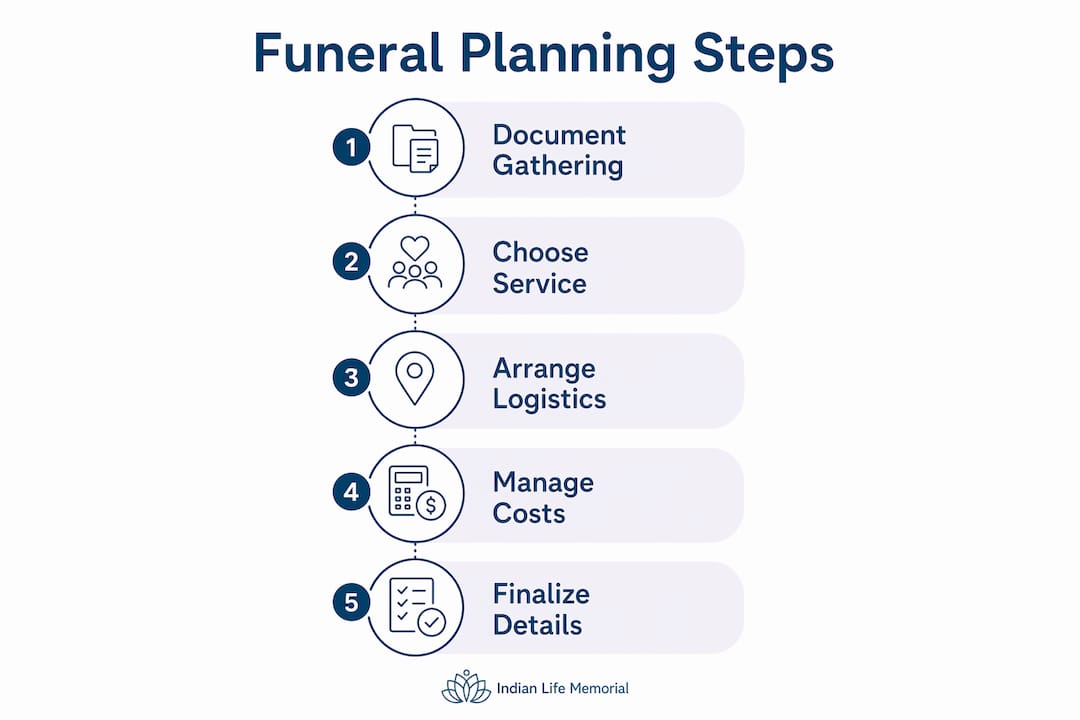
Follow this numbered sequence to stabilize the situation quickly:
- Register the death with your local registry office or relevant authority as soon as possible.
- Order certified death certificates immediately. Experts recommend requesting 10 to 15 certified copies, which typically cost between $10 and $25 each. You will need them for life insurance claims, bank accounts, and probate.
- Notify immediate family and close friends before making any public announcements.
- Contact a funeral director experienced in rapid planning. A skilled director can coordinate the body's transfer, paperwork, and venue within hours.
- Assign delegation roles to trusted family members. One person handles family communications, another manages logistics, and a third tracks paperwork. This prevents any single person from carrying the full burden.
Pro Tip: Ask your funeral director for a written checklist of every document they need from you. This single step eliminates back-and-forth delays and keeps the process moving.
You have a 24 to 48-hour window before the body must be moved or refrigerated. Use that window to make considered decisions rather than rushed ones. Pressure to finalize everything instantly is real, but it is not always necessary.
How do you choose funeral type and service style quickly?
Funeral professionals recommend anchoring the process on two core decisions: the disposition method and the basic gathering plan. Everything else flows from these two choices. Trying to decide flowers, music, and catering before settling burial versus cremation leads to decision fatigue and wasted time.

Here is a practical comparison of the two primary disposition options:
| Factor | Burial | Cremation |
|---|---|---|
| Typical timeline | Requires cemetery slot, often 5–10 days | Can proceed within 24–72 hours |
| Cultural suitability | Required for many Hindu, Muslim, and Christian traditions | Common in Hindu Antyesti rites and secular services |
| Cost range | Generally higher due to plot and casket | Often lower, especially for direct cremation |
| Flexibility | Fixed location and date once booked | Ashes can be held for a later memorial |
Once you settle on disposition, consider these service elements:
- Venue: A funeral home chapel, place of worship, or private home each carry different lead times. Funeral directors can secure venue slots quickly through existing relationships with cemeteries and officiants.
- Officiant: For Hindu families, a Pandit experienced in Vedic rites and Samskaras is non-negotiable. For Christian families, a pastor or priest familiar with the denomination matters. Book this person immediately after the venue.
- Cultural requirements: Hindu Antyesti rites, Islamic burial customs, and Christian funeral liturgies each have specific timing and ritual requirements. Communicate these to your funeral director on the first call.
- Personal touches: A single photograph, a meaningful reading, or a piece of music can make the service feel personal without adding hours of planning.
Pro Tip: Identify the one or two elements that mattered most to the deceased. Build the service around those. Everything else is secondary.
Meaningful funerals are defined by alignment with the deceased's wishes, not by the volume of included elements or flawless execution. A simple, sincere service honors a life just as fully as an elaborate one.
What legal and logistical documents are critical in emergency funeral planning?
Legal paperwork is the backbone of any funeral arrangements checklist. Missing a single document can delay the burial or cremation permit, which halts everything else. The table below outlines the core documents most families need to gather quickly.
| Document | Purpose | Who Provides It |
|---|---|---|
| Death certificate (certified copies) | Required for insurance, banks, probate | Registry office or vital records |
| Burial or cremation permit | Authorizes disposition of the body | Funeral director obtains from authorities |
| Coroner's clearance (if applicable) | Required for sudden or unexplained deaths | Coroner's office |
| Deceased's identification documents | Needed for registration and estate matters | Family |
| Pre-arranged funeral plan (if exists) | Outlines the deceased's documented wishes | Funeral home or estate documents |
Several situations affect timing and require additional steps:
- Deaths involving a coroner or medical examiner can delay the release of the body by several days. Ask the attending physician or hospital directly whether a coroner's referral is required.
- Hospice-managed deaths typically involve pre-completed paperwork, which speeds up the process considerably.
- Deaths occurring abroad require repatriation documentation, which adds complexity and time.
The Federal Trade Commission's Funeral Rule requires funeral homes in the United States to provide General Price Lists itemizing all costs. Request this list from every funeral home you contact. Comparing at least three price lists protects your family from overpaying under emotional pressure. For families in Singapore, Indianlifememorial provides fully transparent pricing starting at $1,888 with no hidden fees, which removes the guesswork entirely. You can review what to expect step by step at the getting started page.
How do you manage costs when planning a funeral under time pressure?
Funeral costs under urgent conditions can escalate quickly if you do not compare options before committing. The average funeral is held 13 to 16 days after death, but expedited arrangements within 48 hours are possible. Speed sometimes carries a premium, so understanding what you are paying for matters.
| Service Type | Typical Cost Range | Best For |
|---|---|---|
| Direct cremation | $700–$2,000 | Families needing speed and simplicity |
| Simple graveside burial | $2,000–$5,000 | Families with cemetery plots already secured |
| Full-service funeral | $5,000–$12,000+ | Families wanting a complete, traditional ceremony |
| Certified death certificate copies | $10–$25 each | All families, order 10–15 copies |
The Federal Trade Commission's Funeral Rule exists precisely because grieving families are vulnerable to upselling. Comparing at least three funeral home price lists is best practice, even when time is short. A phone call to three providers takes 30 minutes and can save thousands of dollars.
When reviewing any package, confirm these financial details in writing before signing:
- Total itemized cost with no bundled fees
- Deposit amount and refund policy if plans change
- Payment timeline and accepted methods
- What happens if the service date shifts due to coroner delays
Pro Tip: Ask every funeral home for their General Price List by name. Providers required to follow the FTC Funeral Rule must give it to you immediately upon request, in person or by phone. If a provider hesitates, move on.
For families in Singapore, Indianlifememorial's funeral packages are structured to eliminate surprise costs. Transparent pricing means your family can make decisions based on values, not financial anxiety.
What practical tips ease the stress of short notice funeral planning?
Families often neglect basic physical needs during the first 6 to 18 hours after a death, which leads to burnout and impaired decision-making. Eating, resting, and staying hydrated are not indulgences. They are requirements for functioning well enough to make the decisions your loved one deserves.
Effective delegation is the single most underused tool in quick funeral planning resources. Assigning specific roles to trusted family members or friends reduces the burden on the primary planner and keeps multiple tasks moving in parallel. Consider these role assignments:
- Communications coordinator: Notifies extended family, friends, and colleagues. Manages the phone and social media announcements.
- Logistics coordinator: Handles transportation, accommodation for out-of-town family, and catering if needed.
- Documentation coordinator: Gathers identification documents, insurance policies, and any pre-arranged funeral plans.
- Children and elder care coordinator: Ensures vulnerable family members are supported and not left alone during the planning period.
A printed or digital funeral arrangements checklist keeps everyone aligned. Indianlifememorial's blog covers what to do when someone dies in Singapore with step-by-step guidance that families can follow immediately. For broader funeral planning guidance, the Willow Tree Funerals blog also provides detailed resources on rapid arrangements and grief support.
Obituary templates and memorial program guides are available through most funeral homes and online. Using a template saves hours of writing time and still produces a meaningful tribute. Ask your funeral director for a template on your first call.
What i have learned about urgency and meaning in funeral planning
What urgency taught me about what actually matters
Working alongside grieving families during some of the most difficult hours of their lives has clarified one truth for me: the families who fare best are not the ones who planned the most elaborate service. They are the ones who made two or three clear decisions early and trusted their support system with the rest.
The pressure to get everything right is real and understandable. But a funeral is not a performance. It is a gathering of people who loved the same person. A single candle, a photograph, and a Pandit reciting the right Vedic prayers can carry more weight than a perfectly catered event with no spiritual center.
I have also seen how financial stress compounds grief when families skip the step of comparing price lists. Thirty minutes of comparison calls can save a family thousands of dollars and weeks of regret. That is time and money that belongs to the living.
The most meaningful short notice funerals I have witnessed were built around one question: what did this person love, and how do we reflect that today? Everything else is logistics.
— Admin
How Indianlifememorial supports families with urgent funeral arrangements
When time is short and decisions feel overwhelming, having a trusted partner who knows exactly what to do next makes all the difference.

Indianlifememorial provides 24/7 funeral services in Singapore for Hindu, Christian, and all-faith families. The team handles everything from Vedic Antyesti rites and Samskaras to Christian liturgies and freethinker services, with experienced Pandits and officiants ready at short notice. Pricing starts at $1,888 with full transparency and no hidden fees. Explore the full suite of funeral services to understand exactly what your family receives at every stage. Indianlifememorial's step-by-step process removes uncertainty so your family can focus on what matters most: honoring your loved one with care and devotion.
FAQ
How quickly can a funeral be arranged after death?
A funeral is possible within 48 hours if families are flexible on date, time, and service format. The average funeral takes 13 to 16 days, but urgent arrangements are achievable with an experienced funeral director.
How many certified death certificates should i order?
Order 10 to 15 certified copies of the death certificate. Each copy typically costs between $10 and $25, and you will need them for insurance claims, bank accounts, and probate proceedings.
What are the two most important decisions to make first?
Funeral professionals recommend deciding on the disposition method and basic gathering plan first. These two choices anchor the entire planning process and prevent decision fatigue on secondary details.
Does a coroner's involvement delay the funeral?
Yes. When a death is sudden or unexplained, a coroner must clear the body before a burial or cremation permit is issued. Ask the attending physician immediately whether a coroner's referral applies to your situation.
How do i avoid overpaying for an urgent funeral?
Request the General Price List from at least three funeral homes before committing. The FTC Funeral Rule requires providers to supply this list immediately upon request, giving you a clear basis for comparison even under time pressure.