

Losing someone you love is hard enough. The administrative responsibilities that follow can feel like a second weight entirely. This post-funeral admin tasks checklist organizes every key step by timeline, so your family knows what needs attention now, what can wait a few weeks, and what belongs to the months ahead. Nothing critical gets missed, and no one has to hold it all in their head alone.
Your post-funeral admin tasks checklist at a glance
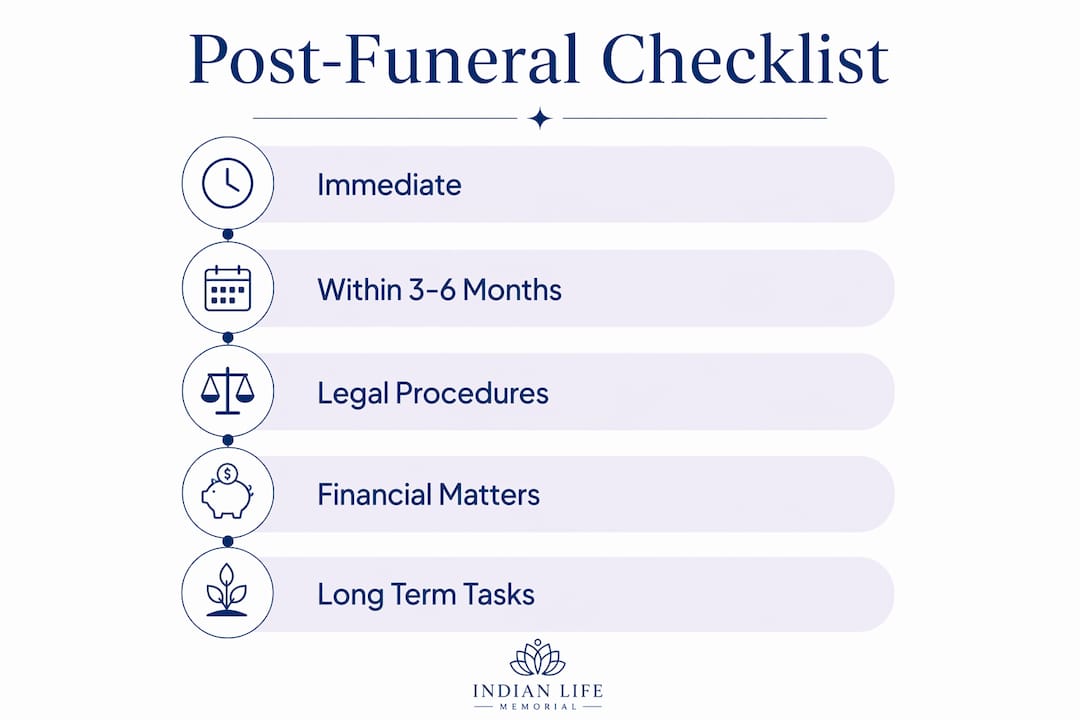
Some tasks demand action within days. Others can wait weeks or even months without legal consequence. The key is knowing which is which.
Immediately after the funeral (days 1–7)
- Order multiple certified copies of the death certificate from your county vital records office
- Notify the Social Security Administration to stop benefit payments
- Contact the deceased's employer to report the death and ask about final pay or survivor benefits
- Notify life insurance companies and begin claims
- Secure the deceased's home: change locks, pause mail forwarding, and arrange for someone to check the property regularly
- Notify the deceased's bank of the death (do not attempt to withdraw funds without legal authority)
- Contact the pension administrator if applicable
- Retrieve the original will and identify the named executor
Within the first two to four weeks
- File for probate if required by your state
- Apply for an Employer Identification Number (EIN) for the estate through the IRS
- Notify credit card companies and creditors
- Cancel or transfer vehicle insurance and registration
- Redirect or hold mail at the post office
- Begin tracking all incoming bills and financial correspondence in one place
- Contact the deceased's accountant or tax preparer about final income tax returns
Within the first three to six months
- Cancel or transfer utilities, subscriptions, and memberships
- Close or memorialize social media accounts (Facebook, Instagram, and similar platforms each have their own process)
- Transfer or rehome pets
- Handle any real property transfers or sales
- Distribute personal belongings according to the will or family agreement
- Write thank-you notes for condolences, flowers, and memorial donations
- File the estate's federal and state tax returns if required
Not every task on this after-funeral list carries the same urgency. Families who stagger their workload, rather than trying to accomplish everything at once, tend to manage both the administration and their own wellbeing far better.
What to do right after the funeral: urgent steps your family should not delay
The first week after a funeral is the most time-sensitive period in the entire post-funeral process. A few specific actions carry real consequences if delayed.
Order enough death certificates. Request at least 10–15 certified copies from your county vital records office. Banks, insurance companies, government agencies, and courts each require their own original certified copy, and ordering too few means repeated trips back to the vital records office, which slows everything else down.
Secure the deceased's home right away. An unoccupied residence creates compounding problems quickly: insurance policies may lapse or become void if the property sits vacant without notification, utility bills accumulate, and the security risk grows with each passing day. Change the locks, notify the homeowner's insurance company, arrange for regular property checks, and pause or redirect mail.
Notify Social Security promptly. If the deceased was receiving Social Security benefits, any payment deposited after the month of death must be returned. Delayed notification can create a repayment obligation for the estate.
- Notify life insurance companies and request claim forms
- Contact the deceased's employer about final wages, accrued vacation pay, and any group life insurance
- Reach out to the pension or retirement plan administrator
- Alert the bank to the death (a certified death certificate is required)
Pro Tip: Start a dedicated notebook or digital document on day one. Write down every phone call you make: the date, the name of the person you spoke with, their direct number, and the confirmation number they gave you. Institutions handling post-funeral administration often lose paperwork or provide conflicting information, and a detailed contact log is what resolves those disputes later.
Families who notify financial institutions and government agencies within the first week avoid the most common administrative complications, including returned deposits, frozen accounts, and delayed insurance payouts.
How to gather vital documents and manage the legal paperwork
The paperwork that arrives in the weeks after a death can quickly become unmanageable without a system. Create a single "everything box," a physical bin or folder, and put every piece of incoming mail, every statement, every legal letter, and every bill directly into it. Nothing gets filed, sorted, or acted on until you have a moment to sit with it. The goal in the first week is simply to capture everything in one place.
The documents your family needs to locate as soon as possible include:
- The original will and any codicils
- Funeral home paperwork and the death certificate
- Birth certificate, marriage certificate, and Social Security card of the deceased
- Recent tax returns (at least the last two years)
- Bank and investment account statements
- Life insurance policies
- Property deeds and vehicle titles
- Any outstanding loan or mortgage documents
Probate basics. If the deceased owned assets solely in their name, those assets typically pass through probate, the court-supervised process of validating the will and authorizing the executor to act. The executor (sometimes called a personal representative) has legal authority to access accounts, pay debts, and distribute assets. Without that court-issued Letters Testamentary document, most banks and institutions will not release funds, regardless of your relationship to the deceased.
Pro Tip: Grief fog is real. The cognitive impact of bereavement can affect memory and decision-making for weeks or months. Before that fog sets in fully, sit down and write out every account number, login, subscription, and contact you can remember. This early "brain dump" saves hours of searching later and prevents accounts from going unnoticed.

Keeping a running log of every document received, every form submitted, and every institution contacted is not optional. Executors who maintain detailed records resolve disputes and delays far more efficiently than those who rely on memory or scattered paperwork.
Managing finances and the estate: accounts, debts, and tax matters
Financial administration after a death involves more legal constraints than most families expect. Getting this part right protects both the estate and the people managing it.
Bank accounts require legal authority. Next of kin cannot withdraw funds from accounts held solely in the deceased's name without proper legal authorization, typically the court-issued Letters Testamentary from probate. Some joint accounts allow immediate access due to right of survivorship, but this depends on how the account was titled. Attempting unauthorized withdrawals can create legal complications for the estate and for the person who made them.
A note on joint accounts: Even when a joint account allows immediate access, it is wise to notify the bank of the death before making any transactions. Some institutions will freeze the account temporarily regardless of titling, and advance notice prevents unexpected holds on funds your family may need.
The estate will likely need its own Tax ID number, called an Employer Identification Number (EIN), applied for through the IRS. This number is used to open an estate bank account, report post-death income, and file the estate's tax returns separately from the deceased's personal returns.
Key financial steps to work through in the first month:
- Notify all banks, credit unions, and investment firms of the death
- Notify credit card companies and ask about balance forgiveness policies (some issuers have them)
- Contact creditors about outstanding debts; the estate is generally responsible, not surviving family members personally
- Freeze or close accounts as directed by the executor and probate court
- Open a dedicated estate bank account using the EIN
- Track every bill, debt, and financial obligation in a single ledger
Meeting with a probate attorney early is worth the cost. Estate tax thresholds, creditor notification deadlines, and probate timelines vary by state, and an attorney familiar with your state's rules can prevent costly errors. Many offer a flat-fee initial consultation.
Longer-term tasks and where to find support along the way
The administrative work does not end after the first month. Several tasks stretch across the following months, and pacing yourself through them is both practical and necessary for your wellbeing.
Utilities, subscriptions, and memberships are easy to overlook but accumulate cost quickly. Work through this list gradually:
- Cancel or transfer electricity, gas, water, and internet accounts
- Cancel streaming services, gym memberships, magazine subscriptions, and club memberships
- Notify the post office of a permanent address change or mail forwarding
- Cancel or transfer vehicle registration and insurance
Digital assets and online accounts require specific steps for each platform. Facebook allows profiles to be memorialized or removed; Instagram and Google have their own legacy contact and account deletion processes. If the deceased had a PayPal account, cryptocurrency holdings, or online banking with no joint holder, those assets may require probate court involvement to access.
Pets and property. If the deceased owned pets, arrange for their care or rehoming as soon as possible. For real property, the executor will need to work with a real estate attorney or agent to transfer title, list the property for sale, or arrange for a beneficiary to take ownership through the probate process.

Thank-you notes and memorial donations. Writing acknowledgment notes for condolences, flowers, and charitable donations made in the deceased's name is a meaningful step that families often defer too long. A simple, brief note is entirely appropriate, and most people understand that it may arrive weeks after the service.
Grief support resources matter as much as administrative ones. Organizations offering grief support and community events can provide a structured space for processing loss alongside others who understand it. Reading through funeral planning and bereavement resources can also help families understand what to expect in the weeks and months ahead.
Cultural mourning traditions, including the 40-day mourning period observed in some communities, carry deep spiritual meaning. They carry no formal legal deadline in the United States, though. Administrative tasks follow their own legal timelines, which vary by state and institution, and most permit gradual completion without penalty. Honor your traditions and meet your legal deadlines; the two are not in conflict.
Common questions about longer-term post-funeral administration
How long does probate take in the United States? Probate timelines vary widely by state and estate complexity. Simple estates in states with streamlined procedures can close in a few months; larger or contested estates may take a year or more.
Do I need a lawyer to handle the estate? Not always, but consulting one early is advisable. An attorney can clarify your state's specific probate rules, creditor notification requirements, and estate tax obligations before you make a costly mistake.
What happens to the deceased's debts? Debts are generally paid from the estate before assets are distributed to beneficiaries. Surviving family members are not personally responsible for the deceased's individual debts unless they co-signed.
When should I close social media accounts? There is no legal deadline. Many families choose to memorialize accounts rather than delete them, preserving the profile as a place for ongoing remembrance. Act when your family feels ready.
What if I find accounts or assets I did not know about? Report them to the probate court and the executor. Undisclosed assets discovered after distribution can create legal complications, so transparency with the court protects everyone involved.
If your family is navigating the period before or after a funeral and needs compassionate, structured support, Indianlifememorial provides full-suite funeral services designed to guide families through every stage with clarity and care. From the first arrangements to the final rites, the team at Indianlifememorial is available to walk alongside you.

Explore Indianlifememorial's funeral packages to understand what is included and how the process works, so your family can focus on honoring your loved one rather than managing logistics alone.
Key Takeaways
Managing post-funeral administration requires a clear timeline, proper legal authority, and detailed record-keeping from the very first day.
| Point | Details |
|---|---|
| Order enough death certificates | Request at least 10–15 certified copies; most institutions require their own original. |
| Secure the home immediately | An unoccupied property creates insurance, security, and utility risks that worsen with delay. |
| Legal authority before account access | Next of kin cannot withdraw from sole accounts without court-issued authorization. |
| Apply for an estate EIN | The IRS requires a separate Tax ID number to manage post-death income and file estate returns. |
| Stagger the workload | Not every task is urgent; families who pace themselves manage both administration and grief more effectively. |