

Urgent funeral arrangement steps are a prioritized sequence of legal, logistical, and cultural actions your family must take within the first 24–48 hours after a loved one's death. The process begins with securing an official pronouncement of death, then moves to contacting a funeral home, gathering key documents, and notifying close family. This guide walks you through each stage clearly, with practical advice on protecting your consumer rights, honoring cultural traditions, and managing costs without unnecessary pressure.
What are the immediate steps in the first 24–48 hours?
The first action after a death is obtaining an official legal pronouncement. Hospital staff, hospice nurses, or emergency responders typically issue this pronouncement depending on where the death occurs. Without it, no death certificate can be issued, and no funeral arrangements can proceed.
Do not move the body until the pronouncement is complete. If the death is unexpected or occurs at home, contact emergency services immediately. They will determine whether a coroner's involvement is required before the body can be released to a funeral home.
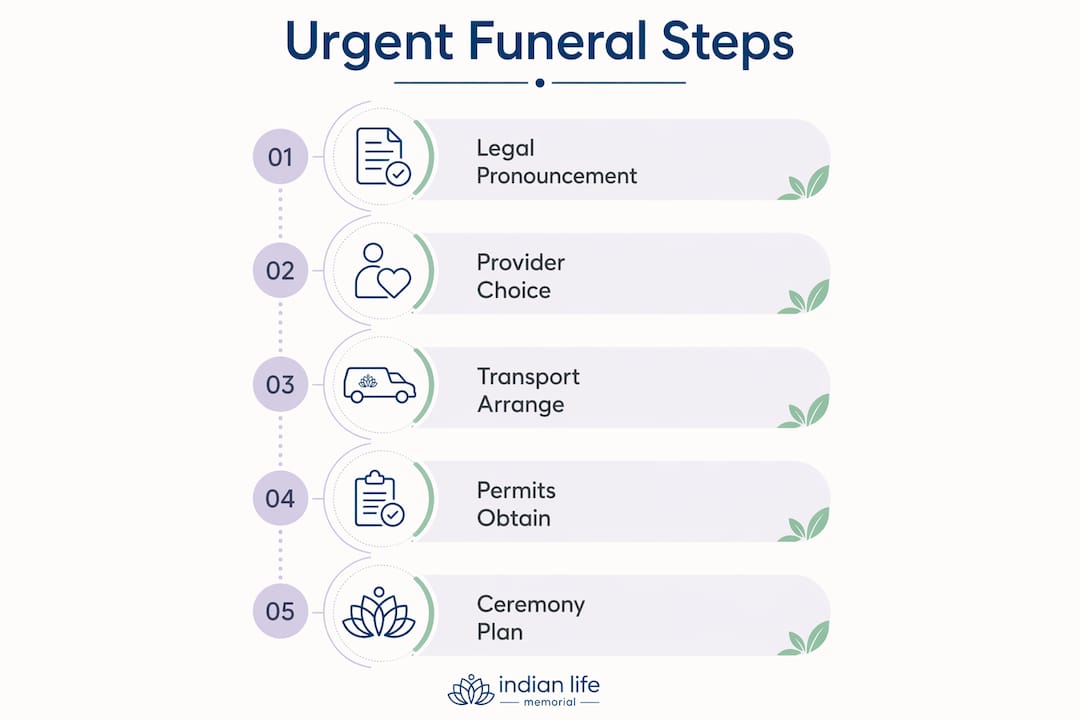
Once the pronouncement is secured, follow these steps in order:
- Contact a funeral home to arrange transportation and take custody of the deceased. You do not need to finalize all services at this point.
- Locate key documents including any will, pre-paid funeral plan, or written funerary wishes. Only about 21% of people have communicated funeral wishes to family, even though 62.5% believe it is important. Finding these documents early reduces both financial and emotional burden.
- Notify immediate next-of-kin and designate one primary family contact. A single point of contact prevents conflicting information and keeps decisions coordinated.
- Secure the deceased's home and belongings, including mail, pets, and valuables.
- Request certified copies of the death certificate early. Most legal and financial processes require multiple certified copies.
- Begin gathering vital statistics such as the deceased's full legal name, date of birth, Social Security number, and place of birth for official documentation.
Families typically have a 24–48 hour window to arrange transport and compare providers before finalizing any decisions. This window exists to allow thoughtful planning, not rushed choices.
Pro Tip: Write down every call you make in the first 48 hours, including the name of the person you spoke with, the time, and what was agreed. This record prevents miscommunication and protects your family if disputes arise later.

How do you choose a funeral provider without overpaying?
Choosing a funeral provider under emotional pressure is one of the most financially consequential decisions your family will make. The right approach is to compare before you commit.
Funeral providers are legally required to provide a General Price List upon request. This list itemizes every service and product, from transportation to embalming to caskets. Request it from every provider you contact before agreeing to anything.
Here is what to look for when comparing providers:
- Itemized cost estimates in writing. A formal written estimate helps you identify hidden fees such as transport surcharges, permit processing fees, or after-hours charges.
- Package versus itemized pricing. Comprehensive funeral service packages often include transportation, permits, floral arrangements, and obituary publication. Bundled packages can reduce total cost compared to selecting each item separately.
- Flexible payment options. Ask whether the provider offers payment plans or accepts insurance assignments.
- Cultural or faith-specific services. Providers who specialize in Hindu, Christian, or multi-faith services bring expertise that generalist providers may lack.
- Availability. Urgent situations require a provider reachable around the clock.
Pro Tip: Never sign a contract at the first meeting. You have the right to take the price list home, compare it with at least one other provider, and return with questions. Reputable funeral homes will not pressure you to decide immediately.
| Consideration | What to Ask |
|---|---|
| Pricing transparency | "Can I have your full General Price List in writing?" |
| Hidden fees | "Are transport, permits, and after-hours fees included?" |
| Cultural expertise | "Do you have experience with Hindu or Indian funeral rites?" |
| Package options | "What does your comprehensive package include?" |
| Payment flexibility | "Do you offer payment plans or insurance assignment?" |
For a detailed breakdown of what fees to expect, the funeral service fees guide from Indianlifememorial covers common cost categories families encounter in Singapore.
What cultural and personal considerations shape funeral decisions?
Cultural and religious traditions are not secondary concerns. For many families, they define the entire structure of the funeral. Addressing them early prevents last-minute complications.
- Identify timing requirements. Hindu tradition, for example, calls for the Antyesti rites and cremation to occur as soon as possible after death, ideally within 24 hours. Christian traditions may allow more flexibility for a viewing or wake before burial. Knowing your tradition's requirements shapes every logistical decision.
- Contact your religious leader immediately. A Pandit for Hindu rites or a pastor for Christian services should be among your first calls. They guide the Samskaras, prayers, and ritual sequence that honor the Atman's transition.
- Review any advance directives. If your loved one left written instructions about faith-based preferences, burial versus cremation, or specific rituals, those wishes take priority. Pre-arranged funeral plans can also specify these details in advance, reducing the burden on grieving families.
- Understand burial versus cremation permits. Cultural preference for cremation or burial affects which permits are required and how quickly they can be obtained. Cremation permits cannot be issued until death registration is complete, so beginning that registration process early is critical.
- Plan for wakes, viewings, or memorial services. Some traditions require a multi-day observance. Coordinate venue, catering, and religious officiant availability as soon as the service type is confirmed.
- Prepare for coroner involvement. If the death was sudden or unexpected, funeral dates may be delayed until the coroner grants official clearance. Build this possibility into your timeline from the start.
Balancing speed with meaning is possible. A measured approach, guided by your family's traditions, produces a ceremony that truly honors your loved one.
How do you manage logistics and permits under time pressure?
Logistics are where urgent funeral planning most often stalls. Knowing the sequence prevents delays.
- Arrange transportation for the deceased. The funeral home typically handles transfer from the place of death to their facility. Confirm this is included in your agreement and get the timeline in writing.
- Register the death officially. In Singapore, death must be registered with the relevant authority before any burial or cremation permit is issued. Begin this process within the first 24 hours wherever possible.
- Obtain burial or cremation permits. These follow death registration and are non-negotiable legal requirements. Your funeral director can often manage this on your behalf.
- Set tentative service dates. Coordinate with your religious leader, venue, and family members in different time zones before confirming any date publicly.
- Arrange supportive services. Floral arrangements, obituary publication, and public notifications each require lead time. Full funeral packages typically bundle these services, reducing the number of vendors your family must manage separately.
- Handle the deceased's home. Arrange mail forwarding, pet care, and home security for the period surrounding the funeral.
- Manage delays proactively. If a coroner is involved or death registration takes longer than expected, communicate updated timelines to all attendees promptly.
| Logistics Task | Responsible Party | Typical Timeline |
|---|---|---|
| Death pronouncement | Medical professional or emergency services | Immediate |
| Death registration | Family or funeral director | Within 24 hours |
| Burial or cremation permit | Funeral director | After registration |
| Service date confirmation | Family and religious leader | Within 48 hours |
| Obituary publication | Funeral director or family | 2–3 days before service |
Early contact with a funeral director, even before death registration is complete, enables preliminary planning and provides emotional reassurance. You do not need to wait for every document to be finalized before beginning conversations.
Key takeaways
Urgent funeral arrangement steps follow a clear legal and logistical sequence that, when handled in order, reduces stress, protects your family's rights, and honors your loved one's cultural and personal wishes.
| Point | Details |
|---|---|
| Legal pronouncement comes first | No funeral arrangements can proceed without an official death pronouncement from a medical authority. |
| Use the 24–48 hour window wisely | This period allows document gathering and provider comparison without rushing into costly commitments. |
| Request itemized pricing in writing | Providers are legally required to supply a General Price List; always compare before signing. |
| Cultural timing shapes every decision | Religious traditions like Hindu Antyesti or Christian wakes directly affect permits, scheduling, and service type. |
| Delegate and document everything | Assign one family contact and keep a written record of every call, agreement, and decision made. |
Why measured planning matters more than speed
Families often feel that every decision must be made within the first hour. That instinct is understandable, but it leads to regret and unnecessary expense.
The 24–48 hour window is your family's legal and practical right. Use it. I have seen families sign contracts with the first provider they called, only to discover later that a more experienced, culturally aligned provider was available at a lower cost. Comparing even two providers, using their written price lists, consistently produces better outcomes.
The most overlooked step in any emergency funeral guide is delegation. Grief is not a solo task. Assign one person to handle provider calls, one to manage family notifications, and one to locate documents. This division prevents the same information from being repeated ten times and reduces the chance of a critical step being missed.
Transparent pricing is not a luxury. It is the foundation of a dignified process. When you know exactly what you are paying for, you can focus on what matters: honoring your loved one with the rituals and care they deserve.
— Admin
How Indianlifememorial supports urgent funeral arrangements
Indianlifememorial provides full-suite funeral services available 24 hours a day, 7 days a week, for families facing urgent arrangements in Singapore. Their team specializes in Hindu and Indian funeral traditions, including experienced Pandits for proper Vedic rites and Antyesti ceremonies, as well as Christian and multi-faith services.

Pricing starts at $1,888 with no hidden fees, and every package is presented with full transparency so your family can plan without financial uncertainty. From transportation and permits to floral arrangements and obituary publication, their service packages cover the full scope of what families need in the first critical days. Reach out to Indianlifememorial today to speak with a compassionate advisor who will guide your family through every step with clarity and respect.
FAQ
What is the very first step after a loved one dies?
The first step is obtaining an official legal pronouncement of death from a medical professional, hospice nurse, or emergency responder. This pronouncement is required before any death certificate can be issued or funeral arrangements can begin.
How long do families have to arrange a funeral?
Families typically have a 24–48 hour window to arrange transport and compare funeral providers before finalizing decisions. This period allows thoughtful planning rather than rushed commitments.
Are funeral providers required to share pricing upfront?
Funeral providers are legally required to provide a General Price List upon request. Always ask for this list in writing before agreeing to any services or signing any contract.
How does cultural tradition affect funeral timing in singapore?
Hindu tradition calls for cremation as soon as possible after death, often within 24 hours, while Christian services may allow additional time for a wake or viewing. Your religious leader should be contacted early to align the service timeline with your tradition's requirements.
What happens if a coroner is involved?
When a death is sudden or unexpected, a coroner may need to investigate before releasing the body. Funeral arrangements can begin, but official service dates must remain tentative until the coroner grants clearance.