
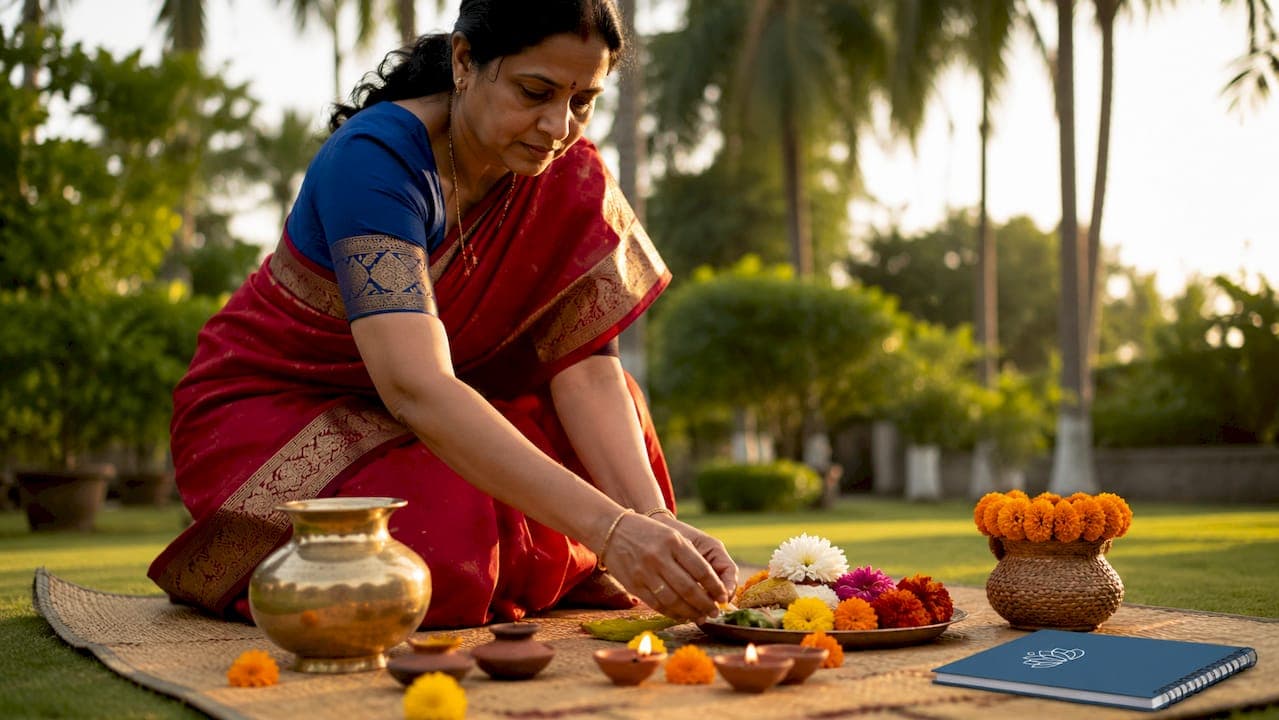
The role of women in Hindu funeral rites is defined by a complex interplay of ancient scripture, regional custom, and evolving family practice. Antyesti, the Sanskrit term for Hindu last rites, has traditionally centered on male performers, particularly the eldest son. Yet women have always held vital responsibilities within these sacred ceremonies, from washing and anointing the body to leading mourning prayers. Understanding where tradition ends and cultural restriction begins is the first step toward honoring your loved one with both respect and accuracy.
What is the role of women in Hindu funeral rites?
Women's roles in Hindu funeral rites are both central and contested. The Antyesti rites form the final Samskara, or life passage, and are ideally performed within 24 hours of death to support the Atman's peaceful transition. Traditionally, the eldest son holds the primary ritual responsibility, including lighting the funeral pyre and performing the kapala Oriya, the act of skull piercing during cremation that is believed to release the departing soul.
Women's participation has historically been shaped more by cultural norms than by scripture. The Vedas and Upanishads do not explicitly prohibit women from performing death rites. What families observe today reflects centuries of regional custom layered over a more flexible scriptural foundation. Recognizing this distinction matters, because it gives families the authority to make informed, compassionate choices.
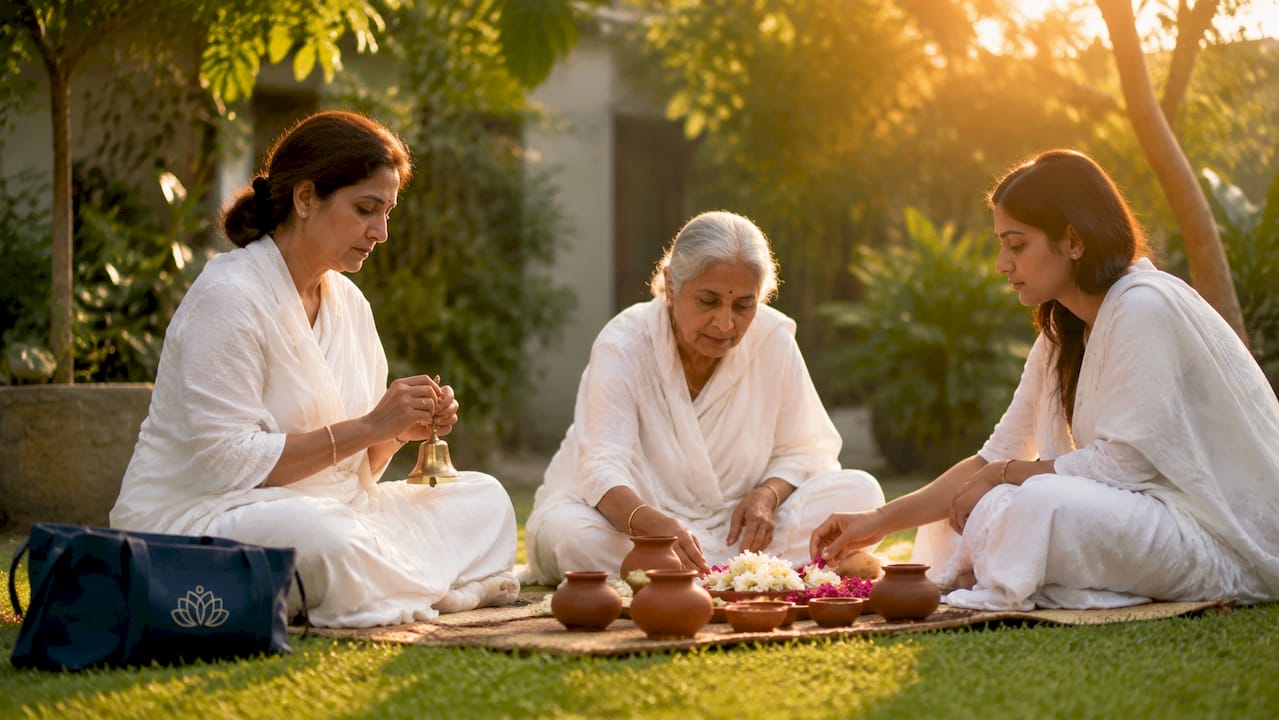
Traditional roles and restrictions for women in Hindu funeral ceremonies
The patriarchal structure of classical Hindu society placed the eldest son at the center of funeral ceremonies. Women were traditionally excluded from the cremation ground and from lighting the funeral pyre. These restrictions were not uniform across all regions or communities, but they were widespread enough to become the default expectation in many Hindu households.
The reasons behind these restrictions are largely protective rather than punitive. Exclusion from cremation grounds was often framed as emotional protection, shielding women from the acute grief of witnessing cremation. Ritual purity concerns also played a role, as certain communities associated the cremation ground with spiritual impurity that could affect women's wellbeing.
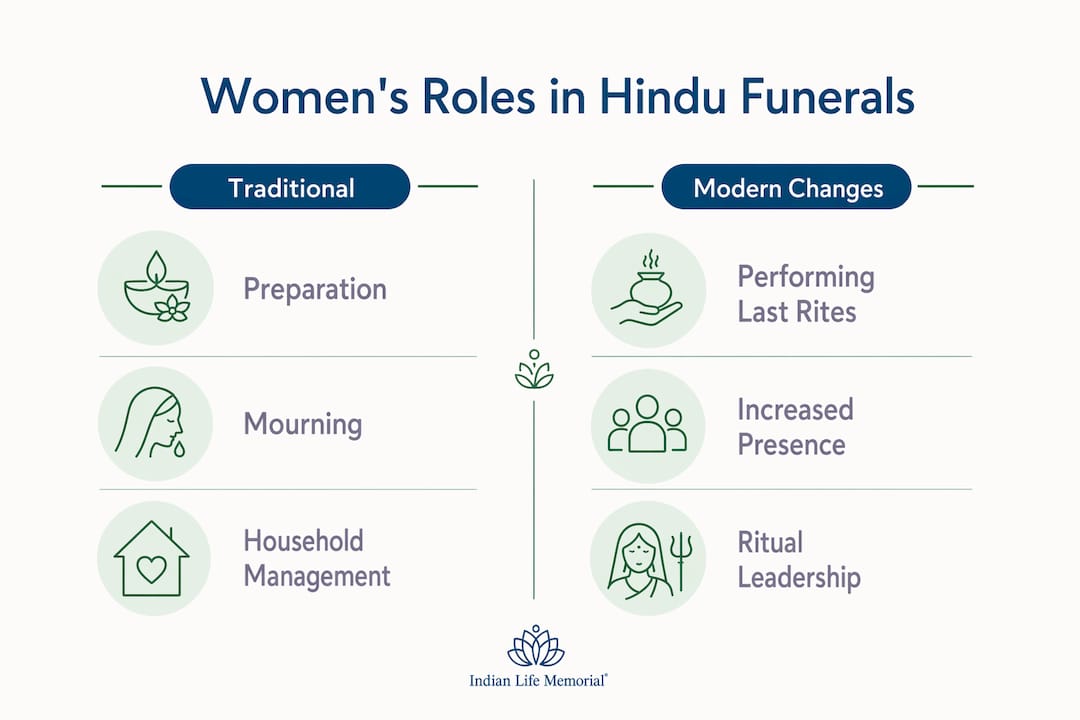
Women's traditional responsibilities concentrated in three areas:
- Body preparation: Women close to the deceased washed, anointed, and dressed the body before the procession began.
- Mourning leadership: Women led lamentation, prayer circles, and the singing of devotional hymns within the home.
- Post-funeral rites: Women organized food offerings, maintained the mourning space, and supported the family through the thirteen-day mourning period known as Terahvin.
Regional variation is significant. South Indian communities, for example, have historically allowed greater female presence at cremation grounds than many North Indian traditions. Diaspora communities in Singapore, the United Kingdom, and North America have adapted further, often welcoming women's full participation across all stages.
Pro Tip: If you are unsure about your family's specific regional customs, consult a Pandit before the ceremony. A knowledgeable priest can clarify which restrictions are scriptural and which are purely cultural, giving your family the confidence to make the right choices.
How do women participate in preparation and mourning rituals?
Women perform the most intimate acts of care in Hindu funeral rites. The ritual bathing of the deceased, known as the preparation rite, is typically carried out by female relatives. They wash the body using panchamrita, a sacred mixture of water, milk, yogurt, ghee, and honey, along with Ganga jal and sandalwood paste. This act is considered a final expression of love and devotion.
The dressing of the deceased carries its own symbolic weight. Married women are traditionally dressed in red or colorful saris, adorned with turmeric and bangles that signify their auspicious marital status. Widows and unmarried women are typically dressed in white. This distinction reflects the Hindu understanding of life stages and the spiritual identity of the deceased at the time of death.
The numbered steps below reflect the typical sequence of women's preparation responsibilities:
- Ritual bathing: Wash the body with panchamrita and sacred water, starting from the head.
- Anointing: Apply sandalwood paste or turmeric to purify and honor the body spiritually.
- Dressing: Clothe the deceased according to marital status and family tradition.
- Adornment: Place flowers, garlands, and symbolic offerings around the body. Guidance on funeral flowers and offerings can help families choose appropriate arrangements.
- Prayer: Lead devotional prayers or bhajans within the home before the procession departs.
Women also serve as the emotional backbone of the mourning household. They coordinate meals, receive visitors, and maintain the sacred space where the body rests. This social and spiritual labor is rarely acknowledged formally, yet it holds the community together during its most vulnerable hours.
Pro Tip: Families who assign specific preparation tasks to female relatives in advance report feeling more organized and less overwhelmed during the ceremony. A brief family meeting the night before can make this coordination much easier.
How are women's roles in Hindu funerals changing today?
Modern Hindu families increasingly allow daughters and female relatives to perform last rites, including lighting the funeral pyre. Women now often lead funeral processions and light the pyre in urban and diaspora contexts, a shift that reflects both theological reconsideration and changing family structures.
The scriptural text Dharmasindhu explicitly permits daughters, widows, or sons-in-law to perform funeral rites when no male heir is present. This provision has become increasingly relevant in smaller families and in communities where sons live abroad. The key principle is Shraddha, meaning sincere devotion and intention, which the texts treat as more important than the performer's gender.
The following factors are driving broader female participation:
- Smaller family units: Families with only daughters or no surviving sons rely on female relatives to lead rites.
- Diaspora adaptation: Indian diaspora communities often adapt practices to local norms and available community support.
- Theological education: Families who study Vedic texts directly are more likely to recognize that gender restrictions are cultural additions, not scriptural mandates.
- Family consensus: The National Association of Funeral Directors affirms that family wishes override tradition, and asking the family directly about women's participation is always appropriate.
The kapala kriya, traditionally performed by the eldest son, is now sometimes carried out by daughters in families that have made a conscious theological choice to prioritize devotion over gender convention. This shift is not a break from Hinduism. It is a return to its scriptural core.
What do Vedic texts say about women performing death rites?
The Vedic foundation for women's participation in death rites is stronger than most families realize. No explicit prohibition exists in the Vedas or Upanishads against women performing Antyesti. The texts consistently emphasize Shraddha, sincere devotion, as the qualifying condition for performing sacred rites.
The Rig Veda offers a particularly striking perspective on widowhood. Rig Veda 10.18.8 actively encourages widows to re-engage with life after cremation, directly contradicting the social marginalization that became common in later medieval practice. This verse has become a touchstone for families and scholars seeking to restore dignity to widows within the funeral context.
Key theological points that inform family decisions today:
- The Dharmasindhu scripture grants daughters and widows full authority to perform rites in the absence of a male heir.
- Shraddha, not gender, determines the spiritual validity of a rite according to ancient texts.
- The Rig Veda's position on widows empowers families to reject outdated stigmas and treat widows with restored dignity.
- Cultural restrictions introduced during medieval periods are not found in the original Vedic corpus.
Understanding this distinction between cultural practice and scriptural mandate gives families a clear foundation. A daughter who lights her father's pyre with full devotion fulfills the Vedic requirement completely. The intention behind the act carries more spiritual weight than the gender of the person performing it.
Key Takeaways
Women's roles in Hindu funeral rites are scripturally flexible, culturally variable, and increasingly inclusive, with devotion rather than gender determining the validity of any sacred act.
| Point | Details |
|---|---|
| Scriptural flexibility | Vedic texts prioritize Shraddha (devotion) over gender; no explicit prohibition on women performing Antyesti exists. |
| Preparation is central | Women traditionally lead body washing, anointing with panchamrita, dressing, and floral offerings. |
| Restrictions are cultural | Exclusion from cremation grounds reflects social custom and emotional protection, not religious mandate. |
| Modern families adapt | Daughters and female relatives now lead cremation rites in many urban, diaspora, and smaller family contexts. |
| Family consensus matters | Consulting a Pandit and reaching family agreement ensures that women's participation is handled with respect and clarity. |
Why tradition and scripture must both be heard
Families often come to me in the days before a funeral carrying two conflicting feelings. They want to honor what their elders practiced. They also want to include a daughter, a widow, or a sister who is the most devoted person in the room. My honest view is that these two desires are not in conflict. They only feel that way because cultural habit has been mistaken for religious law for so long.
The most meaningful funerals I have witnessed are the ones where the family made a conscious, informed choice rather than defaulting to habit. A daughter who lights the pyre because her family studied the Dharmasindhu and chose together is performing a more spiritually grounded act than a distant male relative who performs the rite simply because no one questioned the convention.
What I would tell any family navigating this: read the texts, or ask a Pandit who has. The Vedas are more generous than the customs suggest. Honoring your loved one with full family participation, including the women who cared for them most, is not a departure from Hindu tradition. For many families, it is a return to its truest form.
— Admin
How Indianlifememorial supports families through Hindu funeral rites
Indianlifememorial understands that every Hindu family carries its own balance of tradition and personal conviction, especially when it comes to women's roles in the ceremony.

Indianlifememorial's Hindu funeral services in Singapore are designed to accommodate both classical Vedic rites and modern family decisions, including the full participation of female relatives at every stage. Experienced Pandits guide families through preparation, procession, and cremation with cultural sensitivity and without judgment. Transparent pricing starts at $1,888 with no hidden fees, so your family can focus entirely on honoring your loved one. Explore Indianlifememorial's full suite of funeral packages to find the right support for your family's needs.
FAQ
What is the traditional role of women in Hindu funeral rites?
Women traditionally wash and dress the deceased, lead mourning prayers, and manage the home during the mourning period. Direct participation in cremation, such as lighting the pyre, was historically reserved for the eldest son in many communities.
Can a daughter perform Hindu last rites?
Yes. The scriptural text Dharmasindhu explicitly permits daughters to perform last rites when no male heir is present, with devotion (Shraddha) recognized as the qualifying condition rather than gender.
Are women allowed at Hindu cremation grounds?
Attendance varies by region and family. Women's presence at cremation grounds was traditionally discouraged in some communities for emotional protection, but many modern and diaspora families welcome women's full participation at all stages.
What does the Rig Veda say about widows in funeral rites?
Rig Veda 10.18.8 encourages widows to re-engage actively with life after cremation, directly contradicting later cultural practices that marginalized widows during and after funeral ceremonies.
How should families decide on women's participation in Hindu funerals?
Families should consult a knowledgeable Pandit, review their regional customs, and reach a shared decision together. Family consensus, guided by scriptural understanding, is the most respectful and spiritually grounded approach.