
A wake is an informal gathering centered on personal remembrance and emotional support, while a funeral is a formal, structured ceremony that publicly honors the deceased. The difference between wake and funeral events is primarily one of atmosphere, timing, and purpose. Understanding both helps your family make thoughtful choices during one of life's most difficult moments.
What is the difference between a wake and a funeral?
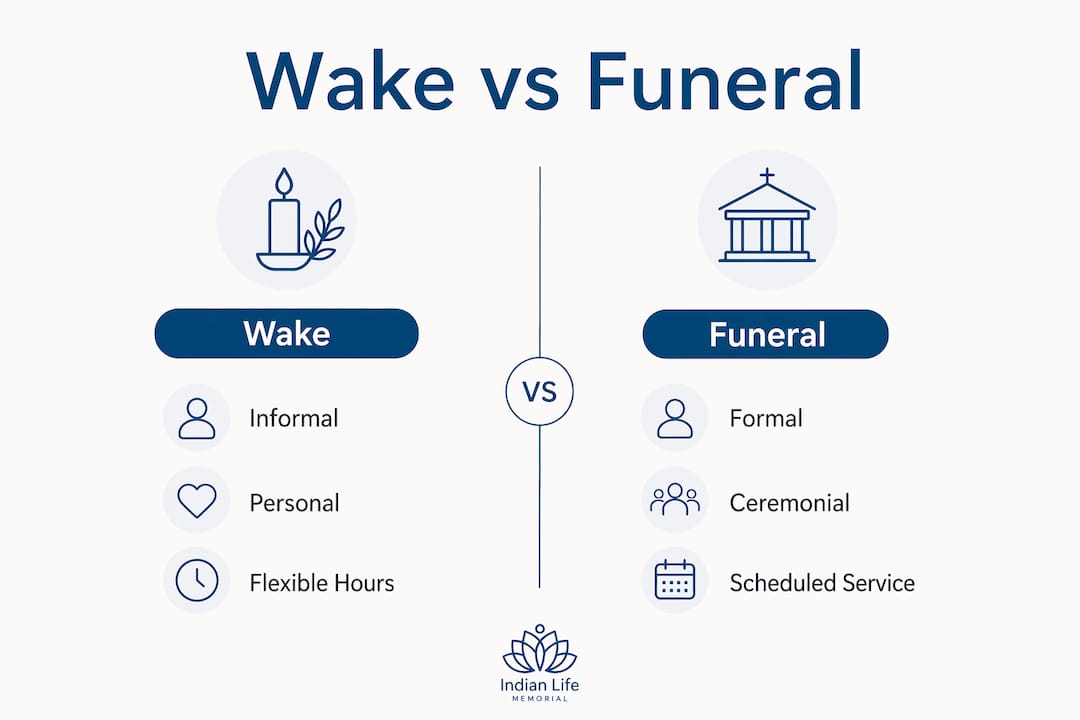
The core distinction is straightforward. A wake is a relational, informal gathering where guests come and go freely, share memories, and offer comfort. A funeral is a scheduled ceremony with a clear beginning and end, typically including readings, eulogies, music, and religious or cultural rites. Wakes almost always happen before the funeral, often the evening prior, while the funeral itself serves as the final, formal tribute.
The distinction centers more on relational support versus formal tribute than on strict religious boundaries. Both events serve the grieving process, but they do so in different ways. Knowing which serves your family's needs is the first step in planning with clarity and confidence.
What happens at a wake?
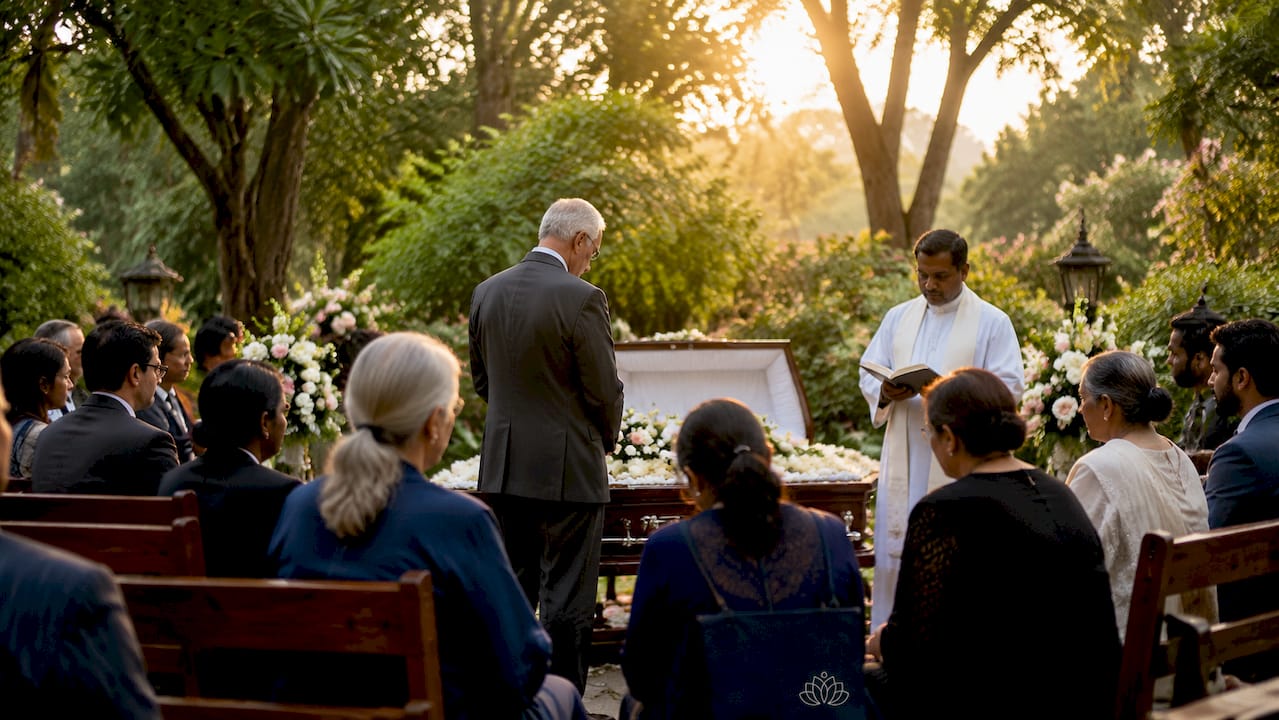
A wake is defined as a communal gathering focused on remembrance, not ceremony. Guests arrive and leave during set hours, speaking freely with family members and sharing personal memories of the deceased. The atmosphere is intentionally relaxed, allowing grief and conversation to flow without the structure of a formal service.
Historically, the word "wake" comes from Old English, meaning "to watch." Early wake traditions involved literally staying awake through the night beside the deceased, rooted in Celtic and Catholic practice. Today, wakes are usually scheduled for a few hours rather than an overnight vigil, but they retain that spirit of watchfulness and communal presence.
Common features of a wake include:
- Open casket or closed casket presence of the deceased, depending on family preference
- Informal conversation among guests, family, and close friends
- Shared memories and condolences offered without a structured program
- Prayers or brief readings in some faith traditions, particularly Catholic vigils
- Flexible timing, ranging from a few hours to a longer evening gathering
- Varied locations including the family home, a funeral parlor, or a community hall
In Catholic tradition, the wake or vigil typically takes place the evening before the funeral Mass, functioning as a spiritual and emotional preparation for the formal ceremony. Other faith communities hold similar pre-funeral gatherings under different names, such as a "visitation" or "viewing."
Pro Tip: Local terminology varies widely. In some regions, "wake," "visitation," and "viewing" are used interchangeably. Always confirm the specific format and schedule with your funeral home or religious leader to set clear expectations for guests.
What happens at a funeral?
A funeral is a formal, structured service honoring the deceased, typically held at a church, chapel, or cemetery. Unlike a wake, attendees are seated and follow a planned order of service, often printed and distributed at the entrance. The ceremony has a defined start time and conclusion.
Funerals carry the weight of public tribute. They bring the broader community together to acknowledge the loss and support the bereaved family in a collective, formal way. The structure provides a sense of closure that an informal gathering cannot fully replicate.
A typical funeral service includes:
- Opening words or prayers by a religious leader, officiant, or celebrant
- Eulogies delivered by family members or close friends
- Readings from sacred texts, poetry, or personal writings
- Music, either live or recorded, chosen to reflect the deceased's life and faith
- Religious or cultural rites, such as Vedic prayers, Christian liturgy, or other faith-specific rituals
- Committal, the final act of burial or cremation, sometimes held at a separate graveside service
The funeral is the main public ceremony. It is where the community formally says goodbye. For families following Hindu traditions, the Antyesti rites and Samskaras performed during this ceremony carry deep spiritual significance, guiding the Atman toward its next transition. A qualified Pandit leads these rites with precision and reverence.
Wake vs. funeral: a side-by-side comparison
Understanding how these two events differ across multiple dimensions helps families plan with confidence. The table below offers a clear comparison.
| Aspect | Wake | Funeral |
|---|---|---|
| Timing | Before the funeral, often the night prior | Scheduled ceremony, usually the day after the wake |
| Formality | Informal, relaxed, conversational | Formal, structured, follows an order of service |
| Atmosphere | Open, personal, grief shared freely | Solemn, reverent, communal tribute |
| Activities | Sharing memories, prayers, condolences | Eulogies, readings, music, religious rites |
| Location | Home, funeral parlor, community venue | Church, chapel, cemetery, or crematorium |
| Attendance style | Guests come and go during set hours | Seated attendees follow a planned program |
| Required? | No, families may choose to skip it | Yes, typically the central memorial event |
It is also worth clarifying three terms that are often confused. A wake is communal and often prayerful, with the body present. A viewing is a scheduled time to see the deceased, sometimes with a closed casket. A visitation is open to all and may not include the body visibly. These distinctions matter when communicating plans to guests.
Regional and cultural variations add another layer. In Singapore, Indian and Hindu families may observe specific pre-funeral rituals that serve the same relational purpose as a wake, even if the terminology differs. Families should follow the guidance of their faith community and funeral service provider for accurate local practice.
How to plan and attend both events thoughtfully
Families are not required to hold a wake. Choosing which ceremonies to include depends entirely on personal preference, cultural tradition, and practical circumstances. Some families find the wake deeply comforting. Others prefer to focus all energy on the funeral itself. Both choices are valid.
When deciding what to hold, consider these factors:
- Family size and geography: A wake gives distant relatives and friends a chance to pay respects before the formal service.
- Cultural or religious expectations: Some faith traditions treat the pre-funeral gathering as spiritually obligatory, not optional.
- Emotional needs of the immediate family: A wake can ease the intensity of the funeral by providing an earlier space for grief.
- Venue availability: Funeral parlors, community halls, and dedicated parlour spaces can accommodate both events with proper coordination.
For cremation, timing becomes more flexible. Cremation allows for visitations before the cremation itself and separate memorial services afterward. This flexibility is increasingly common and allows families to honor their loved one across multiple gatherings without time pressure.
Etiquette guidance for attendees:
- At a wake: Dress respectfully but not necessarily in formal attire. Speak quietly, offer condolences directly to the family, and do not stay longer than feels appropriate.
- At a funeral: Arrive early, silence your phone, follow the order of service, and allow the family to lead in any cultural or religious responses.
Pro Tip: Do not feel pressured to replicate every traditional element. Speak with your funeral home or religious leader about what genuinely serves your family's needs. A meaningful ceremony does not require every convention.
Working with a knowledgeable funeral service provider removes much of the uncertainty. Professionals who understand your faith tradition can advise on which pre-funeral gatherings are customary, how to coordinate timing, and what to communicate to guests. You can learn more about what funeral homes provide to understand the full scope of support available.
Key takeaways
A wake is an informal gathering before the funeral, while a funeral is the formal ceremony that serves as the primary public tribute to the deceased.
| Point | Details |
|---|---|
| Core distinction | A wake is relational and informal; a funeral is structured and ceremonial. |
| Timing sequence | Wakes precede funerals, often held the evening before the formal service. |
| Attendance style | Wake guests come and go freely; funeral attendees follow a seated program. |
| Cultural variation | Terminology and format differ by region, faith, and family tradition. |
| Family choice | Holding a wake is optional; families may choose only a funeral if preferred. |
Why both events deserve equal respect
After working alongside grieving families for years, I have noticed one pattern more than any other. Families who attend both a wake and a funeral consistently describe the wake as the moment they felt most held. The funeral provides structure and closure. The wake provides something harder to name: permission to grieve out loud, without a program telling you when to sit and when to stand.
There is a common misunderstanding that wakes are somehow less important than funerals because they are less formal. That view misses the point entirely. A wake is not a performance but a visit. It creates breathing room for collective grief in a way that a structured ceremony cannot. The two events are not in competition. They are complementary.
I have also seen families skip the wake out of logistical pressure and later wish they had held one. The reverse is almost never true. If your circumstances allow it, the informal gathering before the funeral is worth the effort. It softens what comes next.
For Indian and Hindu families in Singapore, this principle applies with particular depth. Pre-funeral rituals carry spiritual weight beyond social convention. They are part of the Samskaras, the sacred rites that accompany the soul's transition. Treating them as optional formalities misses their true purpose. Prioritize what is meaningful over what is merely convenient.
— Admin
How Indianlifememorial supports your family through both
Planning a wake and a funeral simultaneously is one of the most demanding tasks a grieving family faces. Indianlifememorial provides compassionate, transparent support for families navigating both events, with services tailored to Hindu, Christian, and other faith traditions in Singapore.

From coordinating pre-funeral gatherings to conducting full funeral ceremonies with experienced priests and proper Vedic rites, Indianlifememorial guides your family at every step. Pricing starts at $1,888 with no hidden fees, so you can focus on honoring your loved one rather than managing costs. Explore the full-suite funeral services to see how each element, wake through final rites, can be arranged with clarity and care. You can also review available service packages to find the right fit for your family's needs and traditions.
FAQ
What is the main difference between a wake and a funeral?
A wake is an informal gathering focused on personal remembrance and emotional support, usually held before the funeral. A funeral is a formal, structured ceremony with readings, eulogies, and religious rites that serves as the primary public tribute.
Does a wake always happen before the funeral?
Yes, wakes are almost always held before the funeral, often the evening prior. In Catholic tradition, the wake or vigil directly precedes the funeral Mass the following day.
Is a wake the same as a visitation or viewing?
No. A visitation is typically open to all and may involve a closed casket, while a wake is more communal and often prayerful, sometimes with the body present. A viewing specifically refers to seeing the deceased, with or without a formal gathering.
Do families have to hold a wake?
No. Families are not required to hold a wake. Choosing which ceremonies to include depends on personal preference, cultural tradition, and practical circumstances, and there is no single correct approach.
How long does a wake typically last?
Wakes can range from a few hours to a longer evening vigil, depending on cultural practice and family preference. Modern wakes are usually scheduled with set hours rather than held overnight.