
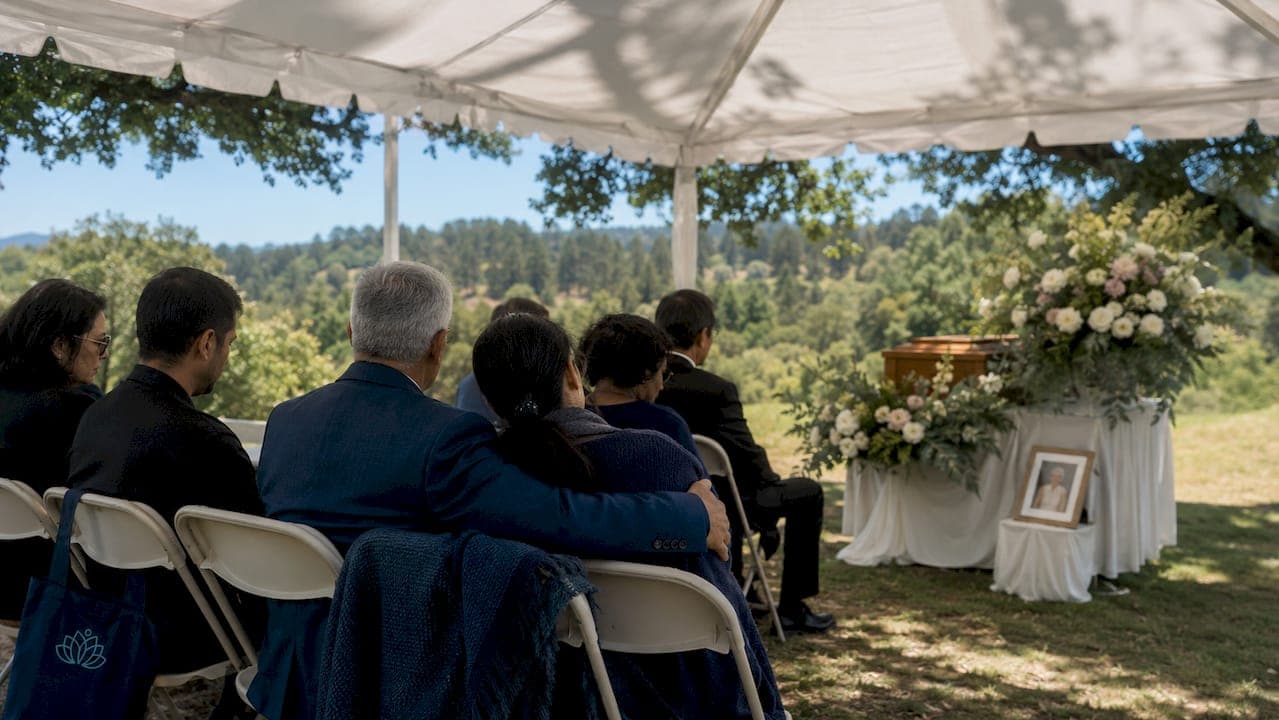
A funeral tent arrangement is the organized setup of a temporary canopy or shelter designed to protect mourners and essential service elements from weather during outdoor memorials and burials. Knowing what is a funeral tent arrangement helps your family plan a dignified, distraction-free service without last-minute surprises. These structures range from compact 3m x 3m gazebos to full marquee-style shelters used in multi-day cultural gatherings. The right tent arrangement preserves solemnity, shields the focal point of the service, and gives every mourner a place of shelter and respect.
What is a funeral tent arrangement and why does it matter?
A funeral tent arrangement is a temporary, engineered structure designed to protect funeral services from weather while preserving dignity and privacy. The word "arrangement" covers more than just the tent itself. It includes the placement of seating, lighting, mats, staging for officiants, and the anchoring system that keeps the structure stable throughout the service.
The core purpose is shelter, but the deeper purpose is solemnity. A well-arranged tent signals to every attendee that this gathering has been prepared with care. Families who arrive to a properly set tent feel supported rather than burdened. That emotional relief matters enormously during grief.
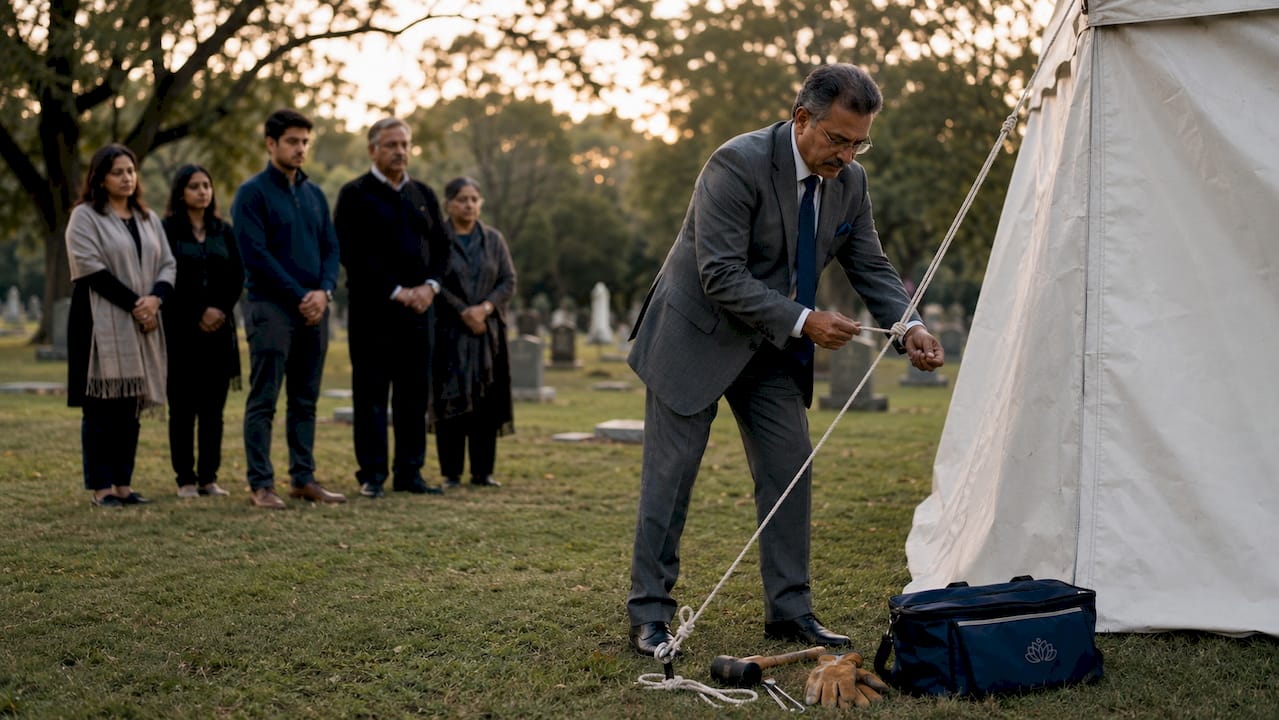
Professional funeral tent setups also address practical safety. Stakes and safety kits with guy ropes can anchor tents to withstand winds up to 100 km/h. That level of stability means the service proceeds without interruption, regardless of weather conditions.
What types of funeral tents should you consider?
Choosing the right tent type depends on three factors: the terrain, the size of the gathering, and the cultural requirements of the service. Each tent category serves a distinct purpose, and selecting the wrong type creates logistical problems that distract from the ceremony.
Common tent types and their ideal uses
| Tent Type | Typical Size | Best Terrain | Ideal Scenario |
|---|---|---|---|
| Gazebo or pop-up | 3m x 3m | Flat, firm ground | Small graveside services |
| Chapel-style | 3m x 6m | Flat, level ground | Standard burial services |
| Roll-around | Variable | Flat, firm ground | Cemetery services with frequent moves |
| Marquee | 6m x 12m and larger | Flat or reinforced ground | Multi-day cultural gatherings |
| Hillside tent | Variable | Uneven or sloped terrain | Hillside cemetery plots |
Flat, level ground suits roll-around or chapel-style tents. Uneven terrain requires hillside tents with adjustable leg systems. Larger marquees accommodate extended family gatherings where guests rotate in and out over several hours.
Cultural context shapes this decision significantly. Marquees used in Tangi ceremonies, for example, serve as multipurpose spaces for extended gatherings that span multiple days. These require flexible configurations that standard chapel tents cannot provide. Indianlifememorial's Hindu funeral services reflect this same principle: the tent arrangement must respect the specific rites being performed, not simply provide overhead cover.
Key factors to evaluate before selecting a tent type:
- Terrain: Confirm whether the ground is flat, sloped, or soft before ordering equipment.
- Guest count: A 3m x 3m gazebo seats roughly 8–12 mourners. Larger gatherings need marquee-scale structures.
- Weather forecast: High-wind or rain conditions demand heavier frames and full sidewall panels.
- Service duration: Multi-hour or multi-day services require sturdier anchoring and weather-resistant materials.
How do you arrange a funeral tent step by step?
A professional funeral tent setup follows a clear sequence. Skipping steps creates instability, poor aesthetics, or safety risks during the service.
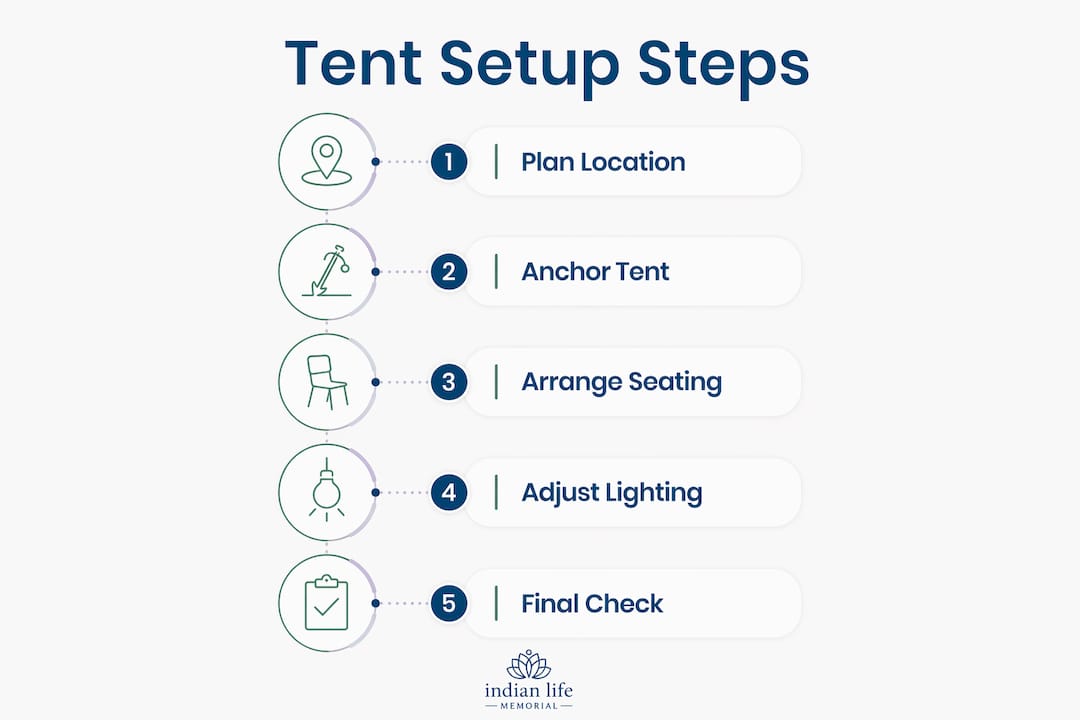
- Site assessment. Walk the ground before any equipment arrives. Check for slopes, soft soil, tree roots, and overhead obstructions. Identify the direction of prevailing winds.
- Tent selection and delivery. Confirm the tent type matches the terrain and guest count. Deliver frames, canopy fabric, sidewalls, and anchoring kits together.
- Frame assembly. Erect the aluminum frame first. Professional-grade small tents can be assembled by 1–2 people in as little as 60 seconds for pop-up designs, or up to 20 minutes for larger chapel-style frames. Frames use heavy-duty aluminum with square or polygonal profiles between 30mm and 55mm in diameter.
- Anchoring. Drive stakes into soft soil at each corner and midpoint. Attach guy ropes and safety kits. Proper anchoring prevents the tent from acting like a sail in high winds.
- Canopy tensioning. Pull the fabric taut across the frame before securing it. A taut roof prevents water pockets from forming during rain. Water pockets add dangerous weight and can collapse a canopy mid-service.
- Interior setup. Lay grass mats, position chairs, place lighting, and arrange the staging area for the officiant or Pandit.
- Focal point placement. Position the urn, casket, or speaker a few steps deeper inside the canopy. This shields them from wind-driven rain without obstructing sightlines.
- Final inspection. Walk the perimeter, check all anchor points, and confirm the canopy is taut and level before guests arrive.
Pro Tip: Orient the tent so wind strikes the side or back of the structure, not the open front. This single adjustment dramatically improves weather protection and keeps the service undisturbed.
How do cultural traditions shape tent arrangements?
Cultural and religious traditions directly influence how a funeral tent is configured, decorated, and used. A tent arrangement that works for one faith community may feel inappropriate or insufficient for another.
Marquees in Tangi ceremonies serve as multipurpose gathering spaces where extended family and community members come and go over multiple days. These tents need open sides, flexible seating layouts, and enough floor space to accommodate rotating groups of mourners. Standard chapel tents are too small and too rigid for this purpose.
Hindu funeral services governed by Antyesti rites require space for the Pandit to perform Vedic rituals, including fire-based ceremonies in some traditions. The tent arrangement must account for ventilation, a clear ritual area, and seating that respects the directional orientation of the ceremony. Indianlifememorial's team understands these requirements and incorporates them into every funeral logistics package they coordinate.
Key cultural considerations for tent arrangements:
- Color and fabric: White or neutral tones suit most traditions. Some communities use specific colors tied to mourning customs.
- Custom printing: Banners or fabric panels can display the name of the deceased, religious symbols, or memorial messages.
- Privacy: Sidewall panels create enclosure for sensitive rites that should not be visible to passersby.
- Directional orientation: Some traditions require the body or altar to face a specific direction. Confirm this before anchoring the tent.
Pro Tip: Speak with the officiant or Pandit before finalizing tent placement. They will identify ritual requirements that affect orientation, ventilation, and interior layout.
What should you include inside a funeral tent?
The interior of a funeral tent arrangement determines how comfortable and dignified the service feels for every attendee. Shelter alone is not enough. The additions inside the tent transform a bare canopy into a respectful memorial space.
Chair placement and lighting contribute significantly to guest comfort and dignity, especially in summer heat or low-light conditions. Reusable grass mats protect the lawn and provide a clean, stable surface for mourners to stand or sit on. These details are not decorative. They are functional and they communicate care.
Recommended additions for a complete tent setup
| Addition | Purpose | Notes |
|---|---|---|
| Folding chairs | Seating for family and guests | Reserve front rows for immediate family |
| Grass mats | Floor protection and clean surface | Reusable; reduces mud and instability |
| LED or halogen lights | Visibility in low light or overcast conditions | Mounted to frame; battery or generator powered |
| Heating or fans | Seasonal comfort | Propane heaters for winter; fans for summer |
| Staging platform | Elevated area for officiant or speaker | Keeps the focal point visible to all guests |
| Sidewall panels | Privacy and wind protection | Full or partial panels depending on need |
Efficient tent and graveside logistics relieve burdens on families and produce calm, distraction-free services. Professional providers handle tent setup, chair placement, mat installation, and post-service cleanup. Families should not be managing these logistics on the day of the service. That responsibility belongs to the funeral team.
Managing guest flow also matters. Place the entrance at the end opposite the officiant's staging area. This keeps arrivals from disrupting the ceremony. Reserve a clear path for pallbearers and ensure accessibility for elderly or mobility-impaired guests.
Key Takeaways
A funeral tent arrangement is defined by the quality of its planning, not just the size of its canopy. Every structural, cultural, and logistical decision shapes the dignity of the service.
| Point | Details |
|---|---|
| Definition matters | A funeral tent arrangement covers the tent, anchoring, seating, lighting, and staging as one coordinated setup. |
| Tent type follows terrain | Match the tent style to ground conditions and guest count before booking rental equipment. |
| Anchoring ensures safety | Stakes, guy ropes, and safety kits protect the structure and the service from wind and weather. |
| Culture shapes configuration | Ritual requirements from traditions like Antyesti or Tangi directly affect tent orientation and interior layout. |
| Interior additions define dignity | Grass mats, lighting, chairs, and staging transform a bare canopy into a respectful memorial space. |
What I have learned from watching families plan tent arrangements
Families consistently underestimate the role of wind direction. They focus on tent size and color, which are visible choices, and overlook orientation, which is invisible until something goes wrong. A tent facing directly into prevailing winds turns the open front into a funnel. Rain soaks the interior, the canopy billows, and the service loses its composure at the worst possible moment.
The second overlooked issue is the focal point placement. Placing an urn or a speaker right at the tent's edge exposes them to wind-driven rain. Moving them two or three steps deeper inside the canopy shields focal points without blocking any sightlines. This is a small adjustment with a large impact on the service's dignity.
The families I have seen navigate this well share one habit: they involve the funeral coordinator in site planning before the day of the service. A site visit, even a brief one, catches terrain problems, wind exposure issues, and access challenges that no amount of phone planning can identify. That one step separates a service that flows peacefully from one that requires constant adjustment during the ceremony itself.
— Admin
How Indianlifememorial supports your funeral tent arrangement
Indianlifememorial provides full-suite funeral services in Singapore that include coordinated tent and site setup for outdoor memorial services and burials. Their team is available 24/7 and manages every logistical detail, from tent selection and anchoring to interior setup and post-service cleanup.

Indianlifememorial's packages are tailored to the specific faith and cultural requirements of each family, with transparent pricing starting at $1,888 and no hidden fees. Whether your family observes Hindu Antyesti rites, Christian burial traditions, or another faith, their coordinators ensure the tent arrangement reflects the solemnity and respect your loved one deserves. Explore their funeral service packages to find the right fit for your family's needs.
FAQ
What is included in a funeral tent arrangement?
A funeral tent arrangement includes the tent structure, anchoring system, interior flooring such as grass mats, seating, lighting, and staging for the officiant. Professional providers also handle delivery, setup, and post-service removal.
How long does it take to set up a funeral tent?
Setup time ranges from 60 seconds for small pop-up designs to 20 minutes or more for larger chapel-style or marquee tents, depending on the crew size and ground conditions.
What types of funeral tents are available for rental?
Common rental options include pop-up gazebos, chapel-style tents, roll-around tents, hillside tents for uneven terrain, and large marquees for multi-day cultural gatherings.
How do I choose the right funeral tent for my family's service?
Match the tent type to your ground conditions, expected guest count, weather forecast, and the cultural or religious requirements of the ceremony. A site visit before the service day resolves most selection questions.
Can funeral tents be customized for cultural or religious ceremonies?
Yes. Tent color, sidewall panels, interior orientation, and custom printed banners can all be adapted to respect specific traditions, including Hindu Antyesti rites, Tangi ceremonies, and Christian burial services.