
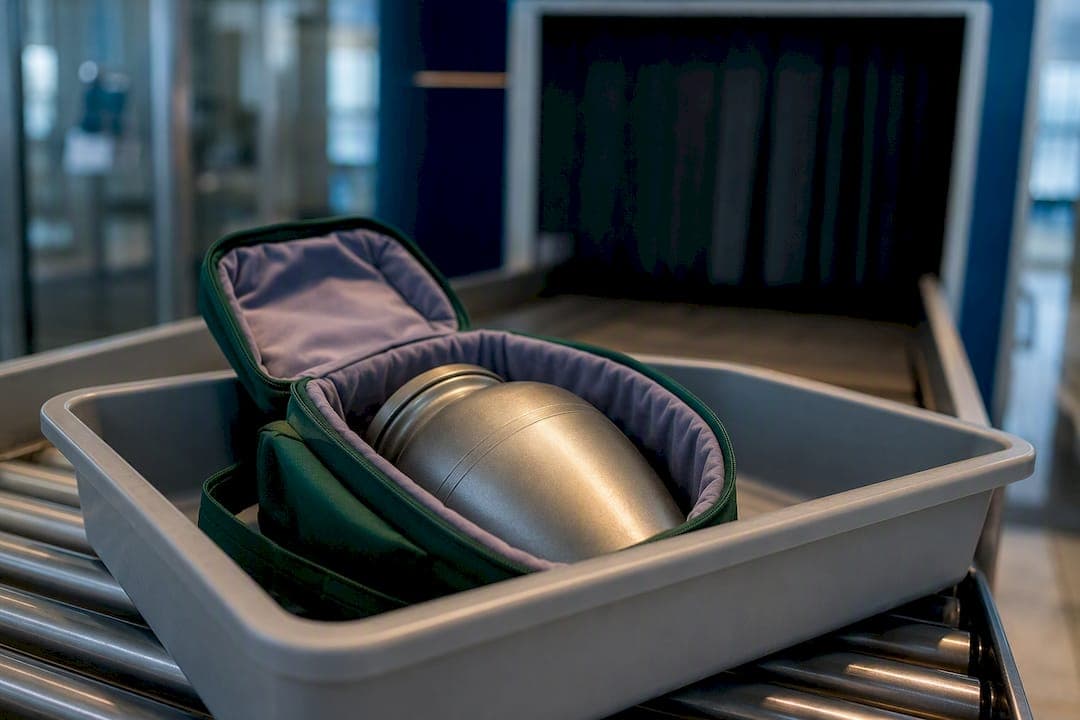
Yes, you can bring ashes on a plane, and most airlines and security agencies allow it in both carry-on and checked baggage. Carry-on is the better choice, and you'll need an X-ray-friendly urn made of wood, plastic, or another non-metallic material. Bring the death certificate and cremation certificate, and call the airline before you travel to confirm their specific rules.
TL;DR:
- Most airlines and security agencies accept cremated remains in carry-on luggage, but the urn must be made of non-metallic, X-ray-friendly materials like plastic, wood, or fiberboard.
- Carrying the urn with you reduces the risk of loss or damage and requires only lightweight, travel-specific containers that fit standard airline size and weight limits.
- Essential documentation includes the original death and cremation certificates, certified translations if needed, and a letter from the funeral home; carry both originals and copies to avoid delays.
- If screened images are unclear, security cannot open sealed urns, so prepare for possible transfer to a clear bag or additional screening, and document the process thoroughly.
- Preparing in advance by confirming airline policies, obtaining a suitable travel urn, and organizing paperwork minimizes last-minute issues at check-in and security checkpoints.
Table of Contents
- What Do Airlines and Security Agencies Require for Ashes on a Plane?
- Which Urns Actually Pass Airport Screening?
- What Documents Do You Need to Fly With Cremated Remains?
- Should Ashes Go in Carry-On or Checked Luggage?
- A Practical Preflight Checklist for Traveling With Ashes
- What Happens If Your Urn Fails Screening?
- How a Funeral Provider Eases the Travel Process
- Get Help With Travel Documentation and Urn Preparation
What Do Airlines and Security Agencies Require for Ashes on a Plane?
Security screening exists to answer one question: can the container be read clearly on an X-ray? That's it. The Transportation Security Administration allows cremated remains in carry-on and checked bags, but officers cannot open a sealed urn to inspect it. If the image comes back opaque or unclear, the container gets refused at the checkpoint, not opened and reexamined.
That single detail shapes everything else about traveling with cremated remains. Since TSA officers won't break a seal, the burden falls entirely on choosing a container that scans clean the first time.
Airlines add their own layer on top of this. There's no universal rule that governs every carrier, which means one airline might accept a checked urn without hesitation while another requires advance notice or specific documentation. A few things worth confirming before you book:
- Whether the airline permits urns in checked luggage at all
- Any documentation the airline wants at check-in
- Extra paperwork required for international connections or customs entry
Flying internationally often adds a customs step at your destination, so build that into your planning early rather than discovering it at the gate.
Which Urns Actually Pass Airport Screening?
Skip anything metal, stone, ceramic, or lead-lined. Funeral practitioners consistently steer families toward lightweight, non-metallic containers because dense materials scatter or block the X-ray image, and a blocked image is an automatic refusal since officers can't open the urn to check by hand.
The safest bets for flying with ashes are:
- Plastic travel urns designed specifically for air travel
- Untreated wood containers
- Cardboard or fiberboard temporary urns
- Certain lightweight polymer containers
Size matters too. Your urn needs to fit comfortably under the seat in front of you or in the overhead bin, and it still counts toward your carry-on weight and dimension limits, so don't treat it as an exception to those rules.
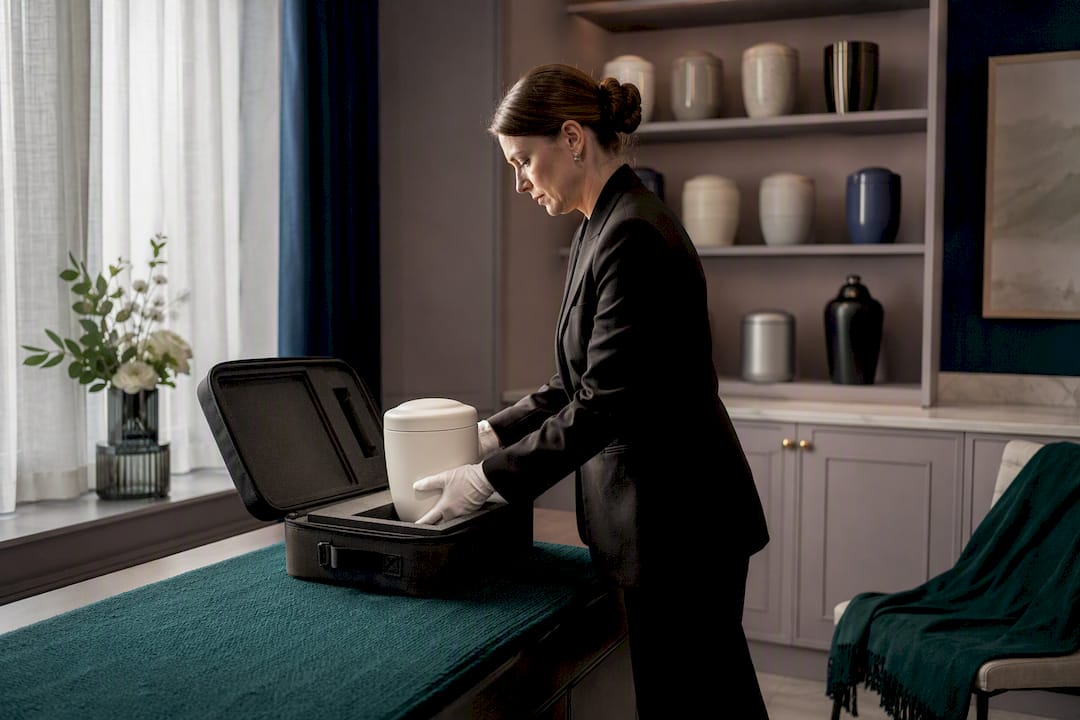
Pro Tip: Ask your crematorium or funeral home for a temporary travel urn before you leave. Many provide one at low cost or no charge specifically because they scan cleanly, and you can transfer the remains to a permanent urn once you've arrived.
What Documents Do You Need to Fly With Cremated Remains?
Carrying the right paperwork prevents the kind of delay nobody wants at a check-in counter or a customs desk. Airlines frequently ask for documentation on international routes, and having it ready, rather than scrambling for it, keeps the process moving.
- Death certificate. Bring the original plus at least one copy.
- Cremation certificate. This confirms the container's contents and is often requested alongside the death certificate.
- Certified translations. If either document isn't in English, get certified translations done in advance, especially for international travel.
- A letter from the funeral home or crematorium. This should certify what's inside the urn and include contact information in case an airline or customs officer wants to verify it.
- Destination entry requirements. Check with the embassy or consulate for your destination country, since documentation required for international repatriation can vary depending on where you're headed and whether you're crossing borders with the remains.
Keep both originals and copies. Airport staff sometimes need to retain a copy, and you don't want to hand over your only certified document.
Should Ashes Go in Carry-On or Checked Luggage?
Carry-on is the stronger choice, and it isn't close. Keeping the urn with you means it never leaves your sight, which eliminates the risk of lost baggage, rough handling, or a container getting crushed under heavier luggage in the cargo hold.
Not every airline accepts checked urns, either. Some carriers refuse them outright, so confirm the policy before you book rather than finding out at the counter.
If checking the urn is unavoidable:
- Use rigid, cushioned packaging that can absorb impact
- Pack copies of your death and cremation certificates inside the case
- Photograph the urn and its contents before you hand it over
- Label the outside clearly with contact information
A checked urn that gets lost is a far heavier loss than a delayed suitcase, so treat the packaging with that in mind.
A Practical Preflight Checklist for Traveling With Ashes
A little preparation days before your flight prevents most of the problems that show up at security. Work through this sequence:
- Call the airline 48 to 72 hours before departure. Confirm their urn policy and note the name of the representative you spoke with. Calling this early gives you time to adjust plans if the airline has restrictions you didn't expect, and having a name on record helps if a last-minute exception is needed.
- Get a temporary travel urn. Request one from the crematorium or funeral home if you haven't already.
- Organize your documents. Keep death certificates, cremation certificates, and any translations in one accessible folder.
- Pack the urn near the top of your carry-on. This makes it easy to access if a screening officer wants a closer look.
- Photograph the urn and its seals before you leave home, in case questions come up later about its condition.
At the checkpoint, tell the officer calmly what you're carrying and hand over documents if asked. Officers who handle cremated remains regularly appreciate the heads-up, and it keeps the interaction brief and respectful.
What Happens If Your Urn Fails Screening?
If the X-ray image comes back unclear, security won't open the urn to resolve it. Instead, you're usually looking at two immediate options: transferring the remains into a clear bag if the checkpoint allows it, or accepting additional screening, such as an explosive swab test, before the container is cleared or checked as luggage.
Whatever happens, document it. Note the time, the officer's name if possible, and photograph the container before it's checked or transferred. Having copies of your certificates on hand speeds up the resolution considerably.
If screening problems persist or you're moving a larger volume of remains, consider alternatives:
- Shipping remains through an approved postal or air freight service built for handling cremated remains
- Carrying a small keepsake portion instead of the full amount, and shipping the rest separately
- Verifying customs rules at your destination before shipping internationally, since requirements shift from country to country
How a Funeral Provider Eases the Travel Process
Families rarely think about air travel logistics until they're staring at a checklist days before a flight. Part of what we do at Indianlifememorial is remove that guesswork before it becomes a problem at the airport.
We prepare certified documentation, including cremation certificates and death certificates, in the formats airlines and consulates actually expect. We also help select travel-appropriate urns that clear screening without complications, and when a flight involves international connections, we coordinate directly with airlines and consulates so families aren't left making calls from an airport gate. For families arranging a scattering ceremony afterward, we can also walk through what post-funeral ash scattering looks like once the remains arrive at their destination.
— Admin
Get Help With Travel Documentation and Urn Preparation
Sorting out airline policies, certified paperwork, and the right travel urn is a lot to manage while grieving. Indianlifememorial handles this for families directly, so you're not calling three departments the week of a flight to figure out what documents you need.

We prepare certified cremation and death certificates in the formats airlines and consulates require, source travel-appropriate urns that pass screening without issue, and liaise directly with airlines and consulates when a flight crosses borders. If your family needs to transport remains overseas rather than fly with them, our team can also walk you through how overseas body shipment works as an alternative route. For readers weighing the cost of repatriation logistics against insurance coverage, it's also worth reviewing funeral insurance guidance to understand what's typically covered.
Reach out through our full-suite funeral and repatriation services page to arrange documentation, urn selection, and airline coordination before your flight, so the only thing you need to focus on is getting your loved one home.