
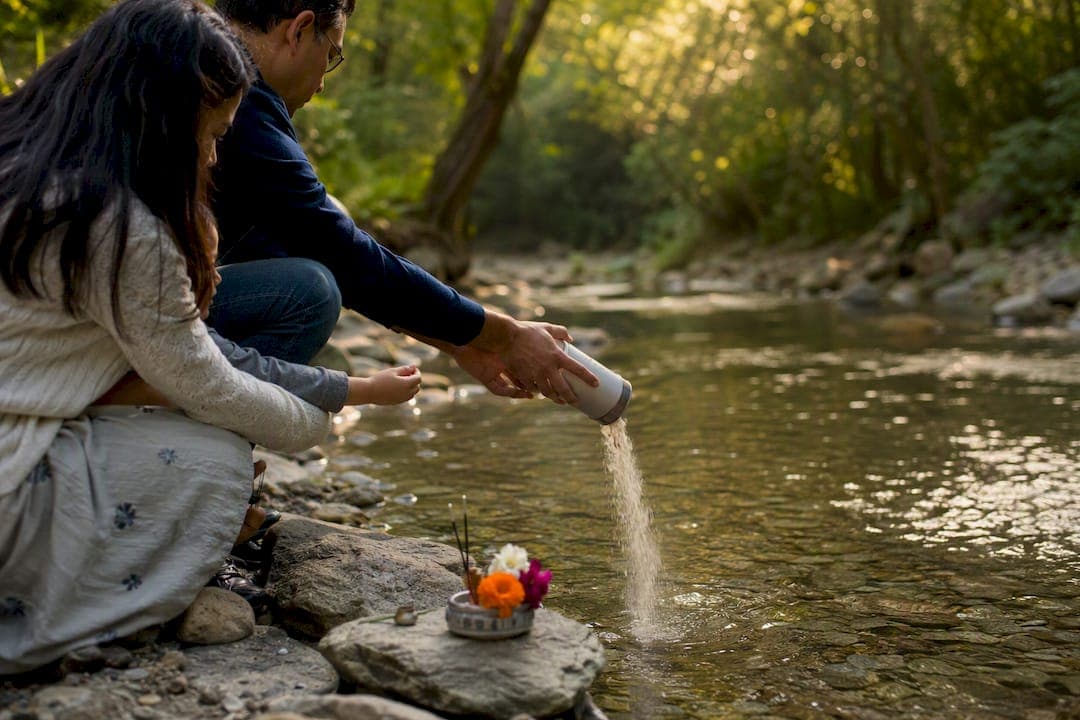
Post-funeral ash scattering is the ceremonial release of cremated remains into an outdoor setting, land, water, or a memorial garden, as a final act of honoring and saying goodbye to a loved one. Ashes are generally sterile organic matter, but local environmental rules and landowner permissions still need to be checked before you go ahead.
A few quick facts to orient you:
- Common places: private land, public parks, memorial gardens, and open water
- Common methods: hand scattering, scatter tube release, and biodegradable water urns
- Common practice: many families set aside a small portion of ashes before scattering the rest
Table of Contents
- Why Families Choose Ash Scattering
- What Legal and Religious Rules Should You Check First?
- What Are the Main Methods for Scattering Ashes?
- When Should You Hold a Scattering, and What Logistics Matter?
- How Do You Plan a Meaningful Scattering Ceremony?
- Are There Environmental or Safety Concerns With Scattering Ashes?
- What Are the Alternatives if You Want a Place to Visit?
- How Indianlifememorial Can Help With Scattering and Memorial Planning
- A Note From Indianlifememorial
- Plan Your Family's Scattering Ceremony With Confidence
- Useful Sources for Further Reading
- Plan a Scattering Ceremony With Local Guidance and Fixed Pricing
- Frequently Asked Questions
Why Families Choose Ash Scattering
Scattering is, at its core, a symbolic act of letting go. It returns a loved one's remains to a place that mattered to them, a favorite coastline, a hiking trail, a garden they tended for decades, rather than confining that connection to a single fixed site.
Families choose it for different reasons. Some are guided by spiritual beliefs about the soul's journey after death. Others simply prefer a ritual that feels lighter than a permanent grave marker, one that mirrors how the person actually lived. Personalization matters here more than convention: playing a favorite song, reading a passage the deceased loved, or choosing the exact hillside where they proposed marriage all turn a scattering into something specific rather than generic. Grief counselors and funeral practitioners generally encourage this kind of flexibility, noting that a ritual tailored to the individual helps families process loss more fully than a rigid, one-size-fits-all script.
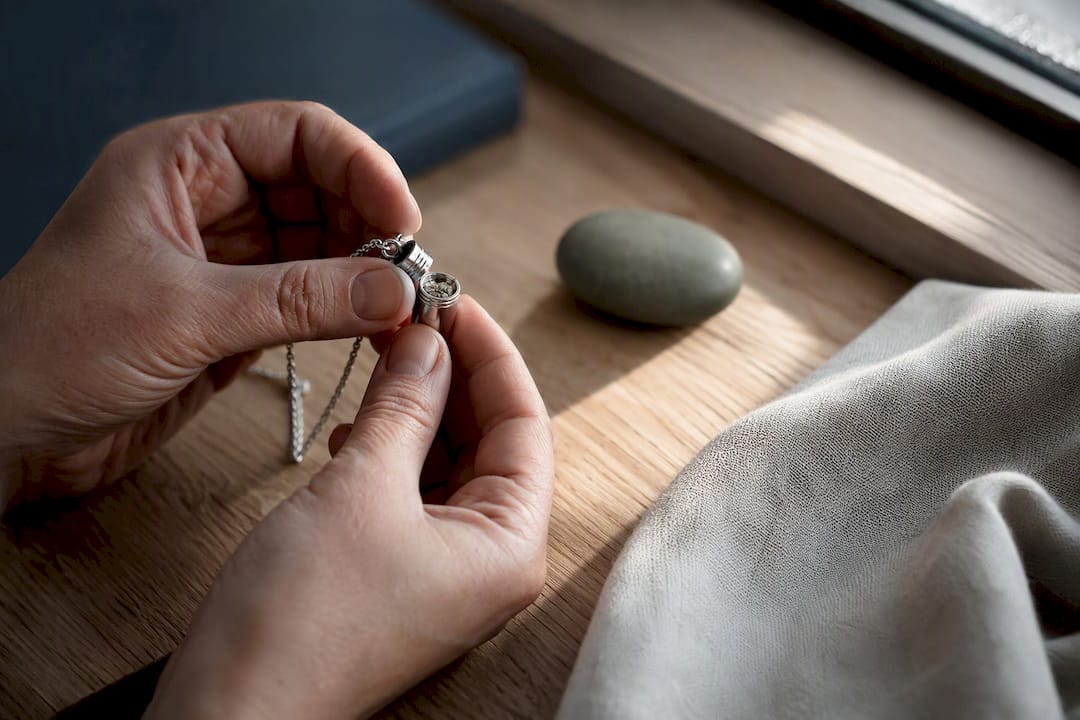
Pro Tip: Set aside a teaspoon or two of ashes before the ceremony. Families often use this small portion for keepsake jewelry, a second scattering location, or a future memorial, and there's no way to undo a full scattering once it's done.
What Legal and Religious Rules Should You Check First?
Rules for scattering ashes vary by jurisdiction and by the specific site, so always confirm local guidance before you plan a ceremony. A public park has different requirements than private land, and open water carries its own set of maritime restrictions.
Before scattering, check:
- Landowner consent if scattering on private property that isn't your own
- Park or nature reserve permits, since many public green spaces restrict scattering without prior approval
- Marine distance-from-shore rules, which regulate how far out a boat must travel before ashes can be released into open water
- Airspace safety, relevant only if a family is considering an aerial scattering service
Faith matters just as much as law here. Some religious traditions embrace scattering as central to their funeral rites, while others discourage it entirely and prefer interment instead. Ask directly about your family's own religious preferences rather than assuming everyone agrees.
A simple pre-scattering checklist:
- Call the relevant authority (park office, marine authority, or reserve management) to confirm current rules.
- Bring any required permits or written landowner consent to the site.
- Confirm who, as executor or next-of-kin, has legal authority to approve the scattering.
What Are the Main Methods for Scattering Ashes?
Most scatterings fall into a handful of categories: hand scattering (casting), scatter tube or urn release, trenching along a beach, raking into a memorial garden, and water release using a biodegradable urn. Specialist aerial or boat charter services exist too, though they're less common.
Each method suits a different setting:
- Hand scattering (casting): works well in an open field or hillside; walk a slow arc while releasing ashes so they spread evenly rather than falling in one heap.
- Scatter tube release: a purpose-made tube gives you more control than tipping an urn directly, letting ashes flow at a steady, dignified pace.
- Trenching or beaching: on sand, dig a shallow groove below the high-tide line, place the ashes, and let the tide handle the rest.
- Raking in a memorial garden: many gardens have a dedicated scattering area where staff rake ashes into the soil after the family departs.
- Water release: use a biodegradable water urn designed to dissolve, which keeps the process contained and respectful compared to loose ashes on open water.
Where you scatter often dictates the method. A backyard or private garden works for simple hand scattering. A public park usually requires the site's approved method and permission. A beach calls for tide timing. Open water needs a boat and marine clearance. A mountaintop or trail demands attention to footing and wind.
Pro Tip: Check wind direction before you begin, and consider passing the scatter tube between family members so each person gets a turn. It slows the moment down and prevents ashes from blowing back onto mourners.
When Should You Hold a Scattering, and What Logistics Matter?
There's no required deadline for scattering ashes. Many families wait weeks or months, giving themselves time to grieve and allowing relatives living overseas or interstate the chance to travel and take part.
A practical planning sequence looks like this:
- Decide who will attend and confirm travel plans early.
- Reserve any transportation, including a boat charter, if scattering at sea.
- Set aside a portion of ashes before the ceremony if any family members want to keep some.
- Verify permissions and permits are still valid for your chosen date.
- Build in a weather backup plan, especially for outdoor or coastal locations.
Executor responsibilities matter here too. Whoever holds legal authority over the remains, usually the next-of-kin or named executor, should document the deceased's wishes if they exist, and confirm consent among immediate family before finalizing plans.
A few practical handling tips:
- Transport ashes in a sealed, spill-proof container.
- Bring gloves and a spare scatter tube in case of mishaps.
- Pack small keepsake containers if splitting ashes among relatives.
How Do You Plan a Meaningful Scattering Ceremony?
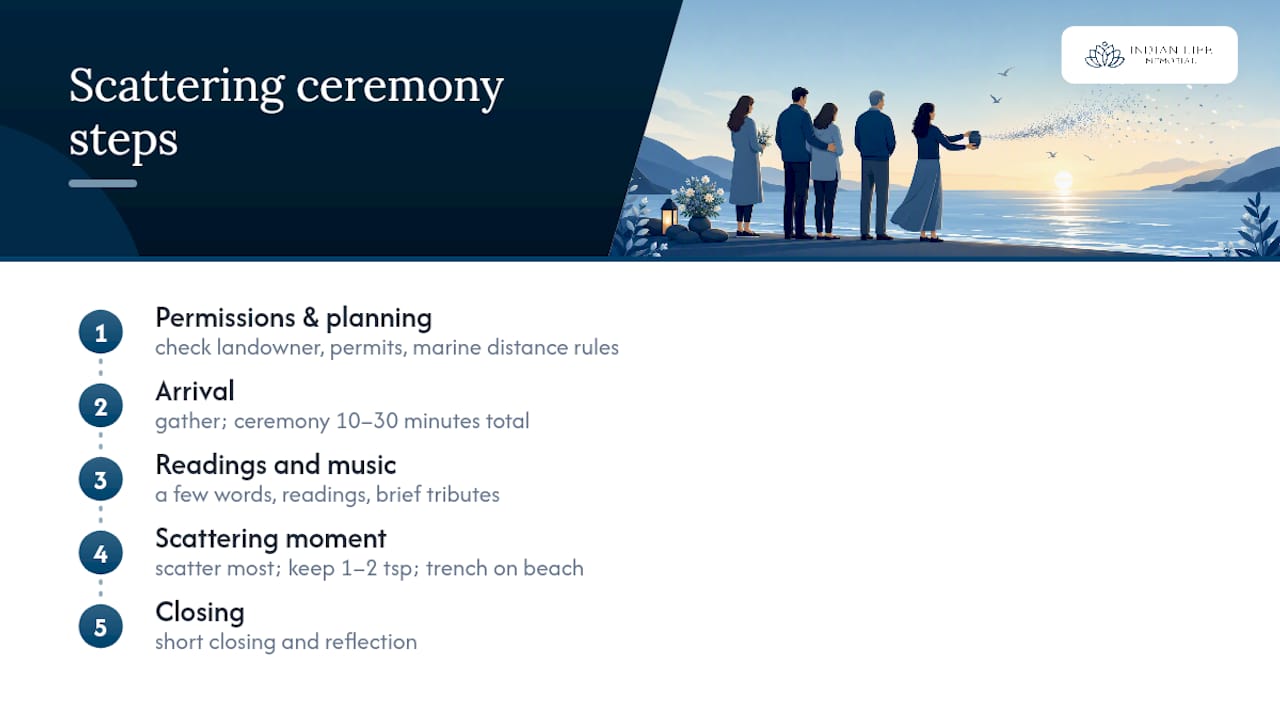
Most scattering ceremonies run for a brief period and work best with a simple structure: arrival, a few words or a reading, the scattering moment itself, and a short closing. Overplanning tends to work against the moment rather than for it.
A basic script might include:
- A brief welcome and explanation of why this location was chosen
- A short reading, poem, or piece of music that meant something to the deceased
- A clear scattering cue ("Let's say goodbye together now")
- A closing line or moment of silence before everyone disperses
Involve everyone present, not just one designated person. Small toasting cups, a shared memory spoken aloud, or passing the scatter tube hand to hand all give mourners a role rather than leaving them as spectators. Think about accessibility too: seating for elderly relatives, parking near the site, and stable footing for anyone with mobility concerns.
Pro Tip: Keep it simple. A brief, well-structured ceremony with a clear beginning and end usually feels more complete than an elaborate one that tries to cover too much ground.
Are There Environmental or Safety Concerns With Scattering Ashes?
Ashes are generally sterile and pose low biological risk, but environmental care and physical safety both still matter on the day. A little preparation prevents most problems before they start.
Environmental considerations to keep in mind:
- Avoid scattering near drinking-water sources or reservoirs.
- Choose a biodegradable water urn if scattering at sea, rather than loose ashes or a non-degradable container.
- Respect wildlife habitats and any protected natural areas.
Safety basics matter just as much:
- Stand upwind before releasing ashes.
- Avoid slippery rocks, unstable cliff edges, or steep drop-offs.
- Plan for a calm, controlled release rather than rushing the moment.
Pro Tip: Toss a small handful of dry sand or grass into the air before you begin. It confirms wind direction instantly and saves you from an awkward, ash-covered surprise.
What Are the Alternatives if You Want a Place to Visit?
If scattering feels too final, several alternatives give families a physical place to return to. A columbarium niche offers a permanent, visitable location without the space and cost of a traditional burial plot. Burying an urn in a cemetery plot works similarly, with more tradition attached. Planting a memorial tree ties remembrance to something living and growing. Keepsake urns and cremation jewelry let family members carry a small physical connection with them daily. Memorial benches or plaques in parks, with proper permission, offer a public spot for reflection.
Many families combine approaches: scattering most of the ashes while keeping a small portion for a keepsake service or a second, smaller memorial. Before deciding, visit potential sites, compare costs, and talk through preferences as a family so nobody feels left out of the decision.
How Indianlifememorial Can Help With Scattering and Memorial Planning
Indianlifememorial supports families through planning, permits, and culturally sensitive ceremony arrangements, whether you're scattering ashes, choosing a keepsake, or combining both. Our team can help coordinate timing, arrange boats or locations where required, and provide scatter tubes or biodegradable water urns so the day goes smoothly.
Services families commonly ask for include:
- Guidance on Asthi Visarjan and other faith-specific ash ceremonies
- Coordination of transport, permits, and site logistics
- Keepsake urns and jewelry for families who want to retain a portion of ashes
- Transparent, upfront pricing across all packages
To get started, reach out with the deceased's cremation details and your preferred location or ceremony style on hand, our team will walk you through the rest.
A Note From Indianlifememorial
Every family grieves on its own timeline, and every faith tradition approaches ash scattering differently. We built our practice around meeting families where they are, offering culturally aware guidance without rushing anyone toward a decision they aren't ready to make. Scattering can happen whenever your family feels ready, and professional support is available the moment you want it.
Plan Your Family's Scattering Ceremony With Confidence
Post-funeral ash scattering works best when families combine clear legal checks, a simple ceremony structure, and honest conversations about keeping a portion of ashes before the moment arrives.
| Point | Details |
|---|---|
| Definition | Post-funeral ash scattering is the ceremonial release of cremated remains outdoors to honor and say goodbye. |
| Check rules first | Confirm landowner consent, park permits, or marine distance rules before scattering anywhere. |
| Choose your method | Hand scattering, scatter tubes, and biodegradable water urns each suit different locations. |
| Keep a portion | Many families set aside ashes for keepsakes or a second memorial before scattering the rest. |
| Get support | Indianlifememorial offers planning, permits, and culturally sensitive scattering ceremonies with transparent pricing. |
Useful Sources for Further Reading
- NEA guidance on ash storage and scattering: — covers safety and regulatory basics for inland scattering.
- Scattering-Ashes.co.uk method guides: — detail specific how-to steps for common scattering methods.
- Funeral.com ceremony and symbolism guides: — offer readings, music ideas, and etiquette background.
Always confirm current rules with your local authority before finalizing a scattering plan.
Plan a Scattering Ceremony With Local Guidance and Fixed Pricing
Indianlifememorial handles the permits, transport, and ceremony details that a scattering day actually depends on, so your family isn't left calling park offices or marine authorities on your own. We coordinate boats or garden access when required, supply scatter tubes and biodegradable water urns, and arrange culturally sensitive rites, including Hindu and Indian ceremonies with qualified priests, alongside the scattering itself.

Packages start at $1,888 with no hidden fees, and every step is explained upfront so you know exactly what to expect before committing. If your family is weighing scattering against a columbarium niche or another permanent option, our team can walk through both during the same consultation. Browse our full-suite funeral packages or view transparent pricing options to see what fits your family's needs, then reach out to schedule a consultation whenever you're ready.
Frequently Asked Questions
What is post-funeral ash scattering? It's the ceremonial release of cremated remains into an outdoor setting, land, water, or a garden, as a final way to honor someone and say goodbye. Families often personalize it with readings, music, or a meaningful location.
Do you need permission to scatter ashes? Often yes. Private land requires the landowner's consent, public parks may require a permit, and open water has marine distance-from-shore rules. Always check with the relevant local authority first.
How much ash should you scatter versus keep? There's no fixed rule. Many families scatter most of the ashes while setting aside a teaspoon or two for keepsake jewelry, a second location, or a future memorial.
What's the best method for scattering at the beach? Trenching, digging a shallow groove below the high-tide line, is common, since the tide handles the rest naturally. Check tide timing beforehand to avoid ashes washing back toward mourners.
How long should a scattering ceremony last? Most run 10 to 30 minutes with a simple structure: arrival, a few words, the scattering moment, and a short closing. Brief and clear tends to feel more complete than elaborate.
This article is general information, not a substitute for advice from a qualified lawyer. Consult a qualified legal professional about your own circumstances before acting on anything here.