

Choosing between funeral home services and DIY funeral arrangements comes down to three core trade-offs: cost, control, and the weight of responsibility your family is prepared to carry. Professional funeral homes offer regulated, logistically complete support, while home funeral arrangements give families deeper personal involvement and potential cost savings at the price of significant legal and practical burdens.
Here is a quick side-by-side of the key dimensions:
- Personalization: DIY arrangements offer nearly unlimited customization; funeral homes increasingly offer flexible, personalized packages.
- Cost savings: DIY can reduce expenses by avoiding facility fees and professional markups; funeral homes carry higher base costs but include comprehensive services
- Professional support: Funeral homes provide licensed directors, paperwork management, and regulatory compliance; DIY families handle all of this themselves
- Legal and logistical burden: DIY arrangements require families to obtain death certificates, permits, and manage body care; funeral homes handle all of it
- Emotional support: Funeral directors are trained to guide grieving families; DIY planning places that weight entirely on the family
- Scheduling flexibility: Home vigils allow unlimited time with the deceased; funeral home services operate on structured, time-bound schedules
Neither path is universally better. The right choice depends on your family's emotional readiness, budget, local laws, and how much direct involvement you want in honoring your loved one.
Table of Contents
- Why some families choose DIY funeral arrangements
- What professional funeral home services provide
- Cost and legal considerations when comparing your options
- Emotional and practical trade-offs between DIY and professional arrangements
- How to decide between DIY funerals and funeral home services
- How a blended approach can honor both intimacy and compliance
- Step-by-step process of organizing a DIY funeral
- Common mistakes to avoid in DIY funerals
- Resources and support available for DIY funeral planners
- What a typical funeral home package includes
- How long does a funeral take: DIY vs funeral home timelines
- Indianlifememorial offers compassionate, transparent funeral care
- Key Takeaways
Why some families choose DIY funeral arrangements
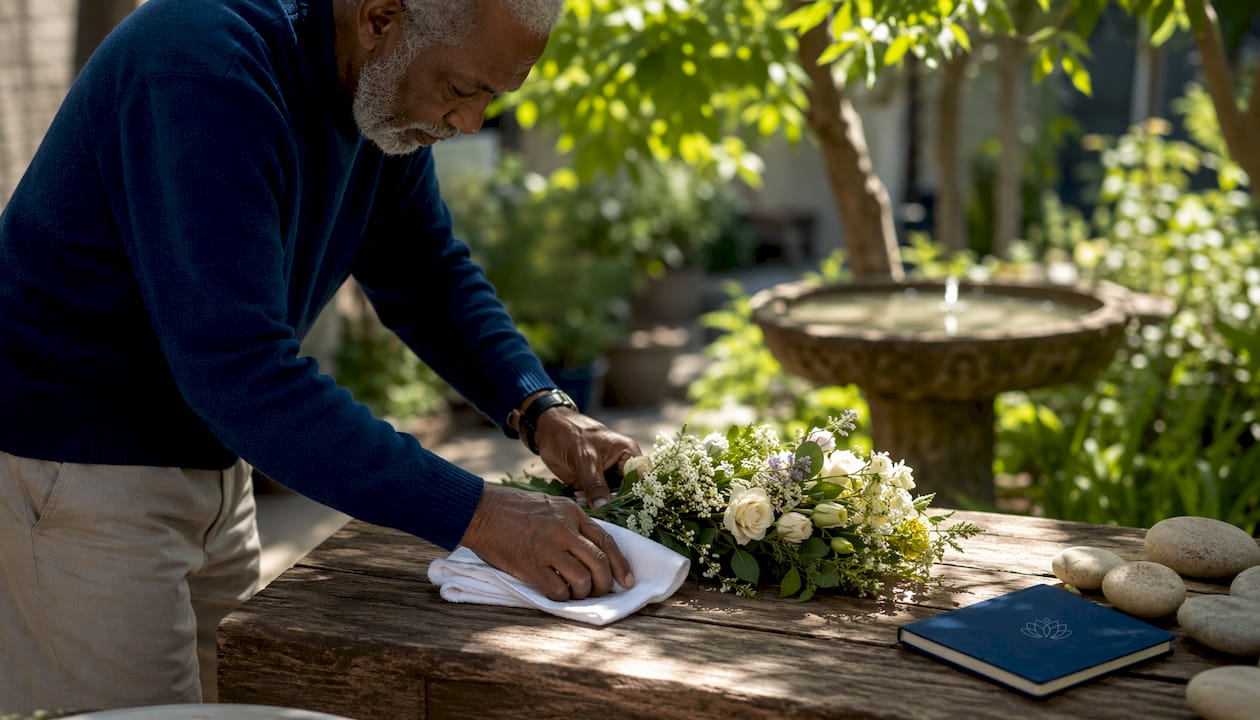
The appeal of arranging a funeral yourself is real, and for many families it goes beyond saving money. Direct involvement in preparing and honoring a loved one can feel deeply therapeutic, turning grief into purposeful action rather than passive waiting.
The core advantages include:
- Full personalization: You choose every detail, from the location and music to the rituals and the pace of the gathering
- Cost savings: Avoiding funeral home facility fees, embalming charges, and service markups can reduce overall expenses considerably
- Unlimited time: A home vigil allows your family to spend as much time as needed with the deceased, without the clock pressure of a scheduled service
- Therapeutic involvement: Many families report that hands-on participation in washing, dressing, and sitting with the deceased helps them process grief more naturally
- Cultural and religious authenticity: Families following specific traditions, including Hindu Antyesti rites or other faith-based practices, can observe every detail without compromise
The challenges are equally real. Body preservation requires active management, particularly in warm climates. Dry ice is a commonly used and relatively affordable option, typically costing $100–$300, but it demands careful temperature monitoring to prevent accelerated decomposition. Permits, death certificates, and transport authorizations must be secured by the family, often under significant time pressure.
Pro Tip: Before committing to a fully DIY approach, contact your county or state health department to confirm which permits you need and whether your state requires a licensed funeral director for any part of the process. Requirements vary widely across the United States, and missing a single permit can delay burial or cremation.
What professional funeral home services provide
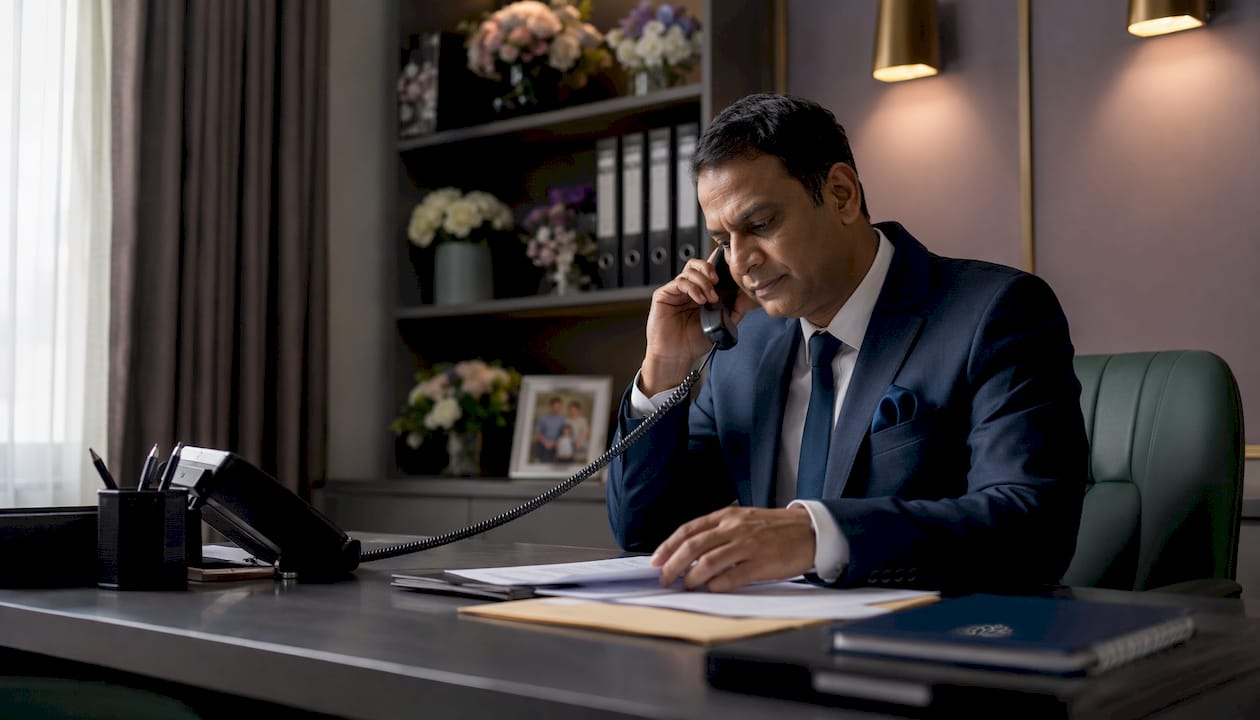
A licensed funeral director does far more than coordinate a ceremony. They manage a web of legal, logistical, and emotional tasks that most families have never encountered before, often under tight timelines.
Key advantages of professional funeral home services include:
- Regulatory compliance: Funeral directors know state-specific laws governing body transport, embalming requirements, and disposition permits
- Paperwork management: Death certificates, burial permits, and cremation authorizations are handled by the funeral home
- Comprehensive service packages: Modern funeral homes offer everything from body preparation and transport to ceremony coordination and grief counseling referrals
- Emotional relief: Entrusting legal and practical tasks to a trusted professional frees your family to focus on mourning and supporting one another
- Personalized options: Many funeral homes now offer customizable services that blend professional expertise with meaningful personal touches, honoring loved ones in ways that feel authentic to the family
A note on professional scope: Funeral costs with viewing and burial in the United States typically run several thousand dollars, reflecting the breadth of services a full-service funeral home provides. Families who understand what is included, and what they can decline, are far better positioned to make cost-conscious decisions.
Joe Pray of Funeral.com has noted that modern funeral homes are moving away from one-size-fits-all packages, recognizing that families want professional support without surrendering personal meaning. That shift has made professional funeral home services more accessible and more flexible than they were a generation ago.
Cost and legal considerations when comparing your options
Money and law are the two factors that most often determine which path a family takes. Understanding both before you decide prevents costly surprises.
Cost components to account for:
- Basic service fee (funeral home's non-declinable charge)
- Embalming or refrigeration
- Body transport (from place of death to funeral home or home)
- Casket or alternative container
- Burial plot or cremation fee
- Venue or facility use
- Death certificates (multiple certified copies are typically needed)
- Permits for burial, cremation, or transport
The FTC Funeral Rule is the most important consumer protection law in this space. It requires funeral homes to provide an itemized price list upon request, and it prohibits bundling services you have not agreed to purchase. You have the legal right to buy only what you need, whether that is transport alone or a complete package. Families who request an itemized price list and compare it against their actual needs often find they can reduce costs significantly without managing anything themselves.
For DIY arrangements, the legal picture is more complex. Every U.S. state has its own rules about who can handle a deceased person's body, which permits are required, and whether a licensed funeral director must be involved at any stage. Some states permit families to act as their own funeral directors; others require professional involvement for transport or cremation. Researching your state's specific statutes before making any decisions is not optional.
Pro Tip: Ask any funeral home you contact for their General Price List before discussing services. The FTC Funeral Rule requires them to provide it. Reviewing it line by line helps you identify which services you genuinely need and which you can decline or handle yourself.
Emotional and practical trade-offs between DIY and professional arrangements
Grief does not follow a schedule, and the path you choose for funeral planning will shape how your family experiences the days immediately following a loss.
- Emotional burden of DIY planning: Coordinating permits, body care, and ceremony logistics while grieving is genuinely demanding. Without professional guidance, family members may find themselves managing administrative tasks at the very moment they most need to be present with one another.
- Flexibility of home arrangements: A home vigil allows your family to gather without time limits, hold private rituals at your own pace, and create a farewell that feels entirely personal.
- Professional emotional support: Funeral directors are trained to guide families through decisions calmly and compassionately. That steadiness can be invaluable when grief makes clear thinking difficult.
- Time demands: A DIY funeral requires someone in the family to take ownership of every task. That person carries a disproportionate burden during an already painful time.
- Family dynamics: Disagreements about how to honor a loved one are common. A funeral director can serve as a neutral, experienced voice when family members hold different views.
The practical reality is that most families are not prepared for the physical and logistical demands of a home funeral. That does not make it the wrong choice, but it does mean going in with clear expectations and a realistic assessment of who in your family can take on which responsibilities.
How to decide between DIY funerals and funeral home services
The decision rarely comes down to a single factor. Most families weigh several considerations at once, and the right answer is genuinely different for different households.
Key questions to ask your family:
- What is your realistic budget, and what does it cover?
- Does your state permit families to act as their own funeral directors?
- How much direct involvement does your family want in the physical care of the deceased?
- Do you have the time, energy, and organizational capacity to manage permits and logistics while grieving?
- Are there cultural, religious, or personal traditions that require specific arrangements?
- Would a blended approach, handling some tasks yourselves while delegating others, serve your needs better than either extreme?
Steps to vet a funeral home:
- Request the General Price List before any conversation about services
- Ask specifically which services are legally required versus optional
- Confirm whether the funeral home has experience with your faith tradition or cultural practices
- Check licensing with your state's funeral regulatory board
For families leaning toward a DIY approach, connecting with a home funeral guide or a death midwife early in the process can prevent costly mistakes. These professionals offer guidance without taking over, helping families stay legally compliant while maintaining personal control.
Pro Tip: A blended approach is often the most practical middle ground. You can hold a private home vigil and then contract a licensed funeral home solely for transport, paperwork, and disposition. This preserves personal intimacy while ensuring legal compliance.
How a blended approach can honor both intimacy and compliance
The choice between fully DIY and fully professional is a false binary for most families. A blended approach, where families manage the personal and ceremonial aspects themselves while delegating legal and logistical tasks to professionals, has become one of the most practical options available.
Under the FTC Funeral Rule, this is entirely legal and explicitly supported. Families can hold a home vigil for as long as they need, then contract a licensed funeral home solely for transport, paperwork, and final disposition. You pay only for what you actually use.
Practical steps for a blended arrangement:
- Hold a private home vigil with family and close friends
- Manage body preservation with dry ice or a cool environment during the vigil period
- Contact a licensed funeral home to handle transport and permit filing
- Coordinate the ceremony yourself, including music, readings, and rituals
- Request only the specific services you need from the funeral home, using the itemized price list
"Many families want the intimacy of a home funeral alongside the assurance that everything is handled correctly. A blended approach gives them both. The family holds the sacred space; the professionals handle the compliance." — Funeral planning guidance reflecting the FTC Funeral Rule's consumer protections
This model works particularly well for families with strong cultural or religious traditions, such as those observing Hindu Samskaras or other faith-specific rites, where the ceremony itself carries deep meaning and professional involvement in the ritual would feel intrusive.
Step-by-step process of organizing a DIY funeral
A well-organized home funeral follows a clear sequence. Skipping steps or changing the order can create legal complications.
- Confirm state laws before anything else. Verify whether your state requires a licensed funeral director for any part of the process.
- Obtain the death certificate. A physician or medical examiner must sign it. You will need multiple certified copies for legal and financial purposes.
- Secure a burial or cremation permit. Your local vital records office or health department issues this. It must be obtained before the body is moved or disposition takes place.
- Arrange body care. Wash and dress the deceased according to your family's traditions. Begin dry ice preservation if the vigil will last more than a day, monitoring temperature carefully.
- Plan the ceremony. Choose the location, invite attendees, prepare readings, music, and any faith-specific rituals.
- Arrange transport. If you are transporting the body yourself, confirm your state's vehicle and container requirements. Some states require a specific type of container.
- Complete disposition. Burial requires a grave permit and coordination with the cemetery. Cremation requires a licensed crematory, even in states that permit family-directed funerals.
- File final paperwork. Submit the death certificate to the relevant county office and notify Social Security, financial institutions, and other relevant parties.
For families managing this under time pressure, a last-minute planning guide can help prioritize which tasks are most time-sensitive.
Common mistakes to avoid in DIY funerals
Most errors in home funeral planning come from underestimating the legal complexity or the physical demands of body care.
- Skipping permit research: Moving a body without the correct permits can result in legal penalties and delays. Confirm requirements with your county health department before the body is moved.
- Inadequate body preservation: Warm temperatures accelerate decomposition rapidly. Dry ice must be replenished regularly and placed correctly to maintain safe temperatures throughout the vigil.
- Underestimating the timeline: Permits, death certificates, and disposition arrangements take time. Starting the process immediately after death, not after the vigil, prevents last-minute crises.
- Overlooking multiple death certificate copies: Banks, insurance companies, and government agencies each require a certified copy. Order more than you think you need upfront.
- Assuming all states have the same rules: Funeral law varies significantly by state. What is permitted in one state may require professional involvement in another.
- Neglecting grief support: The person coordinating the DIY funeral often has little time to grieve. Plan for that person to receive support after the arrangements are complete.
Resources and support available for DIY funeral planners
You do not have to navigate home funeral planning without guidance. A growing network of organizations and professionals supports families who choose this path.
The National Home Funeral Alliance is the primary U.S. organization supporting families who want to care for their own dead. It offers state-by-state legal guides, a directory of home funeral guides, and educational resources for families at every stage of planning.
Death midwives and home funeral guides are trained professionals who support families through the home funeral process without taking over. They advise on body care, permits, and ceremony without replacing the family's central role.
State vital records offices are the authoritative source for permit requirements, death certificate procedures, and disposition rules in your state. Their websites are the most reliable starting point for legal research.
Hospice organizations often have staff familiar with home death care and can provide referrals to local home funeral guides, particularly for families whose loved one died at home under hospice care.
Funeral homes offering unbundled services can be a resource even for families planning primarily DIY arrangements. Under the FTC Funeral Rule, you can contract a funeral home for a single service, such as transport or cremation, without purchasing a full package.
What a typical funeral home package includes
Understanding what funeral homes actually provide helps families assess whether the cost reflects genuine value for their situation. A full-service funeral package typically covers:
- Basic service fee: The funeral home's non-declinable charge covering overhead, staff time, and coordination
- Body preparation: Embalming, washing, dressing, and cosmetic preparation for viewing
- Transport: Transfer of the deceased from the place of death to the funeral home, and from the funeral home to the place of disposition
- Facilities use: Viewing rooms, chapel space, and reception areas
- Ceremony coordination: Scheduling, officiant coordination, music, and program preparation
- Casket or urn selection: Funeral homes offer a range of options at varying price points
- Death certificates: Funeral homes typically file for and obtain certified copies on the family's behalf
- Grief support referrals: Many funeral homes connect families with counselors or support groups
- Cremation or burial coordination: Liaison with the crematory or cemetery, including all required permits
Modern funeral homes increasingly offer à la carte pricing, allowing families to select only the services they need. Requesting an itemized price list at the outset is the most effective way to keep costs aligned with your actual needs.
How long does a funeral take: DIY vs funeral home timelines
Timing is one of the most underappreciated differences between the two approaches.
Funeral home timeline: Most funeral homes can complete arrangements within 3–5 days of death, including body preparation, permit filing, and ceremony coordination. For families who need to gather from out of town, this timeline can often be extended with refrigeration. The funeral home manages the time-sensitive tasks, so the family's primary role is making decisions, not executing them.
DIY funeral timeline: A home funeral can begin immediately after death, with no waiting period for transfer to a funeral home. The vigil can last as long as the family needs, typically 1–3 days with proper body preservation. However, the family must complete all permit and paperwork tasks within the legal timeframes set by their state, which are often 24–72 hours for certain filings. Missing these windows can delay disposition and create legal complications.
The practical difference: Funeral homes compress the administrative timeline because they handle it professionally. DIY arrangements give the family more control over the ceremonial timeline but require someone to manage administrative deadlines simultaneously. For families with a designated, organized person who can take on that role, the DIY timeline can feel more natural and less rushed. For families without that capacity, the funeral home's structured timeline often provides genuine relief.
Indianlifememorial offers compassionate, transparent funeral care
Families who want the assurance of professional guidance without surrendering personal meaning will find a clear path with Indianlifememorial. Rather than choosing between a fully managed funeral and carrying every burden alone, Indianlifememorial provides transparent, faith-sensitive services with honest pricing starting at $1,888 and no hidden fees, so your family knows exactly what to expect at every stage.

Indianlifememorial specializes in Hindu and Indian funeral traditions, including proper Vedic rites and experienced Pandits, but serves families of all faiths with the same care and cultural sensitivity. Every service is structured around what your family actually needs, not a bundled package designed around convenience for the provider. Whether you are honoring a loved one through Hindu funeral rites or another faith tradition, the team handles permits, transport, and ceremony coordination while keeping your family at the center of every decision. To review transparent package options and take the next step, visit the funeral service packages page.
Key Takeaways
The most practical choice for most families is a blended approach: personal involvement in the ceremony and vigil, with professional support for legal compliance, permits, and transport.
| Point | Details |
|---|---|
| FTC Funeral Rule protects you | You have the legal right to request an itemized price list and buy only the services you need. |
| DIY costs less but demands more | Home arrangements can reduce expenses by avoiding facility fees, but require the family to manage permits, body care, and logistics. |
| Dry ice preservation costs $100–$300 | Body preservation during a home vigil requires active monitoring, especially in warm conditions. |
| Blended approach is legally supported | Families can hold a home vigil and contract a funeral home solely for transport and paperwork under the FTC Funeral Rule. |
| Indianlifememorial offers transparent pricing | Packages start at $1,888 with no hidden fees, covering faith-sensitive services for families who want professional support without uncertainty. |