
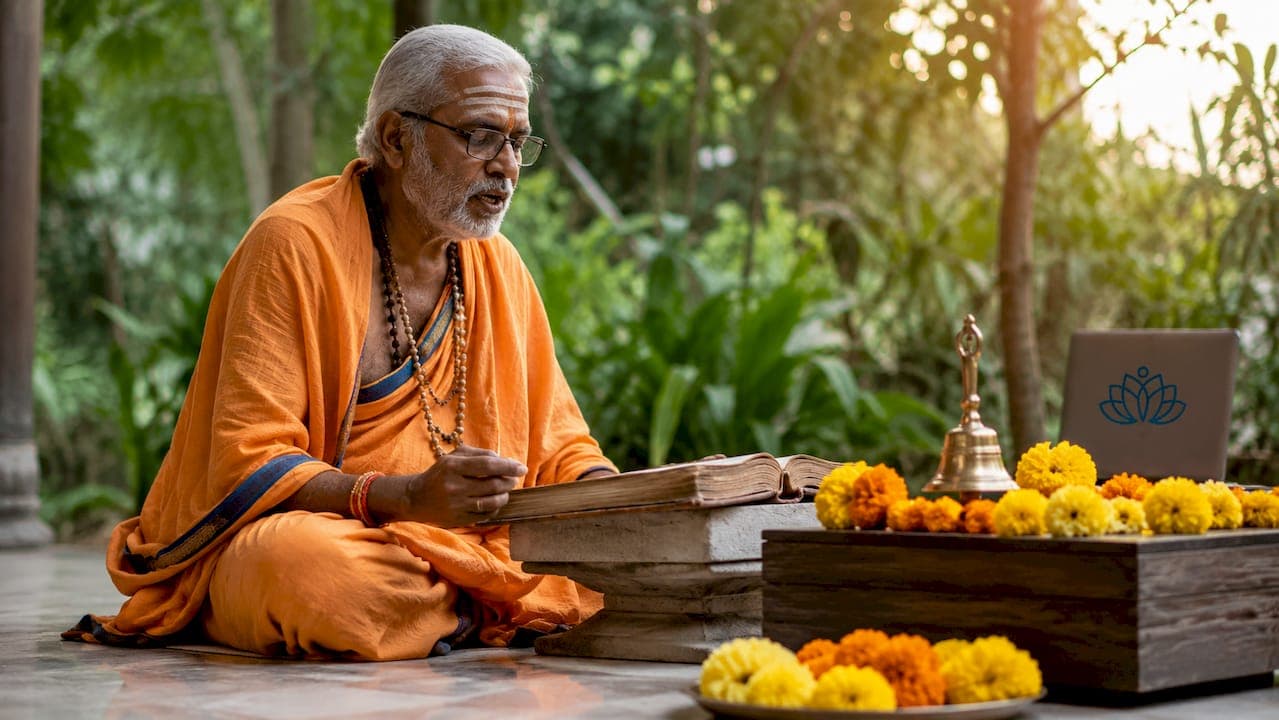
Hindu funeral prayers and mantras are sacred chants defined as Vedic invocations used to guide the Atman (soul) toward peaceful transition and to comfort the bereaved. The practice of chanting during Hindu last rites, formally known as Antyesti, draws from texts including the Bhagavad Gita, Garuda Purana, and ancient Vedic hymns. The most recognized mantras include the Maha Mrityunjaya, Gayatri Mantra, Om Namah Shivaya, and Hare Krishna chants, each serving a distinct spiritual purpose. Understanding the types of Hindu funeral prayers and mantras helps your family honor your loved one with the right rites at every stage of mourning.
1. The most powerful Hindu funeral mantras and their meanings
The Maha Mrityunjaya Mantra is the most widely used chant in Hindu death rituals. Its name translates to "the great death-conquering mantra," and priests recite it to help the soul release attachment to the physical body. The mantra addresses Lord Shiva directly, asking him to free the soul from the cycle of death as a ripe fruit falls from its vine.
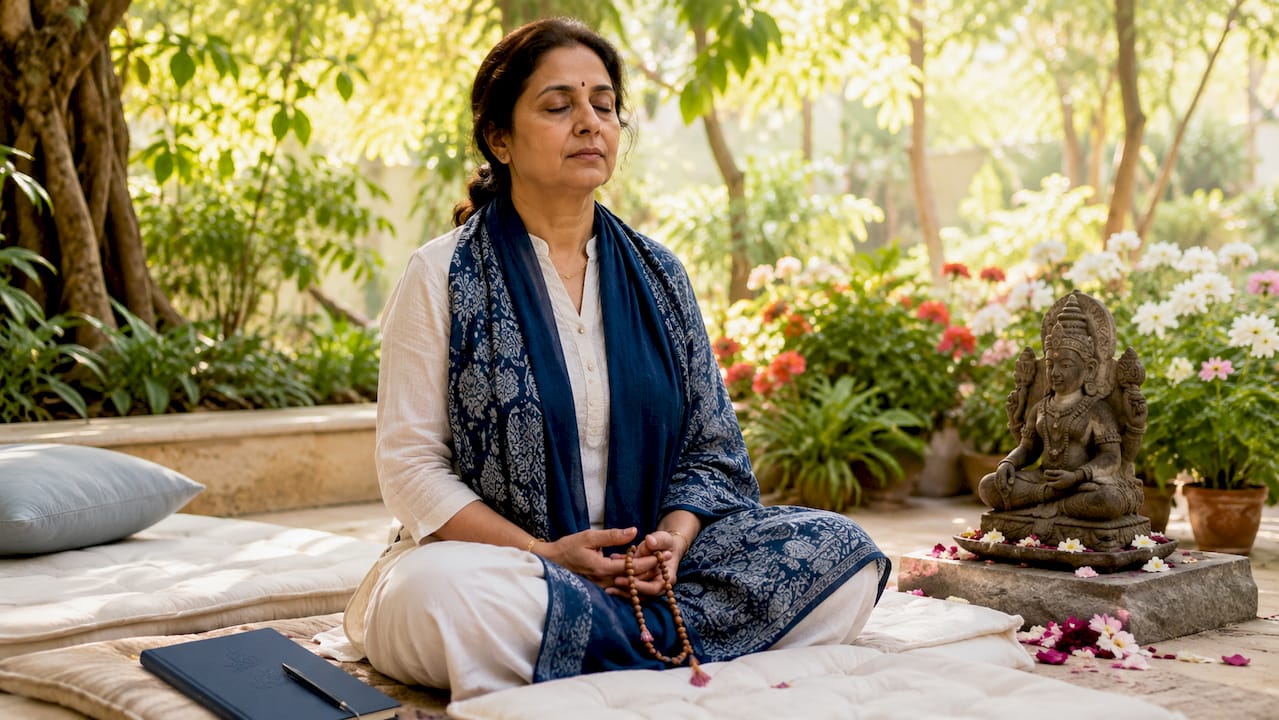
The Gayatri Mantra serves a different but equally important role. Priests and family members recite it to invoke divine light and wisdom for the departing soul. It appears in the Rigveda and is considered one of the most sacred of all traditional Hindu mantras.
Mantras from texts like the Bhagavad Gita and Garuda Purana are also prominent in ceremonial prayers for death. Chants like "Om Namah Shivaya" and "Hare Rama Hare Krishna" help the soul detach from worldly ties and bring calm to mourners gathered at the ceremony.
- Maha Mrityunjaya Mantra: Recited continuously near the body and during cremation; addresses Lord Shiva for liberation
- Gayatri Mantra: Chanted at dawn and dusk during the mourning period; invokes divine light for the soul
- Om Namah Shivaya: Preferred by Shaiva families; short, rhythmic, and easy for all attendees to join
- Om Namo Bhagavate Vasudevaya: The Vaishnav equivalent; addresses Lord Vishnu for the soul's safe passage
- Hare Rama Hare Krishna: Used in Vaishnav traditions to calm grief and assist the soul's transition
- Bhagavad Gita recitations: Chapters 2 and 15 are most commonly read aloud by the Pandit during rites
Pro Tip: Ask your Pandit to recite the Maha Mrityunjaya Mantra 108 times, as 108 repetitions is the traditional count for maximum spiritual effect. If family members wish to join, the Pandit can lead each line slowly so others can follow.
2. How regional and sectarian differences shape funeral prayers
Regional and sectarian variation in Hindu funeral rites is significant, and family priests are the most reliable guides for accurate practice. What a Tamil Brahmin family recites at a funeral differs considerably from what a Punjabi or Gujarati family observes. These differences are not errors. They reflect centuries of regional devotional tradition.
Shaiva families, who follow Lord Shiva, center their prayers on Om Namah Shivaya and the Maha Mrityunjaya Mantra. Vaishnav followers prefer "Om Namo Bhagavate Vasudevaya" and Hare Krishna chants, which align with their devotion to Lord Vishnu. Both traditions share the goal of liberating the soul, but the mantras and ritual objects used differ.
- North Indian traditions: Emphasis on fire rituals, Pind Daan, and Vedic hymns recited in Sanskrit by the Purohit
- South Indian traditions: Longer ritual sequences, specific Agamic texts, and Carnatic devotional songs alongside Sanskrit chants
- Gujarati communities: Shorter mourning periods in some families, with emphasis on Bhagavad Gita readings
- Punjabi families: Often combine Vedic rites with Ardas (a Sikh prayer) in interfaith households
- Tamil communities: Distinct cremation rites with specific Shaiva Agama mantras led by a trained Shivacharyar priest
Consulting your family's Purohit or Pandit before the ceremony prevents ritual errors and honors your community's specific tradition. If your family priest is not available locally, priests can support families remotely via video calls to guide prayers when close relatives are absent.
3. Timing and stages of Hindu funeral prayers during mourning
Hindu death rituals follow a structured timeline from the moment of death through the end of the formal mourning period. Funerals ideally occur within 24 hours of death, respecting the belief that the five elements of the body must return to nature promptly. The preparation rites include washing the body, applying sandalwood paste, and offering Ganga Jal (sacred water from the Ganges River).
The cremation ceremony itself involves continuous mantra recitation. The Kartaa (typically the eldest son) lights the funeral pyre while the Pandit leads the Antyesti rites. In modern crematoriums, the eldest son's symbolic pyre lighting fulfills the ritual requirement even when an electric crematorium is used.
- At the moment of death: Recite Om Namah Shivaya or the Maha Mrityunjaya Mantra near the body to ease the soul's departure
- Body preparation: Chanting continues as the body is washed, dressed in white, and anointed with sandalwood paste
- Procession to cremation: The Pandit leads Vedic hymns as the body is carried; family members follow in silence or soft chanting
- Cremation fire offering: The Kartaa circles the pyre and performs the Mukhagni (fire to the mouth) while the Pandit recites Agni mantras
- Days 1 through 10: Daily Pind Daan (rice ball offerings) and Tarpan (water libations) are performed to nourish the soul in the preta phase
- Day 13 (Terahvin): The mourning period concludes with the Sapindikaranam rite, which formally transitions the soul from preta to ancestor status
- Annual Shraddha: Families perform remembrance prayers each year on the death anniversary to honor the ancestor
Pro Tip: Daily offerings of rice and sesame during the mourning period vary by community. Ask your Pandit on day one to outline the full 13-day schedule so your family can prepare the correct items each morning.
4. How families and attendees participate in funeral chanting
Funeral rites help the living process grief through structured rituals, and attendees are encouraged to participate or observe respectfully. The Kartaa holds the primary ritual role, but the entire family and community contribute to the spiritual atmosphere through their presence and participation.
The Pandit leads all formal chanting. Attendees who know the mantras may chant softly alongside him. Those unfamiliar with Sanskrit need not feel excluded. Sitting quietly, holding a respectful posture, and focusing on the ceremony is itself a meaningful act of support.
- Kartaa (eldest son or designated family member): Performs the fire offering, Pind Daan, and leads the procession
- Female family members: Traditionally observe from a distance during cremation in some communities, though this varies widely
- All attendees: May join in repeating Om Namah Shivaya or Hare Krishna when the Pandit invites group chanting
- Lighting lamps: Family members light oil lamps (diyas) near the body and at the prayer space throughout the mourning period
- Flower and rice offerings: Attendees place marigolds, jasmine, or tulsi leaves near the body as acts of devotion; see customary funeral offerings for full guidance
- Dress code: White or muted colors are standard; avoid bright colors and jewelry; review the Hindu funeral dress code before attending
For attendees unfamiliar with Sanskrit chants, the simplest and most universally accepted option is to repeat "Om Shanti" (meaning "peace") quietly. This phrase crosses sectarian lines and is always appropriate as a mantra for mourning.
5. Comparison of key Hindu funeral mantras by purpose and use
The table below shows the primary mantras used in Hindu funeral prayers, their spiritual purpose, and the ritual stage where each is most appropriate.
| Mantra | Spiritual purpose | Best used during | Tradition |
|---|---|---|---|
| Maha Mrityunjaya | Liberation from death cycle | Body preparation, cremation | All Hindu traditions |
| Gayatri Mantra | Divine light and wisdom for the soul | Morning and evening prayers | Brahmin, North and South Indian |
| Om Namah Shivaya | Soul's surrender to Lord Shiva | Throughout mourning period | Shaiva traditions |
| Om Namo Bhagavate Vasudevaya | Soul's surrender to Lord Vishnu | Throughout mourning period | Vaishnav traditions |
| Hare Rama Hare Krishna | Calming grief, soul's detachment | Group chanting, Pind Daan | Vaishnav, ISKCON communities |
| Bhagavad Gita Chapter 2 | Philosophical comfort for mourners | Funeral ceremony reading | All traditions |
The Maha Mrityunjaya Mantra is the one chant that crosses all sectarian lines. Every Hindu tradition accepts its use at any stage of the funeral. The sectarian mantras (Om Namah Shivaya vs. Om Namo Bhagavate Vasudevaya) reflect the family's devotional lineage and should be chosen accordingly.
Key Takeaways
Hindu funeral prayers and mantras are structured by mantra type, sectarian tradition, and ritual stage, with the Maha Mrityunjaya Mantra serving as the universal chant across all Hindu communities.
| Point | Details |
|---|---|
| Universal mantra | The Maha Mrityunjaya Mantra is appropriate for all Hindu traditions at every funeral stage. |
| Sectarian choice matters | Shaiva families use Om Namah Shivaya; Vaishnav families use Om Namo Bhagavate Vasudevaya. |
| Mourning period structure | Daily Pind Daan and Tarpan continue for 10–13 days, concluding with Sapindikaranam on day 13. |
| Regional variation is real | North Indian, South Indian, Gujarati, and Tamil traditions each follow distinct mantra sequences. |
| Attendees can always participate | Repeating "Om Shanti" quietly is universally respectful for anyone unfamiliar with Sanskrit chants. |
What I've learned about Hindu funeral prayers in diaspora communities
Working alongside families navigating Hindu last rites in Singapore and abroad, I've noticed one consistent challenge: families often feel pressure to perform every ritual perfectly, even when circumstances make that impossible. A loved one passes away overseas. The Pandit is not available in person. The crematorium does not allow an open flame.
Here is what I have come to believe firmly: the spiritual intent behind each mantra matters more than flawless execution. The Maha Mrityunjaya Mantra recited sincerely by a grieving son carries the same weight as a perfectly timed ceremony. Priests and community elders understand this. Most will adapt rites thoughtfully when you explain your situation honestly.
The diaspora reality also means that many families blend traditions across generations. A Gujarati family in Singapore may have a Tamil daughter-in-law. A Punjabi family may include members who are more comfortable with English than Sanskrit. The right Pandit will guide your family through these differences with patience, not judgment.
My strongest advice: contact your Pandit before the death occurs if possible, especially for elderly family members. Knowing the family's sectarian tradition, regional customs, and any practical constraints ahead of time means the ceremony can be prepared with care rather than assembled under pressure. Grief is hard enough. The prayers should bring comfort, not confusion.
— Admin
How Indianlifememorial supports families with Hindu funeral rites
Losing a loved one is one of the most difficult experiences your family will face. Having the right support makes it possible to focus on honoring them with the prayers and rites they deserve.

Indianlifememorial specializes in Hindu funeral services in Singapore, including experienced Pandit coordination, proper Vedic rites, and full Antyesti ceremony facilitation. The team handles every stage from body preparation through the 13-day mourning period, so your family can be present in prayer rather than managing logistics. Pricing starts at $1,888 with no hidden fees. For families who need a full-suite funeral arrangement, Indianlifememorial provides transparent, step-by-step guidance from the first call to the final rite.
FAQ
What is the most important mantra at a Hindu funeral?
The Maha Mrityunjaya Mantra is the most universally used chant in Hindu death rituals. Priests recite it to help the soul achieve liberation from the cycle of death and rebirth.
How long do Hindu funeral prayers last?
The formal mourning period with daily prayers typically lasts 10–13 days, concluding with the Sapindikaranam rite on day 13. Annual Shraddha prayers continue each year on the death anniversary.
What should non-Hindus say at a Hindu funeral?
Repeating "Om Shanti" quietly is always appropriate and universally respectful. Sitting in silence with a calm, attentive posture is equally meaningful and welcomed by grieving families.
Do Hindu funeral mantras differ by region?
Yes. North and South Indian, Gujarati, Punjabi, and Tamil communities each follow distinct mantra traditions. Consulting the family's Purohit or Pandit is the most reliable way to identify the correct prayers for your community.
Can funeral rites be adapted for modern crematoriums?
Spiritual obligation is maintained even in modern settings. Traditional fire offering rituals adapt in electric crematoriums, with the eldest son performing symbolic acts that fulfill the ritual requirement.