
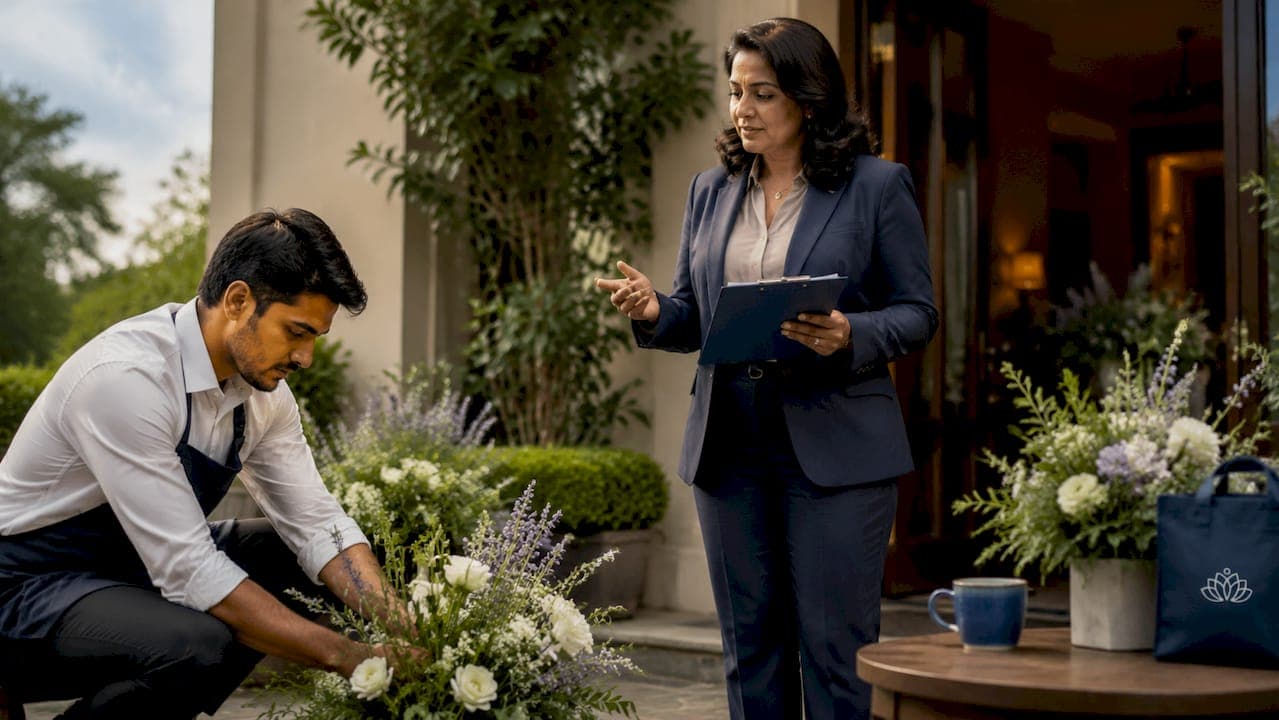
Caretaker services at funerals are defined as specialized on-site support roles that manage logistics, coordinate vendors, and provide compassionate assistance to families and guests throughout funeral events. Unlike funeral directors, who handle legal documentation and body care, caretakers focus on the human and operational side of the service itself. Understanding how caretaker services work at funerals helps your family know exactly what to expect, who to turn to, and how to focus on honoring your loved one rather than managing details. Indianlifememorial builds this caretaker support into every service, so no family faces the day alone.
What are the main responsibilities of funeral caretakers?
Funeral caretaker responsibilities cover every operational detail from the moment guests arrive to the final moments of the service. Traditional funerals typically span 1–3 days, covering visitation, ceremony, and graveside committal. That span means caretakers must manage a shifting sequence of events, not just a single hour.
The core duties of a funeral caretaker include:
- Venue setup: Arranging seating, floral displays, signage, and audio-visual equipment to match the family's wishes and cultural traditions.
- Vendor coordination: Communicating with florists, musicians, officiants, caterers, and transportation providers to keep every party on schedule.
- Timeline management: Overseeing the flow of visitation, ceremony, and procession so transitions feel natural and unhurried.
- Guest hospitality: Directing guests to seating, providing programs, and attending to any comfort needs discreetly.
- Contingency handling: Resolving unexpected issues, such as a delayed vehicle or a technical fault with the sound system, without drawing attention to the problem.
- Post-service follow-up: Confirming any outstanding tasks, returning borrowed items, and answering family questions after the service closes.
Proactive management of vendor timing and contingency plans prevents disruptions and honors family wishes effectively. This is the quiet work that makes a service feel dignified rather than chaotic.
Pro Tip: Give your caretaker a printed run sheet with every vendor's name, contact number, and expected arrival time. This single document prevents most day-of delays.

How do caretaker services differ from funeral directors and planners?
Families often confuse these three roles, and the confusion is understandable. Each role serves a distinct purpose, and all three work together for a well-run service.
Funeral directors handle essential post-death legalities including death certificate filing, burial permits, and benefit notifications. Their authority is legal and administrative. A caretaker, by contrast, holds no legal authority. The caretaker's authority is operational and relational, focused entirely on the day's events and the people present.
Funeral concierge services coordinate vendors and manage family communication at a high project management level, often across multiple venues and over several weeks. A caretaker operates within that framework, executing the plan on the ground during the service itself.
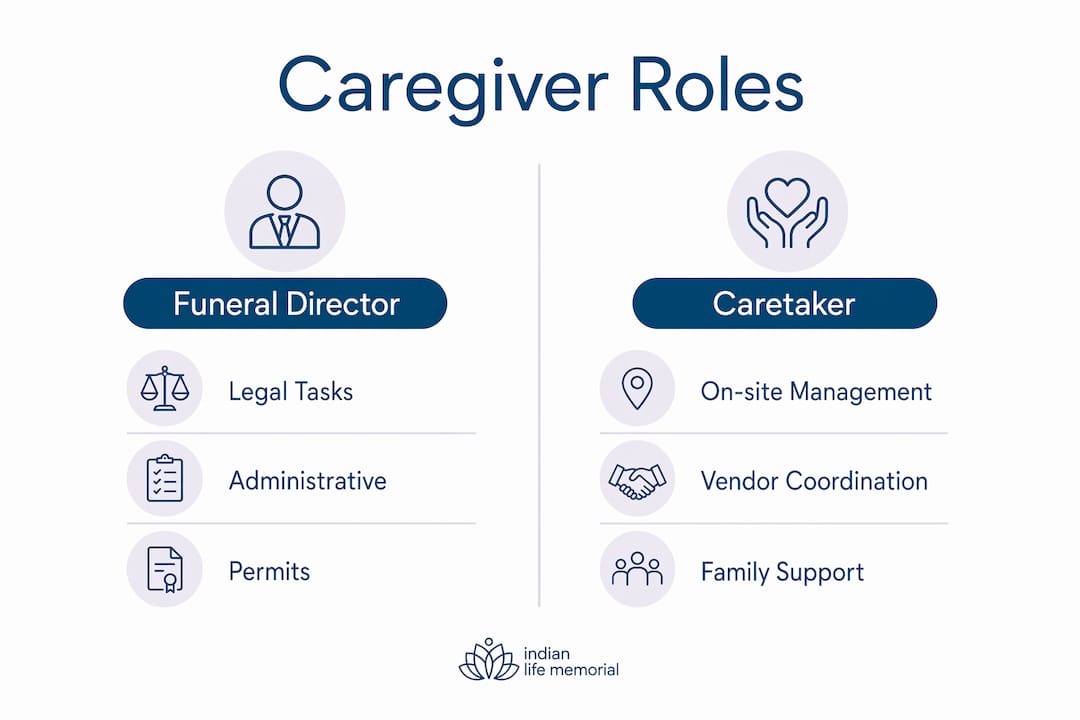
The table below shows how the three roles divide their responsibilities:
| Role | Primary focus | When they are most active |
|---|---|---|
| Funeral director | Legal, administrative, body care | Before and after the service |
| Funeral concierge or planner | High-level coordination and family liaison | Weeks before the service |
| Funeral caretaker | On-site event flow and guest hospitality | During the service itself |
Successful funeral leadership balances officiant guidance, family input, and funeral home coordination. The caretaker sits at the center of that balance, translating plans into lived experience for everyone present.
What should families expect when working with caretakers?
Preparation is the single greatest gift your family can give a caretaker. The more clearly you communicate your wishes before the service, the more precisely the caretaker can execute them.
Follow these steps to prepare effectively:
- Share a detailed schedule early. Provide the caretaker with the full program, including start times, ritual sequences, and any cultural or religious observances such as Antyesti rites or Vedic prayers.
- Assign one family contact. Designate a single person to communicate with the caretaker on the day. Multiple voices giving conflicting instructions create confusion at the worst possible moment.
- Disclose family dynamics. If certain relatives need to be seated separately, or if a guest requires mobility assistance, tell the caretaker in advance. Discretion is a caretaker's strength, but only when they have the information they need.
- Clarify cultural and religious traditions. Caretakers who specialize in Hindu or Indian funerals, as Indianlifememorial's team does, understand Samskaras and the significance of ritual timing. Still, confirm your specific preferences in writing.
- Understand the service package. Review what is included in your funeral service package so you know which tasks the caretaker covers and which fall to other providers.
- Keep documents organized. Gather vendor contracts, music playlists, and seating charts into one folder. Hand this to the caretaker at the start of the day.
The arrangement conference requires families to bring vital statistics and pre-planning information to avoid delays. Treating your caretaker briefing with the same seriousness produces the same benefit: fewer surprises, more dignity.
Pro Tip: Write a one-page "day-of brief" covering the schedule, key contacts, and any sensitive family situations. Hand it to the caretaker 24 hours before the service.
How do caretaker services provide emotional support during bereavement?
The logistical role of a caretaker is visible. The emotional role is quieter, and often more lasting in its impact.
A skilled caretaker reads the room continuously. They notice when a family member is overwhelmed and quietly offer a private space to compose themselves. They place tissues within reach before anyone has to ask. They speak in measured, calm tones that signal to guests that everything is in hand, even when it is not. This presence reduces the ambient anxiety that grief naturally produces.
The emotional support a caretaker provides includes:
- Compassionate presence: Standing near the family without intruding, available the moment they are needed.
- Distress observation: Recognizing signs of acute grief in guests and responding discreetly with water, seating, or a quiet word.
- Atmosphere management: Ensuring lighting, temperature, and sound remain respectful and comfortable throughout.
- Buffer from logistics: Absorbing every operational problem so the family never hears about it unless absolutely necessary.
- Aftercare coordination: Connecting families with grief counselors or aftercare resources if those services have been arranged.
Modern funeral homes combine legal, logistical, and compassionate services to manage funerals fully, and the caretaker is the human face of that compassion during the service itself.
"A well-managed funeral service does not erase grief. It creates the conditions in which grief can be expressed with dignity, surrounded by care, and witnessed by those who loved the same person."
The impact of this support extends beyond the day itself. Families who feel held during a funeral report a stronger sense of closure. The caretaker's work, though largely invisible, shapes that experience directly.
Key Takeaways
Funeral caretaker services are the operational and emotional backbone of a well-run service, translating plans into dignified, supported experiences for every family member and guest present.
| Point | Details |
|---|---|
| Caretakers manage on-site operations | They oversee venue setup, vendor timing, and service flow during the funeral itself. |
| Role is distinct from directors and planners | Directors handle legalities; planners coordinate in advance; caretakers execute on the day. |
| Preparation maximizes caretaker effectiveness | Assign one family contact and share a detailed schedule at least 24 hours before the service. |
| Emotional support is a core function | Caretakers observe distress, manage atmosphere, and shield families from logistical problems. |
| Cultural specificity matters | Sharing religious and cultural traditions in advance allows caretakers to honor every ritual correctly. |
What I have learned about trusting caretaker support
Having worked alongside funeral caretakers through many services, the pattern I see most often is this: families arrive uncertain about who to turn to, and they leave grateful for a presence they almost did not notice. That invisibility is the craft.
The most common misunderstanding I encounter is that caretakers are simply ushers with a fancier title. They are not. A skilled caretaker holds the entire emotional and operational architecture of a service together in real time. Funeral directors perform anticipatory silent tasks during services, and caretakers do the same, adjusting seating, managing audio cues, and resolving vendor issues before any guest becomes aware of a problem.
My honest advice to any family: trust the caretaker you have chosen, and give them everything they need to serve you well. The families who share the most information in advance receive the most seamless support on the day. Withholding details out of privacy or uncertainty only limits what the caretaker can do for you.
Choosing a provider like Indianlifememorial, which integrates caretaker expertise into culturally specific funeral packages, removes the guesswork entirely. You are not assembling a team from scratch. You are working with people who have done this before, who understand the weight of the day, and who are devoted to making it worthy of the person you are honoring.
— Admin
Indianlifememorial's caretaker support for your family
Indianlifememorial provides dedicated caretaker support as part of its full-suite funeral services in Singapore, covering Hindu, Christian, and multi-faith ceremonies. Every package includes hospitality management, vendor coordination, and a family liaison who remains present from setup through the final committal.

Pricing starts at $1,888 with no hidden fees, so your family knows exactly what is covered before the day arrives. Indianlifememorial's team is available 24/7, and every caretaker is trained in the cultural and religious traditions that matter most to Indian and Hindu families. Reach out to Indianlifememorial to learn how the team can support your family through every moment of the service.
FAQ
What does a funeral caretaker do during a service?
A funeral caretaker manages on-site logistics including venue setup, vendor coordination, guest hospitality, and timeline flow. They also provide discreet emotional support to family members and guests throughout the service.
How is a caretaker different from a funeral director?
A funeral director handles legal and administrative tasks such as death certificates and burial permits. A caretaker focuses on the operational and emotional experience during the funeral event itself.
When should a family brief the caretaker?
Families should share the full schedule, cultural traditions, and a designated family contact at least 24 hours before the service. Early information sharing prevents delays and allows the caretaker to prepare for every detail.
Do caretakers handle cultural or religious rituals?
Caretakers do not lead rituals, but they coordinate the timing and environment that supports them. Sharing specific traditions such as Vedic rites or Antyesti sequences in advance allows the caretaker to honor every step correctly.
Can caretaker services help with last-minute funeral planning?
Yes. Caretakers are trained to manage tight timelines and unexpected changes. Working with a provider experienced in last-minute funeral logistics ensures that even urgent arrangements are handled with care and dignity.