
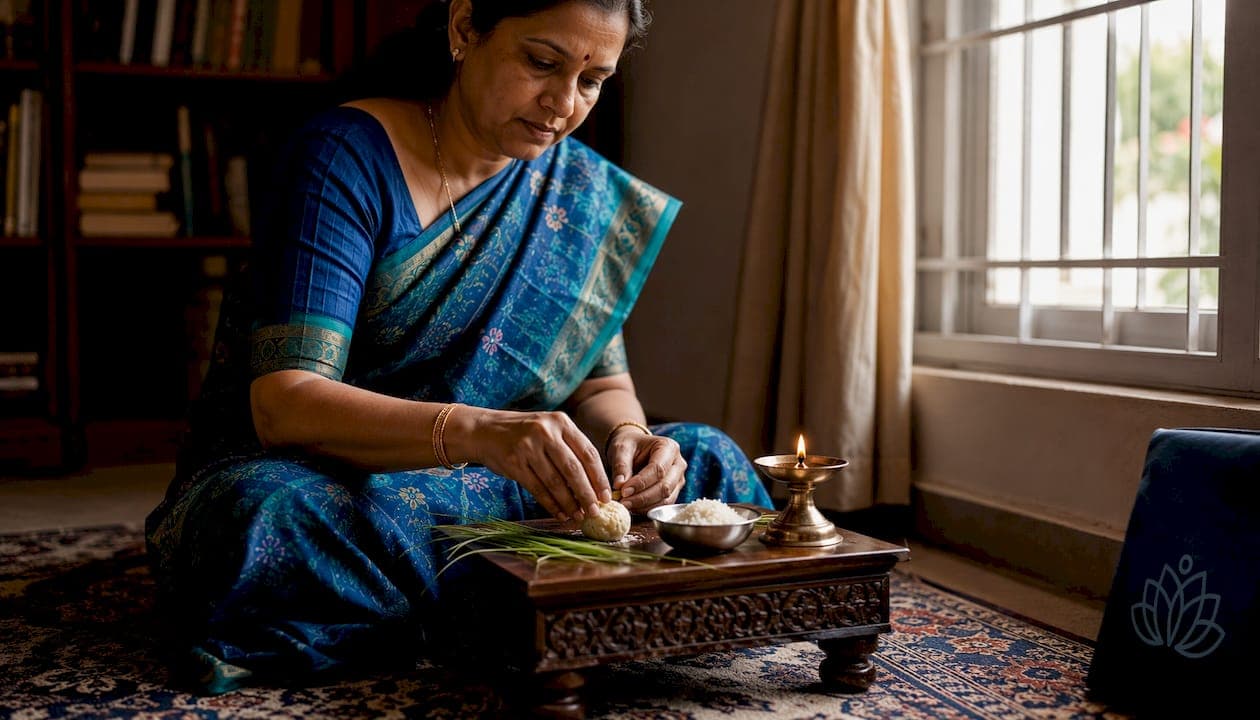
Ekodishta Shraddha is a Hindu funeral rite performed specifically for one recently deceased individual during the first year after death. The name itself tells you everything: Eka means "one" and Uddishta means "intended for," so the ritual is literally a Shraddha directed at a single soul. It is not a collective ancestral rite. It is an urgent, focused act of spiritual care for someone your family has just lost.
At a glance:
- Performed monthly on the death tithi (lunar date of death) throughout the first year
- Conducted by the closest male-line descendant (son or designated karta) with a qualified priest
- Uses a single blade of Kusha grass, reflecting its single-person focus
- Omits the Visvedevas invocation, which collective rites include
- Culminates in Sapindikarana, the ceremony that transitions the soul into the ancestral group
Many families confuse the 13-day Antyesti rites with this monthly series. Antyesti covers the immediate post-death period. Ekodishta Shraddha is what follows: twelve monthly observances that sustain the soul through its transitional preta state.
Table of Contents
- What does "Ekodishta" mean, and where does the name come from?
- Why is Ekodishta Shraddha performed, and when should your family observe it?
- Who performs Ekodishta Shraddha, and what does the priest do?
- What materials do you need? A puja samagri checklist
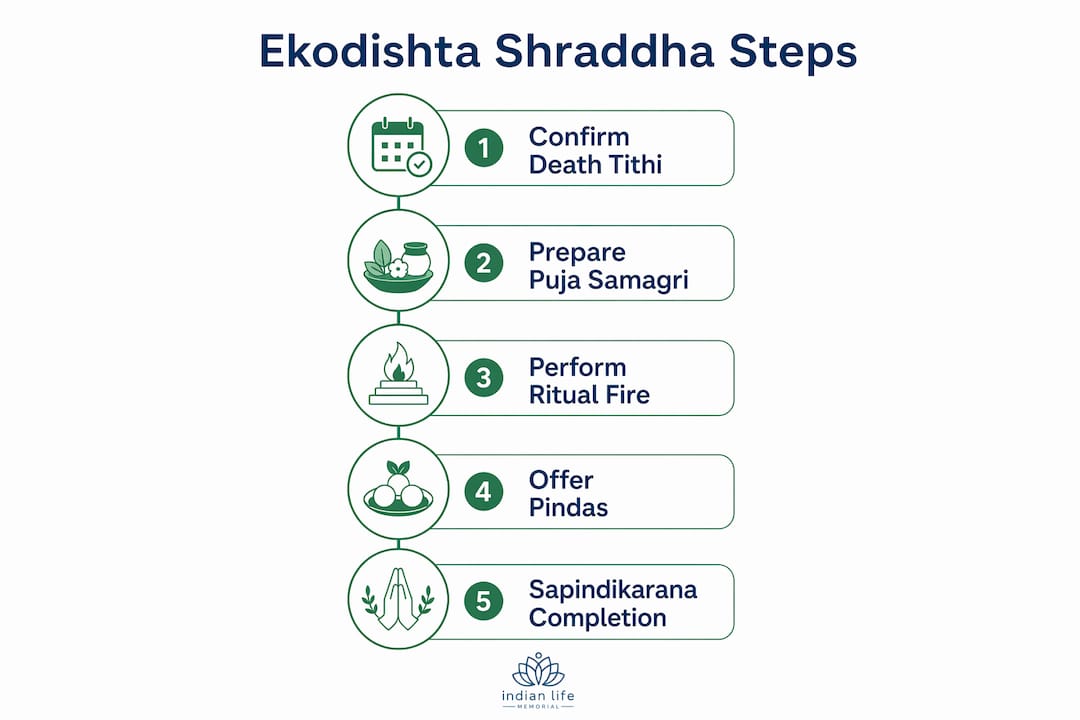
- How to perform Ekodishta Shraddha: a step-by-step procedure
- How does Ekodishta differ from Parvana and other Shraddha types?
- What do the scriptures say about Ekodishta Shraddha?
- Key Takeaways
- A compassionate note for families navigating this rite
- Useful sources and further reading
What does "Ekodishta" mean, and where does the name come from?
The Sanskrit compound breaks cleanly: Eka (one) plus Uddishta (intended for, directed toward). Together they name a Shraddha whose entire ritual logic is organized around a single recipient rather than the collective group of ancestors.
Classical texts including the Grihya-sutras and the Manusmriti distinguish this rite from the Parvana model precisely because of that single-person focus. The Matsya Purana and the Garuda Purana both describe it as the appropriate form of Shraddha for the recently deceased, before the soul has been formally welcomed into the ancestral collective.
Key points from the classical sources:
- The Grihya-sutras document altered mantras and a modified ritual structure for Ekoddishta
- The Manusmriti references the single-person focus as the defining criterion
- The Garuda Purana frames it as urgent spiritual nourishment for the preta state
- The Matsya Purana reinforces the timing and the year-long observance cycle
The name is not merely descriptive. It is a ritual instruction: everything in the ceremony, from the number of pindas to the wording of the mantras, reflects the fact that you are addressing one soul.
Why is Ekodishta Shraddha performed, and when should your family observe it?
The primary purpose is spiritual support for the preta, the soul of the recently deceased that has not yet settled into the ancestral realm. Classical texts, particularly the Garuda Purana, describe this transitional period as one of disorientation and vulnerability. The monthly Ekodishta rites provide nourishment, protection, and karmic assistance to the departed soul during that passage.
Timing rules families need to know:
- Day of death: Some traditions observe an immediate Shraddha on the day itself, though the main monthly cycle begins after the Antyesti rites conclude
- Monthly tithi: The rite is observed each month on the lunar date that corresponds to the day of death, for twelve consecutive months
- Intercalary months: When an extra lunar month (Adhika Masa) falls within the year, consult your priest, as regional traditions differ on whether an additional observance is required
- Sapindikarana: At the end of the first year, this ceremony formally integrates the deceased into the ancestral group, after which the Parvana model replaces Ekodishta
The soul's transition from individual preta to collective ancestor is the theological arc the entire year traces. Ekodishta holds that arc steady, month by month.
Pro Tip: Confirm the exact death tithi with a qualified priest before the first monthly observance. Regional and household traditions can affect the count, and starting on the correct tithi matters for the integrity of the full-year cycle.
Who performs Ekodishta Shraddha, and what does the priest do?
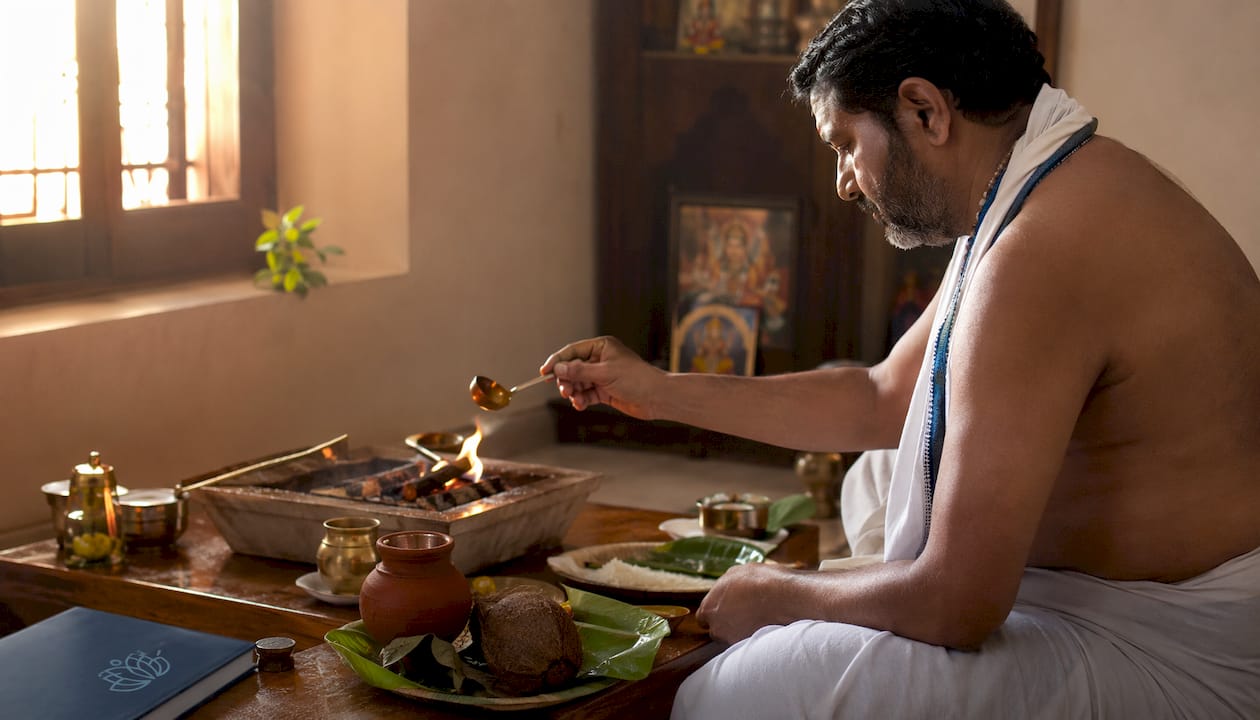
The closest male-line descendant, typically the son, is the traditional karta (performer) for Ekodishta Shraddha. When a son is unavailable, a designated family member, a paternal nephew, or another appointed representative may take the role. Understanding Hindu funeral rites more broadly can help your family clarify who holds this responsibility.
A qualified priest is not optional for most families. The priest's role includes:
- Guiding the karta through the sankalpa (formal statement of intent)
- Chanting the modified mantras that address a single deceased person rather than the collective ancestors
- Managing the ritual protocol, including the correct use of Kusha grass and pinda offerings
- Advising on regional variations and household lineage customs
In diaspora settings, where a full assembly of Brahmanas may not be available, a single experienced priest can fulfill the representative role. What matters is that the mantras are correctly adapted for the single-person format.
Before meeting your priest, prepare:
- The full name and gotra (lineage) of the deceased
- The exact date and lunar tithi of death
- A list of any household or regional customs the family observes
- The samagri items (see the checklist below)
Pro Tip: If you are arranging rites outside India, contact a Hindu funeral specialist early. Coordinating priest availability and samagri sourcing in advance prevents last-minute gaps that can delay the first monthly observance.
What materials do you need? A puja samagri checklist
Gathering the right items before the ceremony saves time and prevents interruptions during the rite. The list below reflects the core requirements documented in classical sources and widely observed in practice.
Essential items:
- Single blade of Kusha grass (the single blade distinguishes Ekodishta from collective rites)
- Cooked rice for pinda preparation
- Black sesame seeds (til)
- Ghee and water for offerings and tarpan libations
- Water vessel (typically a copper or brass pot) for tarpan
- Flowers, preferably white
- Incense and a lamp
- Banana leaves or a clean ritual mat for placing offerings
Optional and diaspora substitutions:
- Pre-printed mantra sheets for the priest if a full Sanskrit text is unavailable locally
- Packaged sesame and rice from Indian grocery stores are acceptable substitutions when fresh ritual-grade items are not accessible
- A small portable fire-safe vessel for havan offerings if a full havan kund is not practical
For families arranging the ceremony at a funeral home or temple, confirm in advance that an open flame is permitted and that a water source is available for tarpan. Reviewing last-minute funeral planning guidance can help you organize these logistics quickly.
How to perform Ekodishta Shraddha: a step-by-step procedure
The sequence below follows the classical Grihya-sutra framework, adapted for practical use. Your priest will guide each step; this outline helps you follow along and understand the purpose of each action.
- Purification and seating: The karta bathes, wears clean white or undyed clothing, and sits facing south, the direction associated with the ancestors.
- Sankalpa: The karta states the formal intention aloud, naming the deceased, their gotra, and the tithi. This declaration anchors the entire rite to one specific soul.
- Invocation: Unlike Parvana Shraddha, Ekodishta omits the Visvedevas invocation. The rite addresses the deceased directly, without inviting the wider divine assembly as mediators.
- Pinda preparation: Rice balls (pindas) are shaped and offered. In Ekodishta, a single pinda is typically offered for the one deceased, reflecting the rite's singular focus. The Kusha grass blade is placed beneath or alongside the offering.
- Mantra recitation: The priest chants mantras in the singular address form. Classical texts document this shift explicitly: where Parvana rites use collective language ("this is your share, ye manes"), Ekodishta uses singular phrasing directed at the one departed soul.
- Tarpan: Water mixed with sesame is offered as a libation, again in the singular form, with the deceased's name spoken aloud.
- Feeding the representative: Traditionally, a Brahmana is fed as a representative of the deceased. In diaspora contexts, the priest may fulfill this role.
- Closing prayers and release: The karta offers final prayers for the soul's peace and formally closes the rite.
This sequence repeats monthly until Sapindikarana. At that ceremony, the pinda of the deceased is merged with the pindas of the three preceding ancestors, symbolizing the soul's full integration into the ancestral collective.
Pro Tip: Document the lunar tithi after the first observance and set a recurring reminder. Diaspora families often lose track of the monthly date across different calendar systems. A note shared with your priest and kept in a family record prevents missed observances.
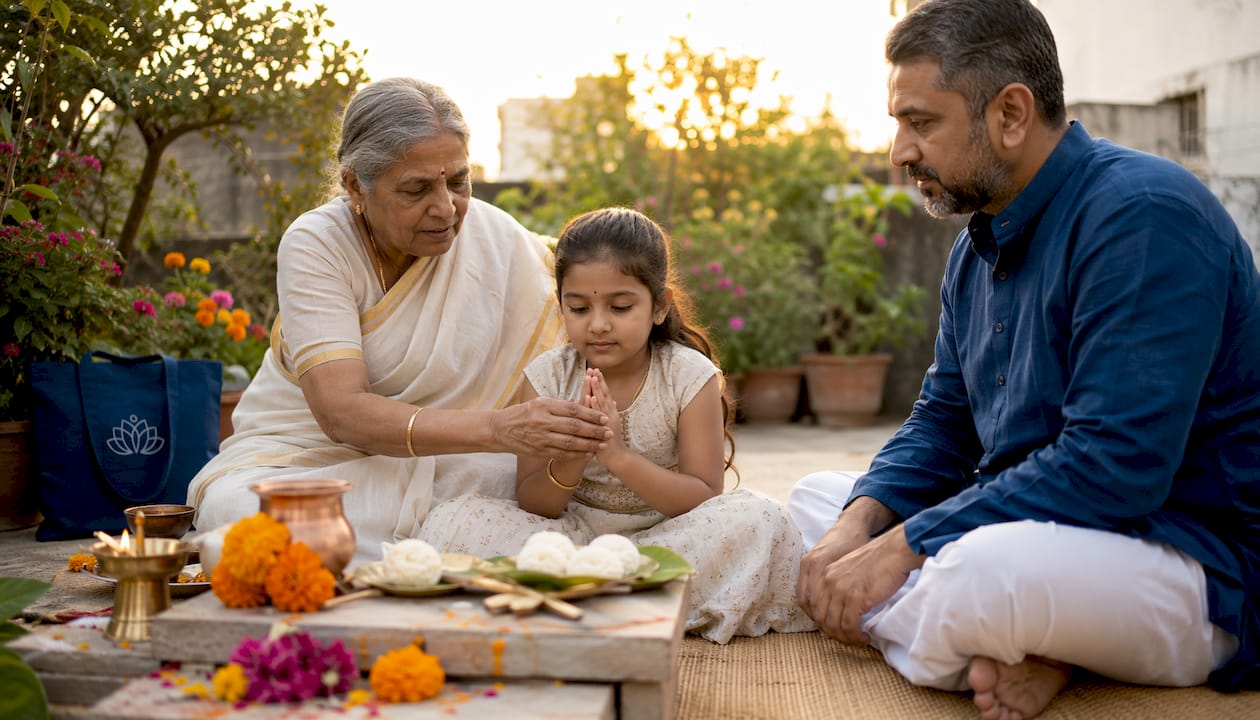
Safety note: Keep all open flames in a fire-safe vessel. Dispose of pinda offerings respectfully, traditionally in flowing water or a garden. Never leave ritual food items in a closed indoor space overnight.
How does Ekodishta differ from Parvana and other Shraddha types?
The clearest way to understand Ekodishta is to place it against the Parvana model, which is the standard annual ancestral rite most Hindu families know.
| Feature | Ekodishta Shraddha | Parvana Shraddha |
|---|---|---|
| Recipients | One recently deceased individual | Three generations of ancestors collectively |
| Timing | Monthly, first year only | Annual (Pitru Paksha and other occasions) |
| Visvedevas | Omitted | Included |
| Mantras | Singular address | Collective address |
| Pindas | Single pinda for one soul | Multiple pindas for ancestral group |
| Purpose | Urgent transitional support | Ongoing ancestral commemoration |
Naimittika Shraddha, performed on specific occasions such as eclipses or the deceased's birth anniversary, occupies a different category again. It is event-triggered rather than monthly, and it does not carry the same urgent transitional function as Ekodishta.
Practical consequences for your family:
- You cannot substitute Parvana rites for Ekodishta during the first year; the ritual logic and mantra structure are different
- Once Sapindikarana is complete, Ekodishta is no longer performed; the deceased is honored within the Parvana framework going forward
- Missing a monthly Ekodishta observance is traditionally considered spiritually significant; consult your priest about remedial rites if a month is missed
What do the scriptures say about Ekodishta Shraddha?
The ritual has deep textual roots across multiple classical sources, each contributing a distinct layer of authority.
Primary textual sources:
- Garuda Purana: Describes the preta state in detail and prescribes Ekoddishta as the correct rite for alleviating the soul's suffering during the transitional year
- Grihya-sutras (Sankhayana and others): Document the procedural modifications, including altered mantras, omission of Visvedevas, and the monthly repetition cycle
- Manusmriti: References the single-person criterion as the defining feature of this Shraddha category
- Matsya Purana: Reinforces the year-long observance and the culminating role of Sapindikarana
Scholars note that the omission of Visvedevas is not an oversight but a deliberate theological choice. Visvedevas serve as mediators between the living and the collective ancestral realm. Since Ekodishta addresses a soul not yet part of that realm, their invocation would be ritually inappropriate.
Regional variations exist across North and South Indian traditions, and some household lineages follow specific Grihya-sutra schools (shakhas) with slightly different procedural details. A qualified priest familiar with your family's lineage is the authoritative guide for those specifics.
At year-end, Sapindikarana marks the theological completion of the Ekodishta cycle. The soul moves from individual preta to collective ancestor, and the ritual format shifts accordingly. Hindu death anniversary traditions observed in subsequent years follow the Parvana model rather than the Ekodishta structure.
Key Takeaways
Ekodishta Shraddha is a monthly first-year rite directed at one recently deceased soul, performed with singular mantras and a single pinda until Sapindikarana completes the cycle.
| Point | Details |
|---|---|
| Single-person focus | Every element, from mantras to pindas, addresses one deceased individual, not the ancestral group. |
| First-year monthly cycle | Observed on the death tithi each month for twelve months, then replaced by Parvana rites after Sapindikarana. |
| Visvedevas omitted | The collective divine mediators are not invoked because the soul has not yet joined the ancestral realm. |
| Karta and priest both needed | The closest male-line descendant leads the rite; a qualified priest adapts mantras and guides the sankalpa. |
| Regional variations are normal | Household lineage and regional tradition affect details; always confirm specifics with a qualified priest. |
A compassionate note for families navigating this rite
Grief does not follow a calendar, and yet Ekodishta Shraddha asks your family to show up, month after month, in an act of deliberate spiritual care for someone you love. That is not a burden. It is one of the most tender expressions of devotion in the Hindu tradition.
The ritual's precision, the specific tithi, the singular mantra, the single blade of Kusha grass, is not meant to intimidate. It is meant to focus your intention completely on the one person you are honoring. If your family is navigating this outside India, or without the full traditional infrastructure, know that the spirit of the rite is what carries it. Regional variations, practical substitutions, and diaspora adaptations are all part of a living tradition that has always found ways to honor the departed across distance and circumstance.
Your most practical next step is straightforward: record the exact lunar tithi of the death, gather the core samagri, and connect with a qualified priest before the first monthly observance. If you need help coordinating Vedic rites with experienced priests, Indianlifememorial's Hindu funeral services are available to support your family through every stage of this sacred year.
Useful sources and further reading
The following sources informed this article and offer deeper reading for families and practitioners.
Scriptural and classical sources:
- Garuda Purana: The most accessible classical source on preta rites and the Ekoddishta cycle; widely available in English translation
- Sankhayana Grihya-sutra (translated in Sacred Books of the East, Vol. 29): Documents procedural modifications for Ekoddishta, including mantra changes and Visvedevas omission
- Manusmriti: Chapters on Shraddha rites provide the single-person criterion and broader ancestral rite framework
- Matsya Purana: Reinforces the year-long observance and Sapindikarana's culminating role
Reputable encyclopedic explainers:
- Wisdomlib's entry on Ekoddishta Shraddha summarizes multiple textual citations on materials and monthly timing
- Hindupedia's article on Ekoddiṣṭa covers the lexical meaning and the one-year cycle ending in Sapindikarana
Practical next steps:
- For families in Singapore needing priest coordination and Vedic rite support, Indianlifememorial offers full-suite Hindu funeral services with experienced pandits available around the clock
- To understand the broader context of Hindu post-death observances, the Indianlifememorial blog's guide to Hindu funeral rites is a clear starting point
This article is general religious and cultural information, not professional religious or legal advice. Ritual specifics vary by lineage, region, and household tradition. Confirm the details of your family's observance with a qualified priest.