
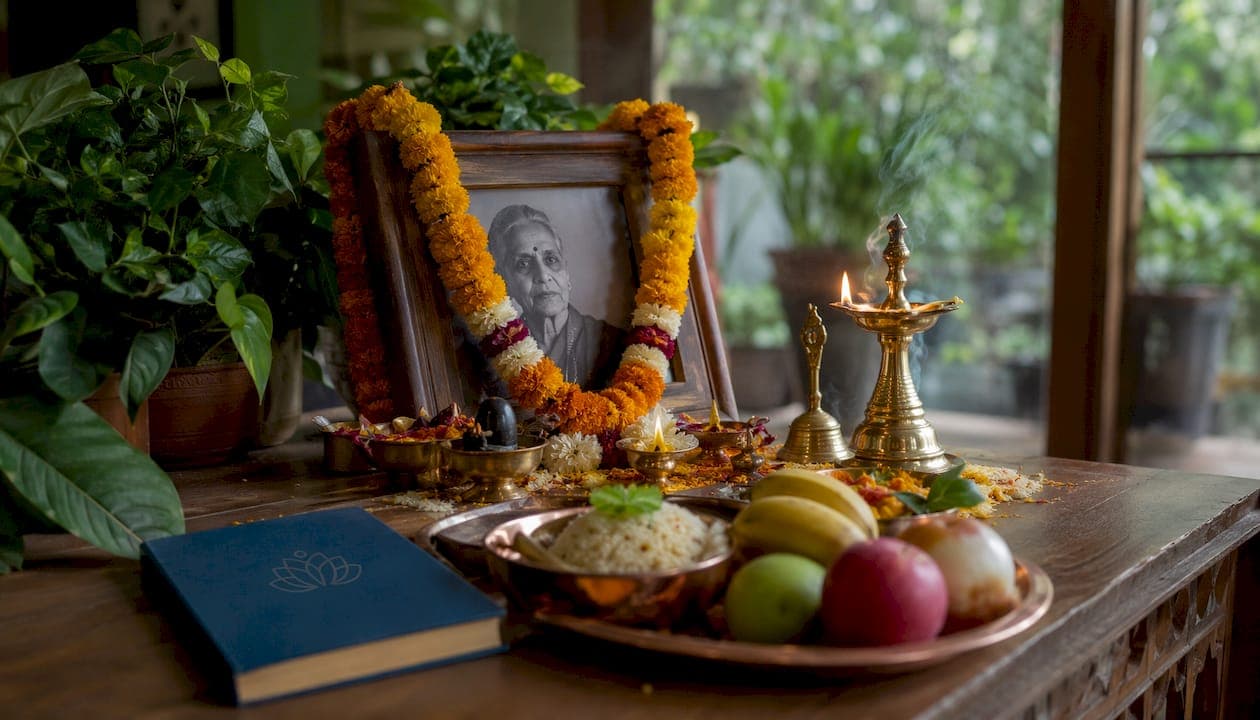
Hindu death anniversary traditions are annual sacred ceremonies called Shradh, Samvatsarikam, or Barsi, performed to honor departed ancestors through offerings, prayers, and devotional vows. These rituals are not simply commemorations. They fulfill a sacred duty known as Pitru Rina, the debt owed to one's ancestors, and actively support the soul's continued journey toward liberation.
The core ceremonies include:
- Shradh / Samvatsarikam / Barsi: Regional names for the annual death anniversary rite, observed on the exact lunar tithi (date) of the person's passing
- Pind Daan: Offerings of rice balls prepared with ghee, sesame seeds, and honey, symbolizing nourishment for the departed soul
- Tarpan: Water libations mixed with black sesame seeds, poured as a gesture of gratitude and remembrance
- Brahmin Bhoj: The ritual feeding of priests or the needy, considered an act of merit that benefits the departed
- Sankalpa: The family's formal declaration of devotional intention, which anchors the entire ceremony spiritually
Rituals follow the Hindu lunar calendar, not the Gregorian calendar, so the anniversary date shifts each year in terms of the English date. Hindu cosmology holds that cremation and subsequent rites help the soul move through post-death states toward rebirth or moksha (liberation), making these annual observances part of an ongoing spiritual relationship between the living and the departed.
What rituals are performed during Hindu death anniversary ceremonies?
The heart of any Shradh observance lies in a sequence of carefully ordered ritual actions, each carrying its own symbolic weight. Understanding what happens and why transforms these ceremonies from unfamiliar customs into deeply meaningful acts of love and duty.
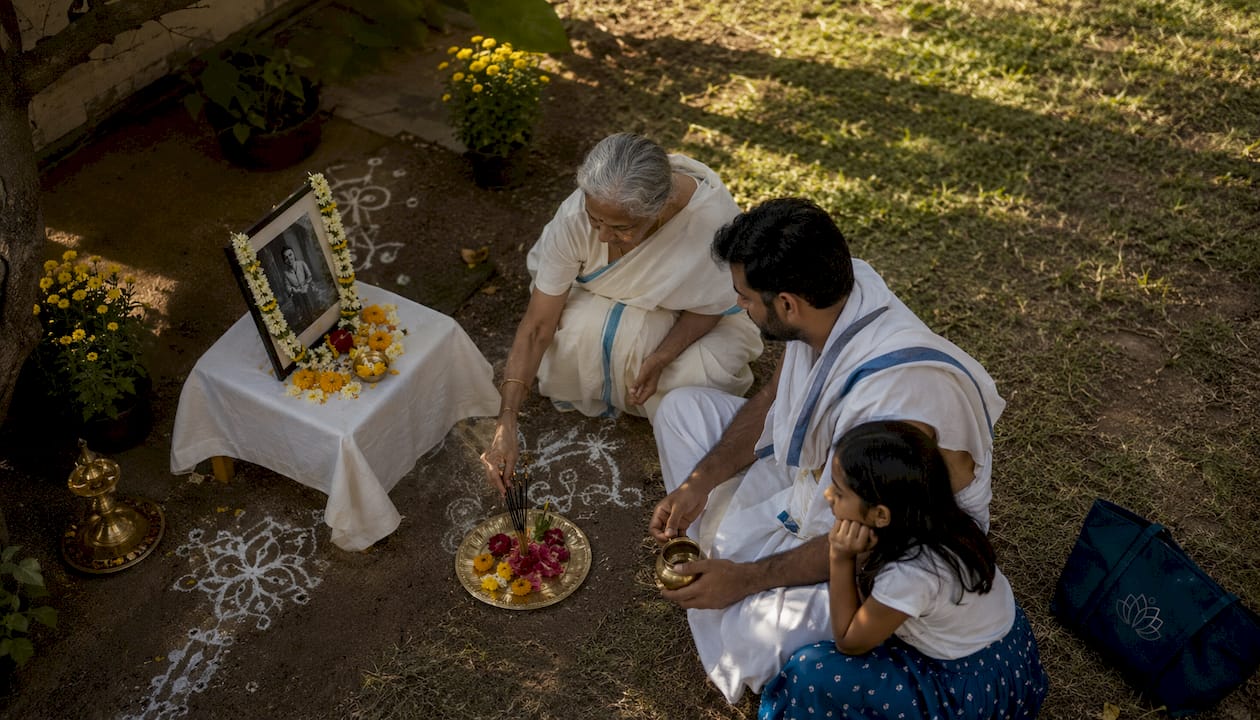
- Sankalpa (Declaration of Intent): The ceremony opens with the family, led by the eldest son or designated male heir, formally stating the purpose of the rite. This declaration names the deceased, the family lineage, and the spiritual goal. The quality of this intention shapes the entire ceremony's meaning.
- Pind Daan (Rice Ball Offerings): Balls of cooked rice mixed with ghee, sesame seeds (til), and honey are shaped and offered to the departed soul. Each Pind represents the body and spirit of the ancestor, and the act of offering is understood as providing sustenance for the soul's onward journey.
- Tarpan (Water Offerings): Family members pour water mixed with black sesame seeds into a cupped palm, then release it as an offering. This gesture expresses gratitude and maintains the bond between the living and the ancestral realm.
- Mantra Chanting: A trained Pandit (priest) recites Vedic mantras specific to ancestral rites, including passages from the Garuda Purana and relevant Shraddha Suktas. The priest's role is to guide the ritual structure, but the family's presence and devotion are equally central.
- Brahmin Bhoj (Feeding of Priests or the Needy): After the main rites, priests or deserving individuals are fed a meal, often including rice, dal, vegetables, and sweets. This act of Annadanam (food donation) generates spiritual merit that is directed toward the departed soul.
- Charitable Giving: Families may donate clothing, grains, or money to priests or charitable causes in the name of the deceased. The tradition holds that such gifts reach the ancestor in spirit.
Regional variations exist across India and the diaspora. South Indian families often refer to the ceremony as Samvatsarikam and may include additional rites tied to regional Vedic schools. North Indian families commonly use the term Barsi for the first-year anniversary. Some communities incorporate the recitation of the Vishnu Sahasranama or specific stotras based on family tradition. The types and meanings of Hindu funeral mantras used during these rites vary by lineage and regional practice.
How do families determine the right time for death anniversary rites?
Timing is one of the most technically demanding aspects of Hindu mourning practices, and getting it right matters deeply to families who want to honor their loved ones correctly.
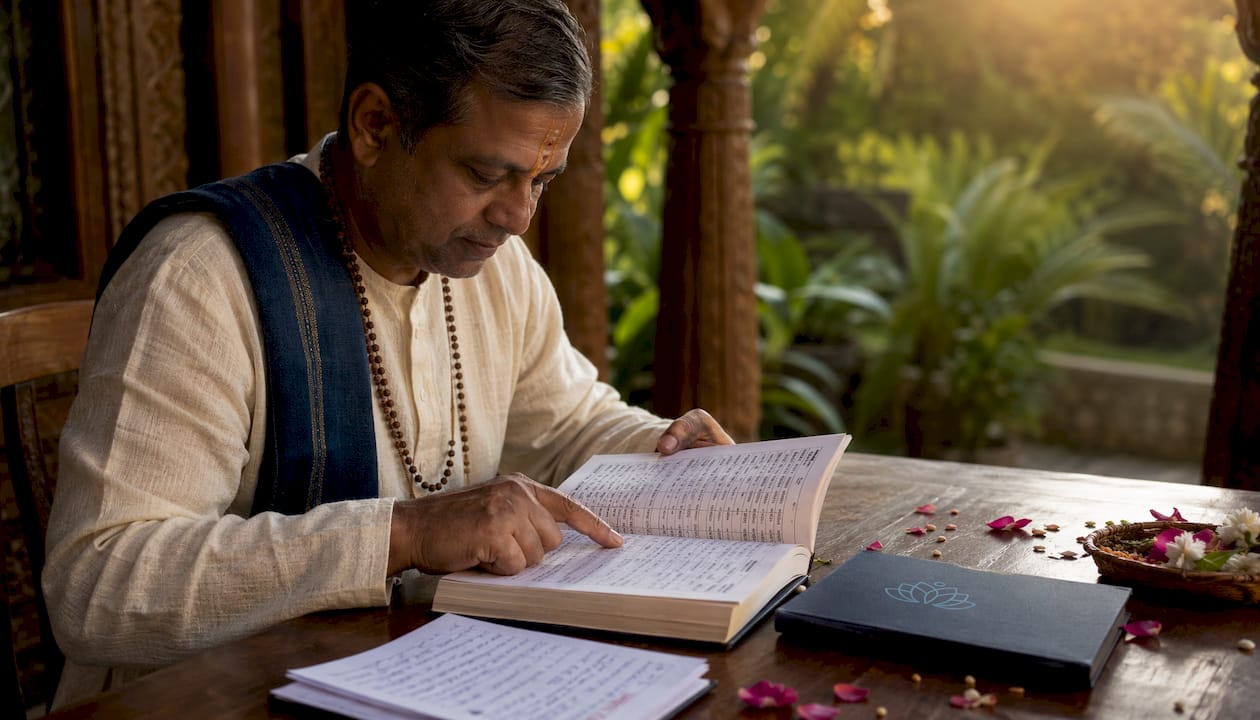
The annual Shradh date is tied strictly to the lunar tithi on which the person died, not the Gregorian calendar date. Because the Hindu lunar calendar and the solar calendar do not align, the English date of the anniversary shifts every year. A priest must consult a Panchang (Hindu almanac) each year to calculate the correct observance date. Families who attempt to observe the anniversary on the same English date year after year are not following the traditional practice.
Key timing considerations include:
- The 13-day mourning period: Immediately following death, the family observes 13 days of simplicity, abstinence, and prayer. This period, known as the Sutak or mourning phase, precedes all annual rites and sets the spiritual foundation for ongoing observance.
- The first-year Barsi: The first death anniversary holds a distinct and elevated spiritual status. It includes the Sapindikarana rite, which formally merges the soul of the deceased with the ancestral group (Pitrs). This transition ends the individual post-death rituals and marks the soul's full integration into the ancestral realm. Many families are unaware that this rite is what closes the first cycle of mourning.
- Amavasya as a fallback: When the exact lunar tithi is unknown, families perform rites on the Amavasya (new moon day) of the relevant month. This is a widely accepted and spiritually valid alternative.
- Pitru Paksha: This 16-day period, falling in the lunar month of Bhadrapada (typically September), is the most auspicious window for ancestral rites. Sarva Pitru Amavasya, the new moon that closes Pitru Paksha, is the single most auspicious day for families who do not know their ancestor's exact death date.
- Annual recalculation: Each year's Shradh date must be recalculated from the Panchang. A priest's guidance is not optional for families who want to observe the rite on the correct tithi.
Pro Tip: Keep a written record of your loved one's lunar tithi of death, confirmed by the officiating priest at the time of passing. This single piece of information makes every future anniversary observance far easier to schedule correctly.
How Hindu diaspora families in the US observe death anniversary customs
Maintaining traditional Hindu death anniversary traditions in the United States presents real logistical challenges, but most diaspora families find meaningful ways to honor their obligations. The unique needs of Indian diaspora families around ritual observance are well documented, and practical solutions have grown alongside the community.
- Priest availability: Finding a qualified Pandit familiar with the specific regional Vedic tradition of your family can be difficult outside major metropolitan areas. Cities with large South Asian populations, such as New York, Houston, Chicago, and the San Francisco Bay Area, generally have established Hindu temples with resident priests who perform Shradh rites.
- Temple-based ceremonies: Many Hindu temples in the US offer Shradh and Barsi services, either within the temple premises or at the family's home. Booking in advance, especially during Pitru Paksha, is advisable as demand is high.
- Simplified home rites: When a priest is unavailable, families often perform a simplified version of Tarpan and Pind Daan at home, guided by printed ritual manuals or video guidance from a trusted Pandit. The Sankalpa, the family's devotional intention, remains the spiritual core of even a simplified observance.
- Pitru Paksha as a practical window: Many diaspora families consolidate their ancestral rites during Pitru Paksha rather than tracking individual lunar tithis. This is both spiritually valid and practically manageable.
- Remote and online priest services: A growing number of qualified priests now offer remote ceremony guidance via video call, walking families through each step in real time. Some temples also live-stream Shradh ceremonies for family members who cannot travel.
- Work and schedule constraints: Most US-based families cannot take a full day off mid-week for a ceremony. Scheduling rites on the nearest weekend to the correct tithi, with a priest's guidance, is a common and accepted adaptation.
The grief support resources available through organizations like Willow Tree Funerals can also help diaspora families navigate the emotional dimensions of annual remembrance, particularly in communities where local Hindu support networks are still developing.
How family and community shape the death anniversary experience
Hindu death anniversary observances are never solitary acts. The entire structure of Shradh assumes a family and community gathered in shared purpose, and that collective presence carries its own spiritual and emotional power.
The eldest son traditionally leads the rites, reciting the Sankalpa and performing Pind Daan on behalf of the family. When no son is present, a daughter, son-in-law, or other close male relative may take this role. In many contemporary families, daughters perform the rites directly, a practice that is gaining wider acceptance across communities.
- Sankalpa as a family act: The devotional intention behind the ceremony belongs to the whole family, not just the person performing the ritual actions. A priest's recitations provide structure, but the family's sincere grief, love, and remembrance are what give the ceremony its depth.
- Brahmin Bhoj and Annadanam: Feeding priests, elders, or the needy after the ceremony is not a formality. It is understood as a direct act of merit-making for the departed soul, and the shared meal also draws the family together in a moment of collective remembrance.
- Community gatherings: Extended family, close friends, and community members often attend, particularly for the Barsi. Their presence reinforces the social memory of the deceased and provides tangible support to the immediate family.
- Healing through shared memory: The annual return to these rites gives grief a structured outlet. Families report that the ceremony creates a dedicated space to remember, which can ease the weight of loss carried through the rest of the year.
- Cultural identity: For diaspora families especially, performing these rites preserves a living connection to Hindu tradition and passes that tradition to the next generation in a way that abstract explanation cannot.
The spiritual and psychological meaning behind Shradh rituals
The Vedic theological foundation for Shradh rests on the belief that the relationship between the living and the departed does not end at death. Hindu cosmology describes the soul as continuing through various post-death states, and the living family's ritual actions actively support that journey.
The Pitru Loka, the realm of ancestors in Hindu cosmology, is understood as a transitional state where souls await their next birth or progress toward moksha. Shradh offerings are believed to reach the soul in this state, providing spiritual sustenance and expressing the family's ongoing love and duty. Cremation and the rites that follow, including annual Shradh, are understood as a complete system for guiding the Atman (soul) through this transition. The theological reasons behind Hindu cremation are inseparable from the logic of annual memorial rites.
From a psychological perspective, the 13-day mourning period and subsequent annual anniversaries function as structured grief support. They give bereavement a defined shape, with clear actions to take, a community to gather, and a spiritual framework that affirms the deceased's continued existence in another form. This structure can ease the disorientation of loss in ways that unstructured mourning often cannot.
Pro Tip: If your family is observing Shradh for the first time without prior guidance, focus on the Sankalpa above all else. A sincere, clearly stated declaration of intent, naming the deceased and your relationship, carries more spiritual weight than a perfectly executed but emotionally absent ceremony.
Key spiritual and psychological dimensions of these rites include:
- Pitru Rina fulfillment: Performing Shradh is understood as repaying the debt owed to ancestors for the gift of life and lineage.
- Soul's onward journey: Offerings and mantras are believed to support the soul's movement through post-death states toward rebirth or liberation.
- Grief structure: The annual ceremony provides a recurring, socially sanctioned space for mourning, which supports long-term emotional processing.
- Priest versus family roles: The Pandit provides ritual expertise and correct mantra recitation. The family provides devotional intention. Both are necessary, but the family's sincere Sankalpa is the quality that determines the ceremony's spiritual depth.
- Intergenerational transmission: Children who participate in Shradh ceremonies absorb both the theological framework and the emotional practice of honoring the dead, carrying these forward into their own adult lives.
How Indianlifememorial can support your family's Hindu memorial ceremonies

Honoring a loved one through traditional Hindu memorial ceremonies deserves the guidance of people who understand both the sacred requirements and the practical realities your family faces. Indianlifememorial specializes in Hindu and Indian funeral services, providing experienced priests, proper Vedic rites, and compassionate support at every stage of the process.
Whether your family is planning a first-year Barsi, an annual Shradh, or needs help navigating the full range of post-death observances, Indianlifememorial offers funeral service packages at transparent and upfront pricing without hidden fees. The team's commitment is to let your family focus entirely on honoring your loved one, without the stress of coordinating logistics or finding qualified ritual support. Explore the full range of funeral service packages to find the right support for your family's needs.
Key Takeaways
Hindu death anniversary traditions follow the lunar tithi of death, require annual Panchang recalculation, and center on Pind Daan, Tarpan, and Brahmin Bhoj, with the family's Sankalpa as the spiritual foundation of every ceremony.
| Point | Details |
|---|---|
| Lunar tithi, not Gregorian date | The Shradh date shifts every year and must be recalculated from a Panchang by a priest. |
| First-year Barsi is distinct | The Sapindikarana rite merges the soul with the ancestral group, closing the first mourning cycle. |
| Sankalpa is the spiritual core | The family's sincere devotional intention carries more weight than ritual precision alone. |
| Pitru Paksha as a fallback | Families without an exact lunar date may perform rites during Pitru Paksha, especially on Sarva Pitru Amavasya. |
| Diaspora adaptations are valid | Simplified home rites, temple services, and remote priest guidance preserve the tradition's integrity in the US. |