
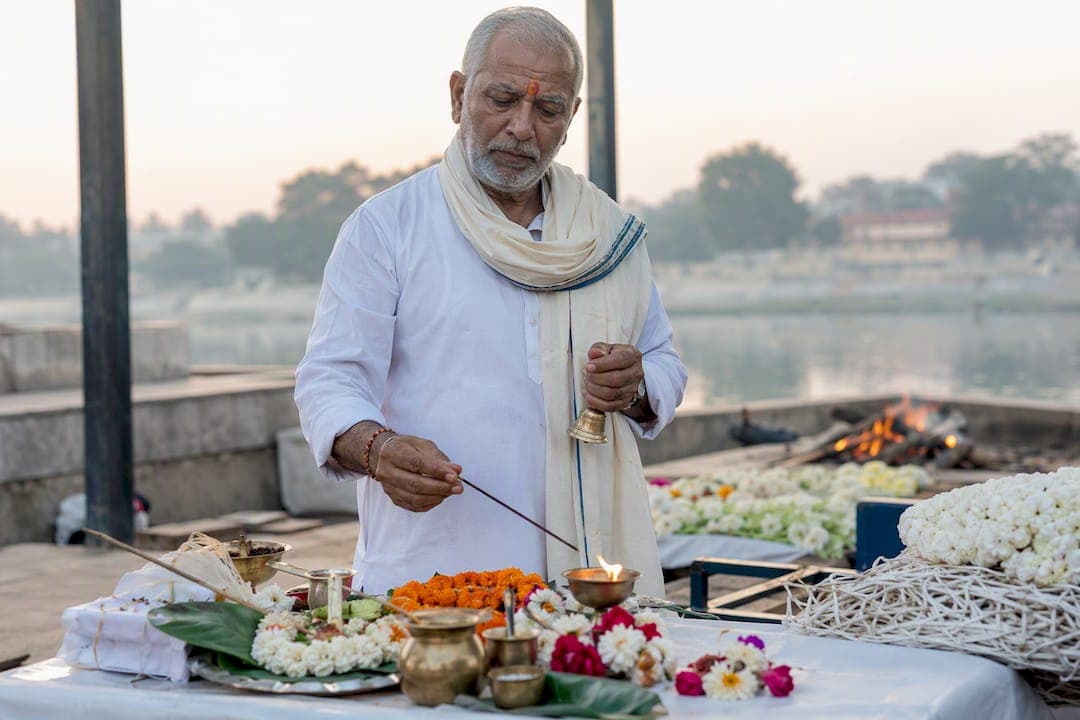
Download the digital Death Certificate through the Immigration & Checkpoints Authority (ICA) and report the death first. From there, apply for a Permit to Bury or Permit to Cremate (PTB/PTC) through the National Environment Agency's NEA ePortal so you can secure a cremation or burial slot. These two actions unlock everything else, from the wake to the final rites.
Your first hours checklist:
- Get the digital Death Certificate from ICA (report the death if it has not already been done at the hospital or by police).
- Have the deceased's NRIC and your own NRIC ready as next-of-kin.
- Contact a funeral director experienced with Hindu or Indian rites, such as Indian Life Memorial, who can guide the permit process.
- Apply for PTB/PTC via the NEA ePortal once the death certificate is issued.
- If someone else will handle bookings on your behalf, prepare a short letter of authorization.
Pro Tip: Keep every document in one folder from hour one. You'll need the same paperwork again for banks, insurers, and utility providers in the weeks ahead.
Key Takeaways
Reporting the death with ICA and applying for the PTB/PTC through NEA's ePortal are the two actions that unlock every other step in the funeral process.
| Point | Details |
|---|---|
| Start with ICA | Download the digital Death Certificate and report the death before anything else can proceed. |
| Book permits fast | Apply for PTB/PTC via the NEA ePortal to secure a cremation or burial slot that fits ritual timing. |
| Plan rites early | Book the priest and confirm embalming needs alongside the funeral director, not as an afterthought. |
| Decide on ashes | Choose between a columbarium, sea scattering off Raffles Lighthouse, Garden of Peace, or home storage. |
| Get culturally sensitive help | Indian Life Memorial offers 24/7 support, priest coordination, and permit handling from $1,888 with no hidden fees. |
Table of Contents
- Probate Process Singapore Checklist: Permits and Cremation Slots
- Planning Hindu and Indian Rites: Priests, Embalming, and the Wake
- What Happens to the Ashes After Cremation?
- Post-Funeral Admin: Banks, GIRO, and Insurance
- Do You Need a Grant of Probate for a Simple Estate?
- How Long Does the Whole Process Take?
- Which Agencies Will You Deal With?
- Common Delays and How to Avoid Them
- What Does the Whole Process Cost?
- A Note From Someone Who's Walked This Path With Families
- How Indian Life Memorial Supports Your Family Right Now
- Where to Find the Official Guidance
- Frequently Asked Questions
Probate Process Singapore Checklist: Permits and Cremation Slots
The word "probate" in most family searches after a death actually refers to the practical funeral checklist, not a court filing. Once ICA issues the digital Death Certificate, the next step is applying for the Permit to Bury or Permit to Cremate through NEA's ePortal. This single permit determines whether the body can be interred or cremated, and it is tied directly to a booked slot at a crematorium or cemetery.
Either the next-of-kin or an authorized funeral director can submit the PTB/PTC application. Most families let their funeral director handle this, since they already know slot availability and can match timing to when the priest and relatives can attend. If the digital Death Certificate is not yet available for any reason, NEA and LifeSG guidance confirms that other written confirmation-of-death documents can be used to apply for the permit in the interim, so a short administrative delay does not have to stall the funeral.
Slot booking through the ePortal also determines your wake timeline. Crematoria and burial grounds operate on fixed daily schedules, so booking early, ideally the same day the death certificate is issued, gives your family more flexibility to schedule Vedic rites at a time convenient for the priest and elders. Waiting too long can force you into a slot that clashes with ceremonial timing.
Planning Hindu and Indian Rites: Priests, Embalming, and the Wake
Antyesti, the Hindu last rites, generally calls for a priest (pandit) to lead prayers at the wake and again before cremation. Book the priest as early as you book the funeral director, since experienced pandits familiar with Tamil, Telugu, or North Indian traditions can be in demand, especially around auspicious or inauspicious dates that some families prefer to avoid.
Embalming is optional and depends mainly on how long the wake runs and whether relatives are traveling from overseas to view the body. NEA guidance notes that wakes extending beyond seven days require prior written permission from NEA, and licensed funeral parlours with proper infection-control training handle embalming when it's needed. For most Hindu wakes lasting one to three days, embalming isn't required.
The wake location matters for ritual reasons too. Some families prefer holding it at a void deck or community hall near the family home so relatives and neighbors can pay respects easily; others use a dedicated funeral parlour with facilities suited to Vedic rites, including space for the sacred fire ritual or havan where permitted. Your funeral director should confirm which venues accommodate open-flame rituals safely.
What Happens to the Ashes After Cremation?
Families arranging Hindu rites have four realistic paths for the ashes, and the choice often carries as much emotional weight as the funeral itself. A columbarium niche gives relatives a fixed place to visit, light a lamp, or leave flowers on death anniversaries, similar to how many temples encourage ongoing remembrance.
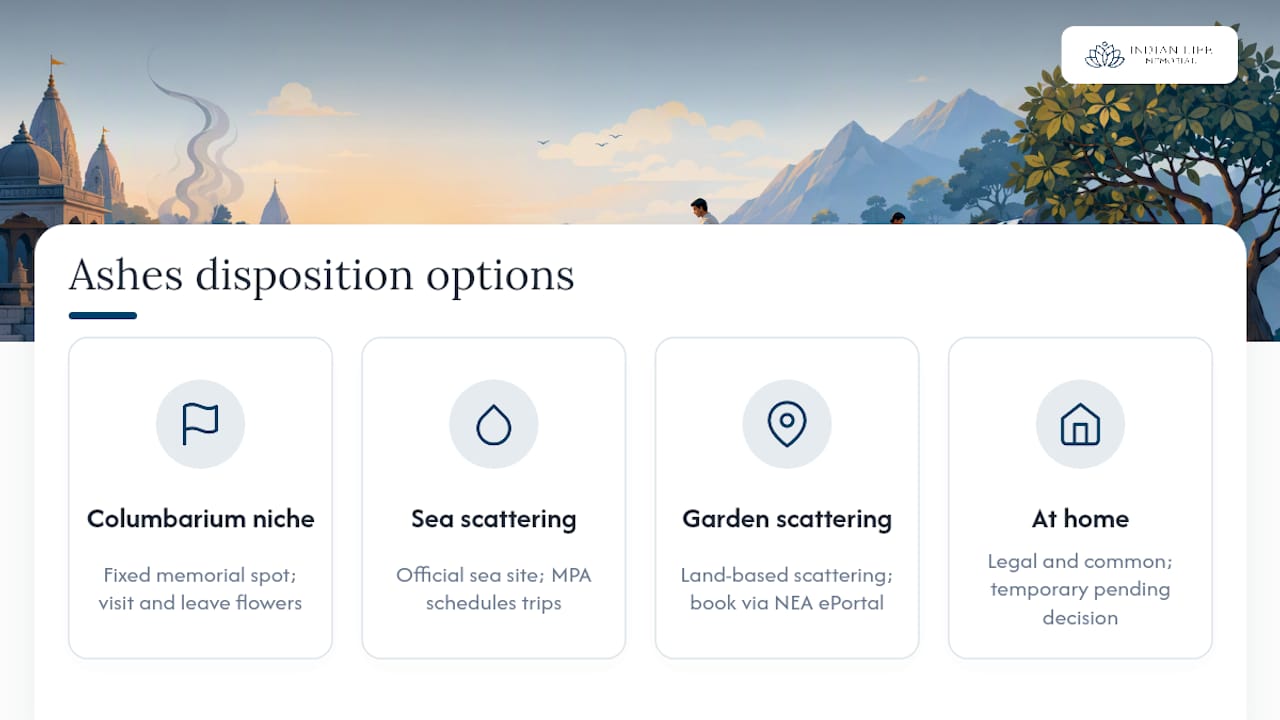
Sea scattering is a recognized alternative, with NEA and the Maritime and Port Authority of Singapore (MPA) designating an official site east of Raffles Lighthouse for this purpose. Families who see cremation ash as returning to the elements, consistent with Hindu teaching on the cycle of the atman, often choose this option. MPA coordinates the scheduling directly, and your funeral director can help arrange the trip out.
The Garden of Peace at Choa Chu Kang Cemetery offers a land-based scattering option for families who want a permanent, government-managed site without the logistics of a sea trip. Bookings run through the NEA ePortal, the same system used for the original PTB/PTC application.
Some families choose to keep the ashes at home, at least temporarily, before deciding on a permanent option. This is legal and common, though it works best when the family has already discussed where the ashes will eventually rest, since indecision here tends to create quiet tension weeks later.
Post-Funeral Admin: Banks, GIRO, and Insurance
The funeral is only half the task list. Once the rites conclude, next-of-kin need to notify several institutions, and doing this promptly avoids complications like bounced payments or lapsed coverage.
Start with the bank. Present the death certificate to stop GIRO arrangements tied solely to the deceased's account, and ask about joint accounts separately, since those often continue operating differently than solo accounts. Insurance companies need notification too, both to begin any claims process and to stop premium deductions where relevant.
Utility providers, telecom companies, and any subscription services in the deceased's name should be contacted next. Community caregiving resources consistently flag these as the tasks families forget under stress, only to be surprised by a bill months later.
Keep copies of the death certificate, NRIC, marriage certificate, and birth certificates of any dependents in one folder. You will present these documents repeatedly over the coming weeks, and reprinting or re-requesting them each time adds friction you don't need. If you're the one managing this alongside grief and Hindu ritual obligations like the 13th-day ceremony, a step-by-step estate administration guide can help you sequence the paperwork without missing a step.
Do You Need a Grant of Probate for a Simple Estate?
Not every family needs to apply for a Grant of Probate or Letters of Administration, and this confuses many next-of-kin who assume it's mandatory regardless of estate size. Whether it's required depends on the value and type of assets left behind, particularly whether the deceased held property, investments, or bank balances above certain thresholds that institutions will not release without a court order.
If a will exists naming an executor, that person typically applies for the Grant of Probate. Without a will, a family member applies for Letters of Administration instead, following the priority order set out under Singapore's intestacy rules. Either path starts with gathering the same core documents you already collected for the funeral: the death certificate, NRIC, and proof of the family relationship.
Because this legal process runs separately from funeral arrangements and follows its own court procedures, most families find it easier to complete funeral rites and immediate admin first, then turn attention to any court application once the household has settled. A funeral director cannot file this on your behalf, but they can make sure the funeral-related paperwork is clean and ready to hand to whichever lawyer or family member takes on the estate matters afterward.
How Long Does the Whole Process Take?
Most Hindu funerals in Singapore move from death to cremation within one to three days, largely because Hindu tradition favors a relatively swift cremation rather than an extended wake. The digital Death Certificate is often issued within hours of the hospital or police confirming the death, which means the PTB/PTC application and slot booking can happen the same day in many cases.
Ash-related decisions, whether that's booking a Garden of Peace slot or scheduling a sea scattering trip with MPA, typically happen within the first week or two after cremation, though there's no hard deadline forcing families to decide immediately. Administrative cleanup with banks, insurers, and utilities tends to stretch over several weeks, simply because each institution has its own notification timeline and required forms.
Culturally significant rites like the 13th-day ceremony (sometimes called karumathi or tehravin depending on the family's regional tradition) add another layer to the calendar. Booking the priest and caterer for that milestone early, ideally right after the funeral itself, avoids the last-minute scramble that catches many families off guard once the initial shock of the funeral has passed.
Which Agencies Will You Deal With?
You'll interact with a small, predictable set of government offices throughout this process, and knowing their roles ahead of time saves you from repeating the same explanation to five different phone lines.
ICA handles death registration and issues the digital Death Certificate, your entry point for everything downstream. NEA, through its ePortal, manages PTB/PTC applications, cremation and burial slot bookings, and ash scattering arrangements at the Garden of Peace. MPA specifically coordinates sea scattering logistics at the designated site off Raffles Lighthouse. LifeSG, through its MyLegacy pages, consolidates step-by-step guidance across all of these touchpoints in one place, which is useful when you're too exhausted to hunt across multiple government sites. The Competition & Consumer Commission of Singapore (CCS) doesn't process permits, but its funeral services checklist helps you evaluate quotes and compare what different providers actually include.
Common Delays and How to Avoid Them
The most frequent delay isn't bureaucratic, it's family disagreement over rites, ash disposition, or which provider to hire, and it tends to surface exactly when everyone is least equipped to handle conflict calmly. Settling major decisions, cremation versus burial, and where the ashes will eventually rest, as early as possible reduces this friction considerably.
A second common snag involves missing documents. Families sometimes discover the deceased's NRIC has been misplaced, or that a required authorization letter wasn't prepared before the person handling bookings needed to submit the PTB/PTC application. Preparing a short authorization letter with NRIC copies in advance, even before it's strictly needed, prevents this stall.
Wake duration can also trip families up. If relatives are flying in from overseas and the wake needs to extend past seven days, written permission from NEA is required, and that approval takes time to process. Flag this need with your funeral director immediately rather than assuming it will be approved on short notice.
Finally, priest availability during busy ritual periods can push timelines. Booking the pandit at the same time you confirm the funeral director, rather than treating it as a secondary task, avoids losing a preferred priest to another family's booking.
What Does the Whole Process Cost?
Funeral-related costs vary widely depending on wake length, venue, embalming needs, and whether the family wants a full traditional service or a simpler direct cremation. Direct cremation with a private prayer service has become a more common choice for families who want to reduce complication and cost while still honoring Hindu rites, often with the funeral director coordinating a simple Vedic prayer at the crematorium's service hall rather than a multi-day wake.
Permit and slot booking fees through the NEA ePortal are set by the agency and apply regardless of which funeral director you use. Ash scattering at the Garden of Peace or through MPA's sea scattering site carries its own modest booking costs, separate from the funeral package itself.
Where costs vary most is in the funeral package: casket or urn selection, venue rental for the wake, priest honorarium, catering for mourners, and any transport or repatriation needs if family members are arriving from abroad. This is exactly where the CCS funeral services checklist earns its place in your folder. It was built specifically to help families ask providers direct questions about what's included before signing anything, so you can compare quotes on equal terms rather than guessing at what a lump-sum figure actually covers.
A Note From Someone Who's Walked This Path With Families
Having sat with grieving families through Hindu funeral rites for years, I can tell you this checklist reflects what families actually do under pressure, not theory. Direct cremation with a simple private service is a completely valid choice, and a good funeral director will handle every permit and booking so your family can focus on the rites that matter most.
How Indian Life Memorial Supports Your Family Right Now
Indian Life Memorial exists for exactly the moment you're in: needing someone who understands Vedic rites and knows the NEA ePortal equally well. Our team coordinates priests, manages the PTB/PTC application, books your cremation or burial slot, and handles ash arrangements whether you choose the Garden of Peace, sea scattering, or a columbarium.
We're available 24/7, and pricing starts at a transparent $1,888 with no hidden fees added later, so you know the full cost before you commit. When you call, have the digital Death Certificate number, your NRIC as next-of-kin, and any rite preferences ready, and we'll take it from there. Explore our Hindu and Indian funeral services to see exactly what's included, or reach out through our services overview to start arranging support today.
Where to Find the Official Guidance
Keep these authoritative pages bookmarked alongside your death certificate and NRIC copies:
- ICA's death registration page for reporting the death and downloading the digital Death Certificate.
- NEA's ePortal for PTB/PTC applications and booking cremation, burial, or Garden of Peace ash scattering slots.
- MPA's ash scattering guidance for sea scattering logistics near Raffles Lighthouse.
- LifeSG's MyLegacy "When Death Happens" pages for a consolidated, plain-language walkthrough of every step.
- CCS's funeral services checklist for comparing provider quotes and knowing what questions to ask.
Frequently Asked Questions
What is the probate process in Singapore for funeral arrangements, explained simply?
In the context of funeral planning, it means the practical sequence of steps a family follows after a death: registering with ICA, obtaining the digital Death Certificate, applying for PTB/PTC through NEA, and completing post-funeral admin like notifying banks and insurers.
What documents do I need for the probate checklist after a death?
Gather the deceased's NRIC, the digital Death Certificate, marriage and birth certificates, and a letter of authorization if someone other than the immediate next-of-kin will handle bookings.
How do I file for a Permit to Bury or Cremate?
Apply through the NEA ePortal once ICA issues the digital Death Certificate. Either the next-of-kin or an authorized funeral director, such as Indian Life Memorial, can submit the application.
What if the digital Death Certificate isn't ready yet?
NEA and LifeSG guidance confirms other written confirmation-of-death documents can support a PTB/PTC application in the interim, so the funeral doesn't need to stall.
Do Hindu families need embalming for the wake?
Not always. Embalming depends on wake length and whether relatives are traveling from abroad to view the body; most one to three day Hindu wakes don't require it.
What are my options for the ashes after cremation?
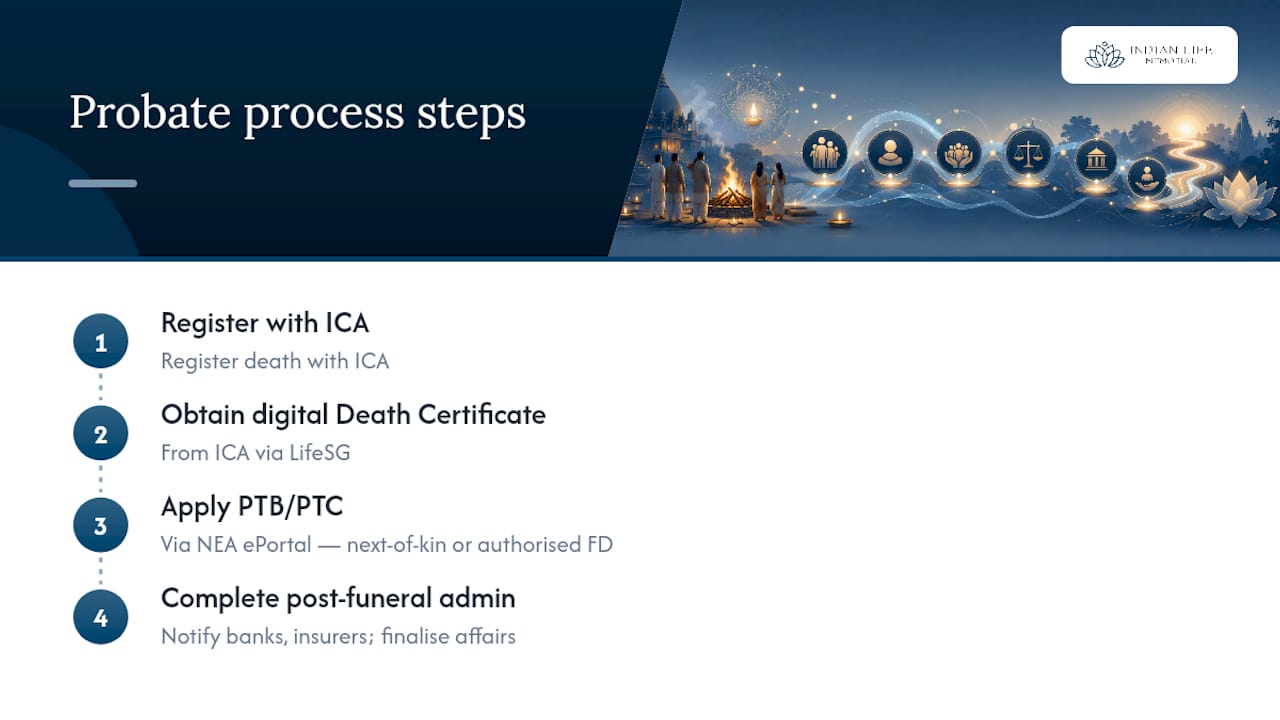
Choose from a columbarium niche, sea scattering at the MPA-designated site, land scattering at the Garden of Peace, or keeping the ashes at home until the family decides on a permanent option.