
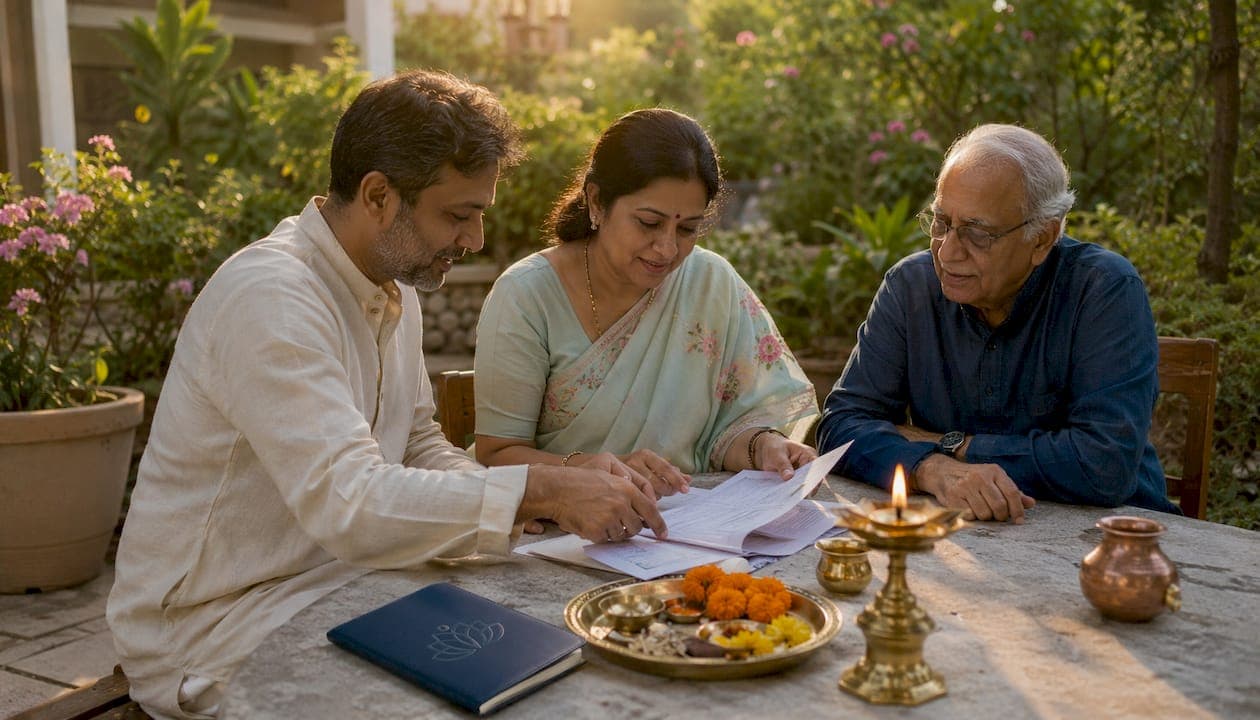
Karma is the law of cause and effect: every intentional action shapes future existence, and the cycle of rebirth (samsara) continues until the soul achieves liberation (moksha). Understanding what karma and afterlife belief mean in Hindu tradition is not just a doctrinal exercise. It is the foundation for every funeral rite your family will perform. When a loved one passes, those rites are not merely ceremonial. They are purposeful acts meant to support the atman's onward journey.
In the first hours, your family should:
- Contact a Hindu priest (Pandit) or your local temple immediately
- Keep the body clean and, where possible, positioned with the head facing south
- Notify the attending physician to obtain a death certificate
- Contact a funeral provider experienced in Vedic rites
- If the deceased is a foreign national, notify the relevant consulate
Table of Contents
- What is karma and afterlife belief in Hindu tradition?
- How karma and afterlife beliefs shape Hindu funeral rites
- Practical steps for arranging Hindu funeral rites in the United States
- Which mantras and prayers are commonly used, and how do you arrange them?
- How ritual and belief support your family through grief
- Key Takeaways
- A note from our team at Indianlifememorial
- Authoritative references and further reading
What is karma and afterlife belief in Hindu tradition?
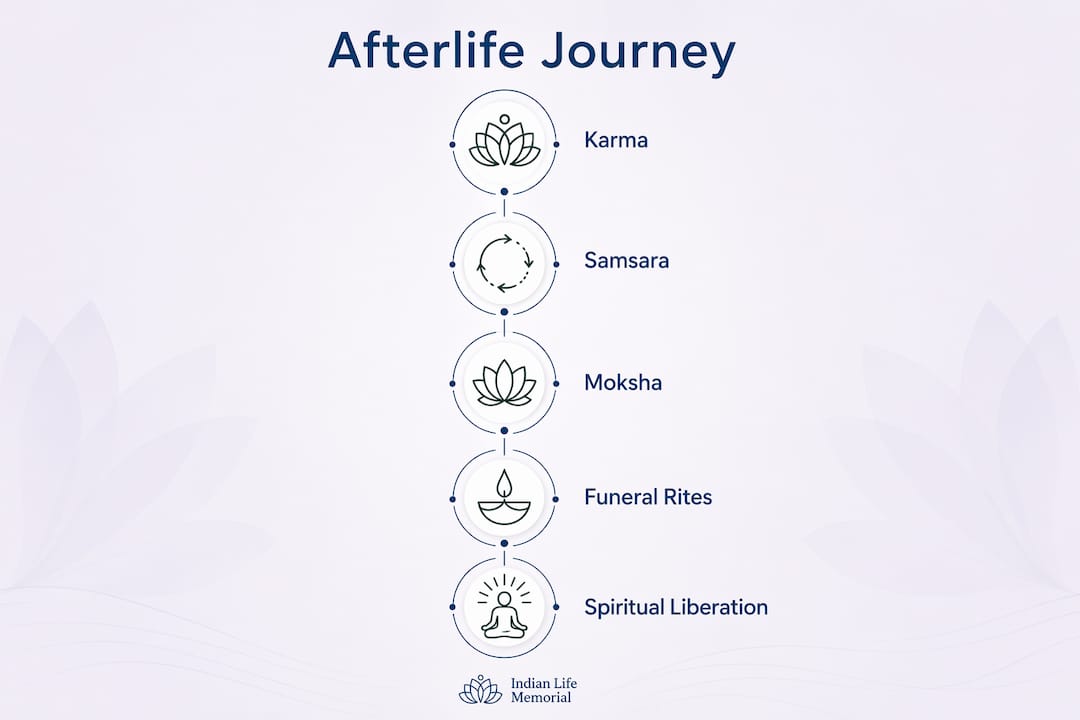
Karma is a Sanskrit term meaning action. According to Britannica, it operates as a universal law of cause and effect in which the intent behind deeds, not just the deeds themselves, shapes future existence and rebirths. The cycle of birth, death, and rebirth is called samsara, and it continues until the soul achieves moksha, liberation from that cycle entirely.
"Karma functions not merely as retributive justice but as an ethical orientation and framework for religious discipline, motivating a commitment to liberation." — Routledge Encyclopedia of Philosophy
The Stanford Encyclopedia of Philosophy notes that hope for a fulfilling future state for the deceased is central to grief, which is precisely why Hindu afterlife beliefs are inseparable from funeral practice. Rites are not performed to mark an ending. They are performed to assist the soul forward.
Moksha, in Vedantic understanding, is the realization that the individual soul (atman) and absolute reality (Brahman) are one. When that union is achieved, samsara ends. Funeral rites are framed as the final sacrament that helps the atman begin that journey free of earthly attachment.
How karma and afterlife beliefs shape Hindu funeral rites
Antyeshti, the last rites described in Britannica as Hinduism's final sacrament, aims to detach the soul from the body and prepare it for its next stage. Every element of the ritual sequence reflects this purpose.
Doctrine mapped to ritual:
- Cremation dissolves the physical body so the atman is not held to earthly form; fire is considered the purifying agent that releases the soul
- Mantras and Vedic prayers generate merit and express the family's intention to assist the soul, not merely mourn it
- Pind-daan (rice-ball offerings) and tarpan (water libations) nourish and honor the departed soul during the transitional period
- Shraddha ceremonies, performed at intervals, continue to support the soul's journey and honor ancestral bonds
Funeral rites are culturally bound practices that integrate beliefs about time, the divine, and continuity, as the Encyclopedia.com overview of afterlife traditions notes. They are part of a larger cosmological story your family holds.
| Phase | Timing | Key Rites |
|---|---|---|
| Immediate rites | — | Body preparation, lamp lighting, initial prayers |
| Cremation rites | 1–3 days | Antyeshti, mantras, fire ceremony |
| Post-cremation | Days 3–13 | Pind-daan, tarpan, daily prayers |
| Memorial rites | Day 13, monthly, annual | Shraddha, community gathering |
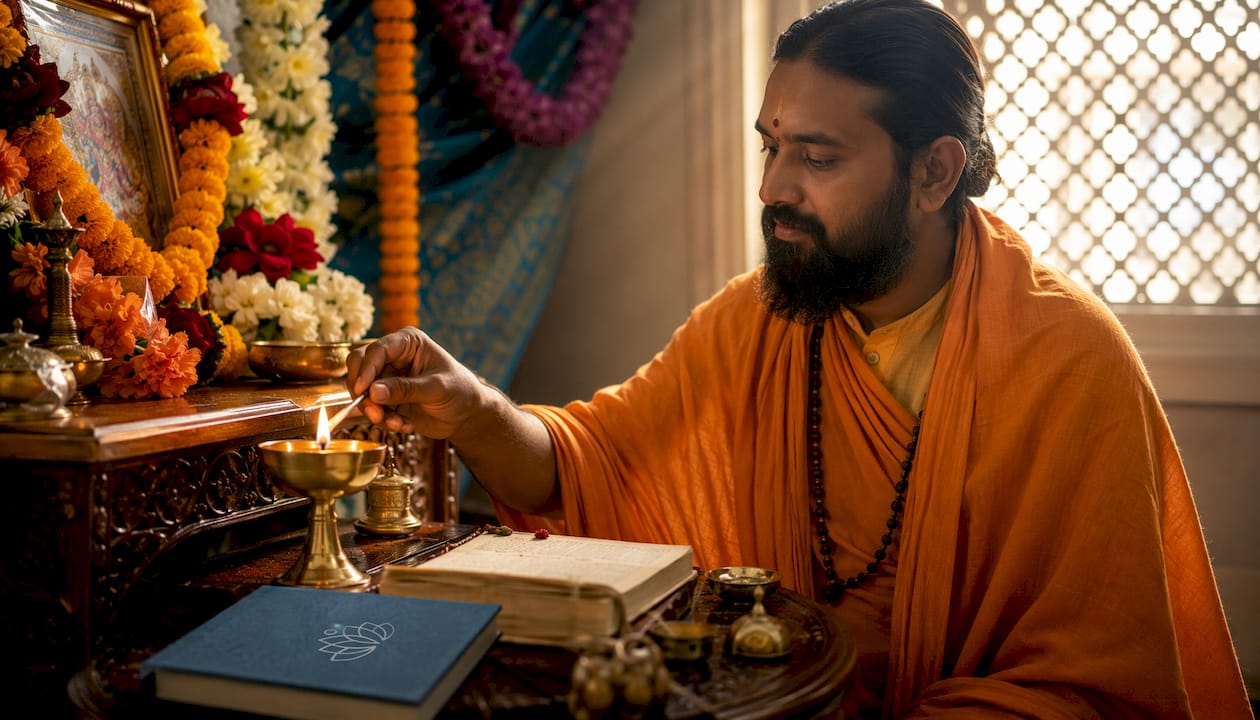
Pro Tip: Regional customs vary significantly. South Indian, North Indian, and Bengali families each observe distinct ritual sequences and mourning periods. Consult your local temple or Pandit before finalizing any schedule.
Practical steps for arranging Hindu funeral rites in the United States
Families arranging Hindu funeral rites in the United States face both religious and legal requirements. Here is a clear workflow.
1. Obtain the death certificate Contact the attending physician or medical examiner within 24 hours. No funeral arrangements can proceed without this document.
2. Notify your priest or temple Call your Pandit or local Hindu temple as early as possible. Ritual timing is often tied to astrological considerations, and priests need lead time.
3. Engage a funeral provider Choose a provider experienced in Vedic rites. Confirm they can accommodate open-flame ceremonies, specific body-preparation requirements (bathing, tulsi leaves), and cremation timing.
4. Handle legal paperwork In the United States, you will typically need a burial or cremation permit issued by the local registrar, in addition to the death certificate. Requirements vary by state.
5. Arrange the cremation or burial Most Hindu families choose cremation. Confirm the crematory's policies on witness attendance and ash-scattering, as local ordinances differ.
6. Plan post-cremation rites Coordinate pind-daan, tarpan, and the 13-day mourning period with your Pandit. If family members are traveling internationally, factor in visa and travel timelines.
7. Notify the consulate if applicable For families with ties to India or Singapore, notify the relevant consulate early. Repatriation of remains requires additional documentation and coordination. See repatriation coordination steps for a detailed walkthrough.
| Stage | Timeframe | Estimated U.S. Cost Range |
|---|---|---|
| Basic direct cremation | within a few days | moderate cost range |
| Traditional Vedic ceremony (full) | several days | higher cost range |
| Priest (Pandit) fees | Per ceremony | variable fees |
| Venue / hall rental | for a few days | moderate fees |
| Memorial shraddha ceremony | Around two weeks and annually | nominal fees |
Cost ranges are estimates and vary by city, provider, and community. Temple donations are separate and voluntary. Always confirm pricing in writing.
Legal caveat: State and local health codes govern cremation timing, body transport, and ash-scattering locations. Check with your state's funeral regulatory board and your funeral provider before finalizing any arrangement.
Questions to ask your priest and funeral home:
- Can you accommodate a specific cremation time based on astrological guidance?
- What body-preparation requirements do you follow for Hindu rites?
- Are witness attendance and open-flame rituals permitted at your facility?
- Which post-cremation rites do you recommend for our regional tradition?
Which mantras and prayers are commonly used, and how do you arrange them?
Mantras in Hindu funeral rites are not decorative. They carry intent, and according to Buddhist and Hindu doctrinal sources, intention (cetanā) is the primary determinant of karmic result. The prayers your family arranges are acts of merit-making on behalf of the deceased.
Common types of prayers used:
- Vedic invocations (such as verses from the Rigveda and Yajurveda) recited by the Pandit during the fire ceremony
- Name-specific commemoration verses that honor the deceased by name and lineage
- Kirtan and devotional chanting by family and community, which can be led by the priest or by a senior family member
For families who are not fluent in Sanskrit, transliterated texts with English translations are widely available through temples and Hindu cultural organizations. Many temples also offer recorded chanting for families who cannot arrange a priest in time, though live recitation by a qualified Pandit is preferred for the primary ceremony.
Pro Tip: When inviting a priest, confirm in advance which regional tradition (Shaivite, Vaishnavite, Smarta) they follow, as this affects which texts and sequences they use. Family recitation is appropriate for kirtan and bhajans; leave Vedic fire-ceremony mantras to the Pandit.
How ritual and belief support your family through grief
Philosophical treatments of the afterlife, including those in the Stanford Encyclopedia of Philosophy, note that hope for a good future state for the deceased is central to grief. Hindu rites channel that hope into action. Performing shraddha, lighting the lamp, and offering pind-daan give your family a way to express love and intention when words feel inadequate.
Sociological and psychological research indicates that karma and reincarnation beliefs function as moralizing frameworks that orient behavior and provide meaning during loss. Rites restore a sense of order. They give each family member a role, a schedule, and a shared purpose during the most disorienting days of loss.
Practical ways to support one another:
- Participate in daily prayers together during the 13-day mourning period, even briefly
- Assign specific ritual roles to family members so everyone feels included and purposeful
- Mark the annual shraddha date on the family calendar as a continuing act of remembrance
- Consider preserving memories and mementos as a complement to ritual observance
- Seek professional grief counseling if distress persists beyond the mourning period; many Hindu community centers in the United States offer bereavement support
Rites do not end grief, but they give it direction. That is their oldest and most enduring function.
Key Takeaways
Karma, samsara, and moksha form the doctrinal foundation that gives every Hindu funeral rite its purpose: to support the soul's transition and assist its journey toward liberation.
| Point | Details |
|---|---|
| Karma is driven by intent | The intention behind ritual actions matters as much as the actions themselves. |
| Rites assist the soul's journey | Antyeshti, pind-daan, tarpan, and shraddha each serve the atman's transition toward moksha. |
| Legal steps come first | Obtain the death certificate and cremation permit before any rites can proceed in the United States. |
| Regional customs vary | Consult your Pandit early; South Indian, North Indian, and Bengali traditions differ in sequence and timing. |
| Grief has a ritual structure | The 13-day mourning period and annual shraddha give families a shared framework for processing loss. |
Your first call: Contact a Hindu priest or temple as soon as possible after a death. Everything else follows from that.
A note from our team at Indianlifememorial
Grief arrives without warning, and the weight of arranging sacred rites while mourning is something no family should carry alone. The beliefs at the heart of Hindu funeral practice, that karma shapes the soul's journey and that rites genuinely assist that transition, are not abstract theology. They are the reason every prayer, every offering, and every carefully observed mourning day carries real meaning for the person you have lost.
At Indianlifememorial, we work with experienced Pandits and guide families through every step of the Antyeshti process with transparency and cultural respect. Whether your family follows South Indian, North Indian, or another regional tradition, our team is available around the clock to help you arrange Hindu and Indian funeral services that honor your loved one's journey with the dignity it deserves.
You do not have to figure this out alone. Reach out to Indianlifememorial any time, and we will walk alongside your family from the first call to the final memorial.
Authoritative references and further reading
These sources support the doctrinal and practical claims in this article. Consult them for deeper reading on karma, samsara, and afterlife beliefs.
- Britannica: Karma — foundational definition of karma as intentional action and its role in samsara and moksha
- Britannica: Antyeshti — description of Hindu last rites as the final sacrament and their ritual purpose
- Stanford Encyclopedia of Philosophy: Afterlife — philosophical treatment of afterlife beliefs and their emotional role in grief
- Routledge Encyclopedia of Philosophy: Karma and Rebirth — scholarly framing of karma as ethical discipline, not mere retribution
- Encyclopedia.com: Afterlife Overview — cultural and theological context for funeral rites across traditions
For legal and process guidance in the United States:
- Contact your state's funeral regulatory board for cremation permits, transport rules, and ash-scattering ordinances
- Consult your local Hindu temple or cultural organization for community-specific ritual guidance and priest referrals
- For families with cross-border needs, contact the Indian Consulate or relevant embassy for repatriation documentation requirements