
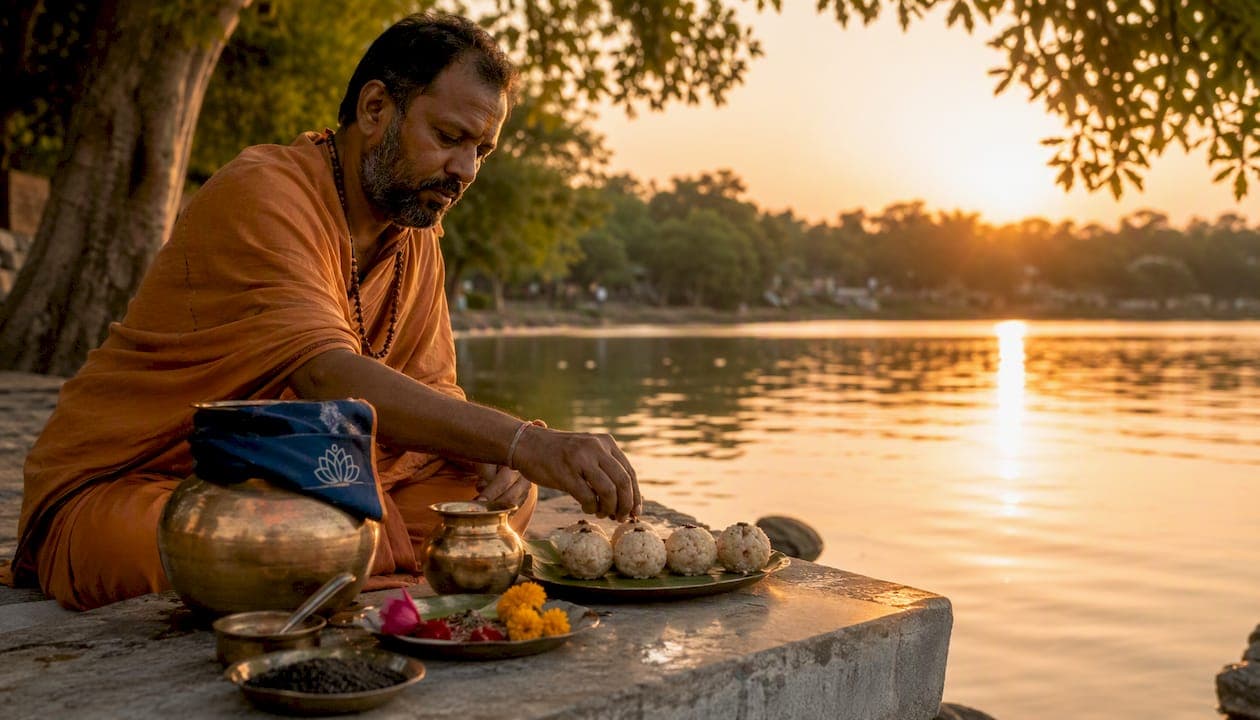
Pind Daan is a sacred Hindu ancestral rite in which the family offers pindas, small sanctified balls made of cooked rice or barley flour, to the souls of deceased ancestors. The word "pind" refers to the body or form, while "daan" means giving or offering. Together, the ritual nourishes the departed soul, expresses filial duty known as Pitru Rina, and helps the ancestor move toward liberation (moksha). Rooted in scriptures like the Garuda Purana and traditionally performed at sacred sites such as Gaya, the ceremony is most widely observed during the 15-day period of Pitru Paksha.
The core elements of a Pind Daan ceremony include:
- Pindas: cooked rice or barley balls mixed with sesame seeds, ghee, and honey
- Tarpan: water offerings poured for the departed soul
- Black sesame seeds and kusha grass: ritually significant items linked to Lord Vishnu
- Mantras and sankalp: formal vows and invocations recited by the karta or priest
- Daan (charity): food or essentials offered to Brahmins or the needy to generate merit (Punya)
Table of Contents
- Why is Pind Daan performed in Hinduism?
- What does a Pind Daan ceremony involve, step by step?
- When is Pind Daan performed, and how many pindas are offered?
- Who can perform Pind Daan, and how do regional practices differ?
- Where is Pind Daan traditionally done, and what are the options outside India?
- How to arrange Pind Daan in the United States
- Rules, etiquette, and common concerns
- Key Takeaways
- Why intention matters more than location
- Helpful sources and further reading
- Indianlifememorial: compassionate Hindu ritual services for your family
Why is Pind Daan performed in Hinduism?
Pind Daan repays Pitru Rina, the ancestral debt every person carries toward their forebears, and helps the departed soul find peace rather than remain in a state of longing or unrest. The Garuda Purana, one of the eighteen Mahapuranas, describes in detail how souls depend on the living to perform these rites for their onward passage. Without them, the soul is believed to linger between worlds, unable to progress toward moksha.
Practitioners and scholars consistently emphasize that Pind Daan is not merely a ritual obligation but a functional act of devotion (bhakti). The living family member who performs it, called the karta, participates in a reciprocal relationship with their ancestors: the ancestors once sustained the family, and the family now sustains the ancestor's soul on its journey.
Charity is woven into the rite's very structure. Anna Daan, the donation of food to Brahmins or those in need during Pitru Paksha, is considered an essential extension of the pinda offerings. This charitable act generates Punya, or spiritual merit, that benefits both the deceased and the living family. The rite is therefore as much about generosity as it is about ritual precision.
What does a Pind Daan ceremony involve, step by step?
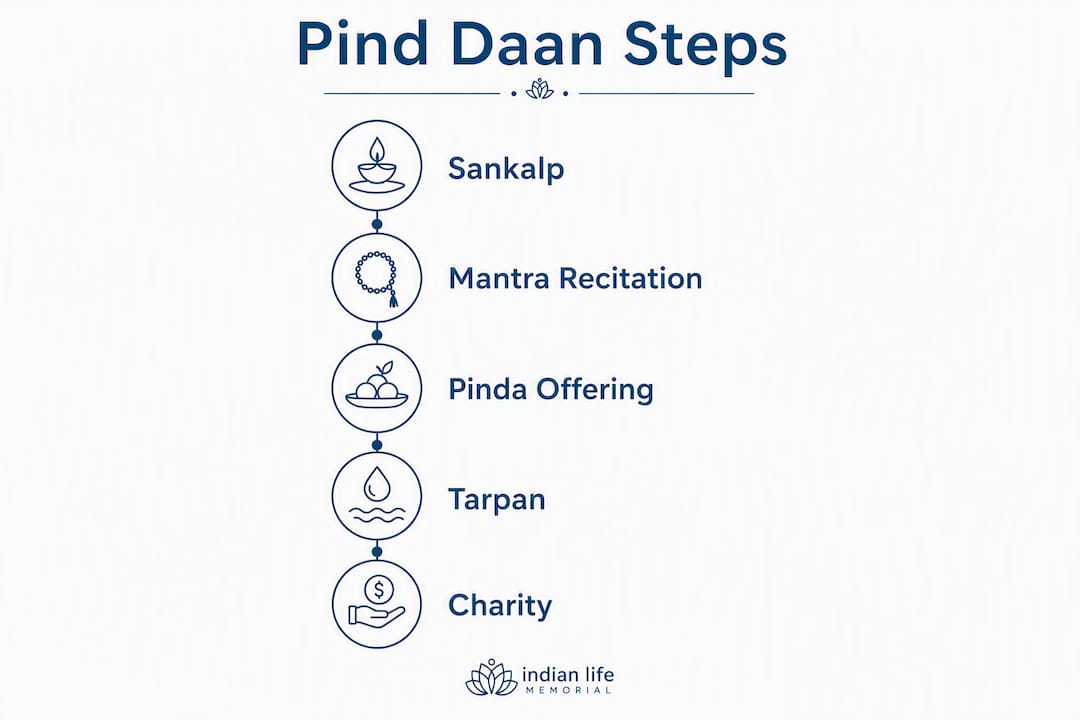
The ceremony flows from purification through offering to charitable conclusion. Here is the standard sequence most priests follow:
- Purification (Shuddhi): The karta bathes and wears clean, preferably white, clothing. The ritual space is cleansed. Duration: a brief period sufficient for purification.
- Sankalp (formal vow): The karta states their name, lineage, and intention aloud, formally dedicating the rite to named ancestors. A priest typically guides this recitation. Duration: a short period for formal vow recital.
- Pinda preparation: Cooked rice or barley flour is mixed with black sesame seeds, ghee, milk, and honey to form small balls. These are placed on kusha grass or a banana leaf. Duration: a modest time to prepare pindas.
- Invocation (Avahan): Mantras from the Garuda Purana and Pitru Sukta are recited to invite the ancestors' presence. Duration: a reasonable span for mantra invocation.
- Offering (Pinda Daan): The karta places each pinda with reverence, naming the ancestor for whom it is intended. Water (tarpan) is poured as an accompanying libation. Duration: a reasonable span for mantra invocation.
- Tarpan: Water mixed with black sesame seeds is offered through cupped hands, directed toward the south (the direction associated with ancestors). Duration: a short period for formal vow recital.
- Charity and conclusion (Daan): Food, clothing, or essentials are offered to a Brahmin or donated to the needy. The priest recites closing shanti mantras. Duration: a modest time to prepare pindas.
Materials needed:
- Cooked rice or barley flour (primary pinda base)
- Black sesame seeds (til)
- Ghee and honey
- Kusha grass or banana leaf (for placement)
- Clean water for tarpan
- Flowers and incense
- Food items for Anna Daan
Pro Tip: The karta need not memorize every mantra. Your role is to hold sincere intention and repeat the priest's recitations. What requires a qualified Pandit is the correct sequencing of Vedic mantras, the sankalp formulation, and the tarpan invocations. The preparation of pindas and the act of offering them can be guided by the priest and performed by the karta directly.
When is Pind Daan performed, and how many pindas are offered?
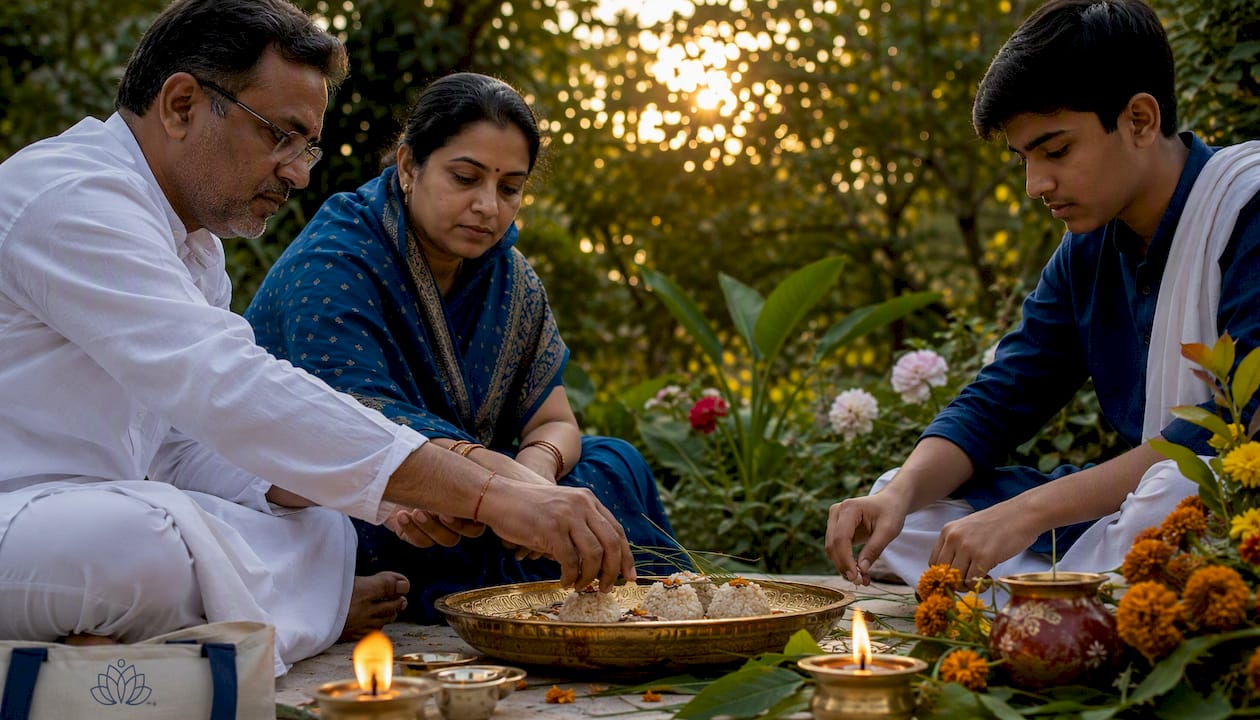
The primary windows for Pind Daan are the 15-day period of Pitru Paksha and the deceased's death anniversary (tithi); offerings are also made immediately after cremation and ash immersion.
Pitru Paksha falls in the lunar month of Bhadrapada (typically September–October) and culminates on Mahalaya Amavasya, the new moon day considered the most powerful for ancestral rites. Each of the 15 days corresponds to a specific lunar tithi, and families traditionally perform rites on the tithi that matches their ancestor's date of passing.
The number of pindas varies by tradition and the number of generations being honored. Standard practice covers three generations: father, paternal grandfather, and paternal great-grandfather, with corresponding pindas for each. Some traditions also include the maternal line. During Pitru Paksha, certain practices call for five portions per offering session, reflecting the belief that ancestors can receive offerings through multiple forms, including animals such as cows, dogs, and birds that may consume the pindas.
| Aspect | Detail |
|---|---|
| Pitru Paksha duration | 15 days (lunar fortnight) |
| Typical timing | September–October (Bhadrapada month) |
| Most significant day | Mahalaya Amavasya (final day) |
| Standard pindas per session | One per named ancestor (minimum three generations) |
| Five-portion tradition | Observed in some regional practices during Pitru Paksha |
| Other valid occasions | Death anniversary (tithi), post-cremation, Shraddha ceremonies |
Who can perform Pind Daan, and how do regional practices differ?
The karta, traditionally the eldest son or male head of the family, performs Pind Daan with a priest's guidance. That said, practices vary considerably across regions and communities, and women or other relatives may act as karta where local custom and family circumstance permit.
Common regional and sectarian variations:
- North Indian practice: Emphasis on Gaya as the primary site; rites often include multiple days of offerings at the Phalgu River and Vishnupad Temple.
- Bengali tradition: Mahalaya Amavasya holds particular cultural weight; families often gather at the Ganges for collective tarpan.
- South Indian practice: Rites may be performed at home or at local temples; the Brahmin priest's role is central, and the sequence of mantras differs from North Indian traditions.
- Modern diaspora practice: Simplified ceremonies conducted at local temples or homes, with a single qualified Pandit guiding the karta through an adapted but spiritually valid procedure.
- Orthodox vs. reformed: Orthodox families follow the full multi-day Shraddha sequence; reformed or urban families often condense the rite into a single session.
Steps requiring a qualified Pandit include the sankalp formulation, Vedic mantra recitation, and tarpan invocations. The karta can independently prepare the pindas, gather materials, and make the physical offerings under the priest's direction.
Where is Pind Daan traditionally done, and what are the options outside India?
In India, Gaya (Vishnupad Temple and the Phalgu River), Varanasi, Haridwar, and Prayagraj are the traditionally preferred sites; outside India, local Hindu temples and qualified community priests provide spiritually recognized alternatives.
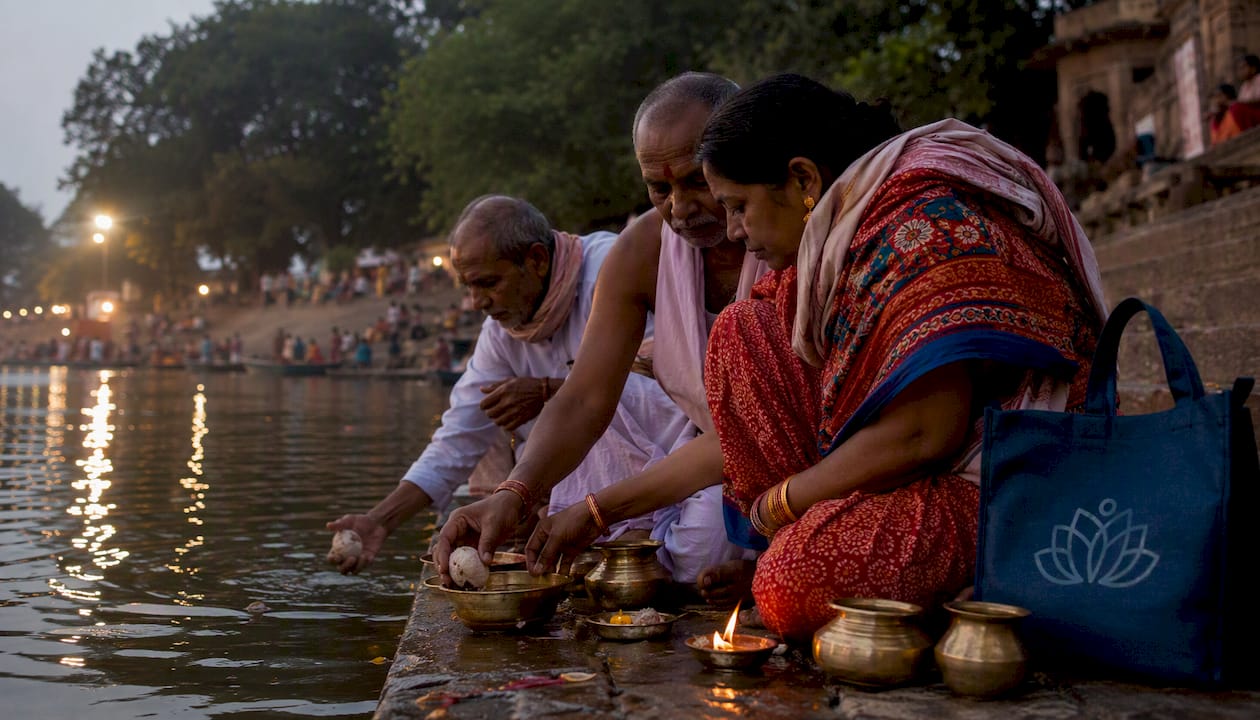
Gaya holds a singular place in Hindu tradition. The Garuda Purana and other Puranic texts describe it as the site where Lord Vishnu's footprint (Vishnupad) sanctifies every offering made there, multiplying its merit. Families who perform Pind Daan at Gaya are said to release their ancestors from the cycle of rebirth in a single rite, a claim that draws pilgrims from across the world every Pitru Paksha.
| Dimension | Traditional site (e.g., Gaya) | Diaspora option (U.S. temple or home) |
|---|---|---|
| Spiritual significance | Highest (Puranic sanction, Vishnupad) | Recognized; intention and correct procedure are primary |
| Accessibility | Requires travel to India | Available locally via temple or community priest |
| Priest availability | Specialized Gaya pandas on-site | Qualified Pandits through temple networks or diaspora services |
| River/water offering | Phalgu River, Ganges | Temple tank, clean water vessel, or nearby river with permission |
| Duration | 1–3 days (full pilgrimage) | 2–4 hours (single-session ceremony) |
Practical checklist for a U.S. temple or home ceremony:
- Confirm the Pandit's credentials and experience with Shraddha rites
- Gather all materials in advance (sesame seeds, ghee, kusha grass, rice or barley flour)
- Arrange a clean, dedicated space or book a temple hall
- Prepare a list of ancestors' names and, where known, their tithis
- Check local municipal guidelines for outdoor water offerings or pinda disposal
How to arrange Pind Daan in the United States
You can arrange Pind Daan in the U.S. through local Hindu temples, community priests, or specialized diaspora funeral and ritual services; remote or online puja is a practical fallback when no local Pandit is available.
Checklist for arranging the ceremony:
- Contact your nearest Hindu temple (BAPS, Chinmaya Mission, or local community mandirs) and ask specifically whether they facilitate Shraddha or Pitru Paksha rites
- Ask the Pandit: Do you perform tarpan? Do you supply materials, or must we bring them? How long does the ceremony take?
- Confirm whether the temple hall is available or whether a home visit is possible
- For online puja, verify that the service includes a live-streamed ceremony with a qualified priest performing the full sequence, not a pre-recorded session
- Book at least two to three weeks ahead during Pitru Paksha, when demand is highest
Typical cost components:
| Component | Typical range |
|---|---|
| Pandit/priest fee | Varies by region and ceremony length |
| Ritual materials (sesame, ghee, kusha, rice) | Modest; most items available at Indian grocery stores |
| Temple hall or venue | Varies; some temples waive fees for members |
| Travel (if priest comes to your home) | Agreed in advance with the Pandit |
| Full-service Hindu funeral and ritual packages | Starting from $1,888 with Indianlifememorial |
Ceremony timeline: Preparation and material gathering typically take one to two hours. The ceremony itself, from sankalp to the closing daan, runs approximately two to four hours. If you are booking a Pandit for a home visit, allow an additional hour for setup and travel buffer.
Pro Tip: Ask the Pandit to walk you through the sankalp wording before the ceremony begins. Knowing your ancestors' names, their relationship to you, and their approximate tithis will make the formal vow more precise and personally meaningful.
For families navigating diaspora funeral logistics, understanding how these rites connect to the broader Antyesti process can help you plan with greater confidence.
Rules, etiquette, and common concerns
Follow purity and cleanliness, hold correct intention, and take guidance from your temple or Pandit. Those three principles cover most protocol questions.
Dos and don'ts:
- Do bathe before the ceremony and wear clean, preferably white or light-colored clothing
- Do fast or eat only sattvic (pure vegetarian) food on the day of the rite
- Do maintain silence or speak only in the context of the ritual during the offering
- Do dispose of pindas respectfully: in a river, temple tank, or by leaving them for birds and animals
- Don't use non-vegetarian food, alcohol, or onion and garlic on the day of the ceremony
- Don't photograph the offering itself without the Pandit's explicit permission
- Don't perform the rite in a state of anger or distraction; intention is central to the rite's efficacy
Common concerns answered:
What if you miss Pitru Paksha? The rite can be performed on the deceased's tithi (death anniversary) or on Amavasya (new moon day) in any month. Missing Pitru Paksha does not permanently foreclose the opportunity.
Can women perform Pind Daan? Yes, in many traditions and particularly where no male heir is present. South Indian and modern urban practice increasingly recognizes women as karta. Consult your family's Pandit for guidance specific to your tradition.
How do you dispose of pindas in the U.S.? Offering pindas to birds or animals in a garden or park is the most common diaspora practice. For water disposal, check local municipal guidelines: most jurisdictions permit small biodegradable food offerings in natural waterways, but confirm before proceeding.
Legal and cultural note: Outdoor ritual offerings in the U.S. are generally permissible on private property; for public parks or riverbanks, check local permitting rules, as regulations vary by municipality.
Key Takeaways
Pind Daan is a sacred Hindu ancestral rite that repays Pitru Rina through pinda offerings, tarpan, and charity, and can be performed at traditional Indian sites or through qualified priests and temples in the United States.
| Point | Details |
|---|---|
| Core definition | Pind Daan offers sanctified rice or barley balls to ancestors to nourish the soul and aid its passage toward moksha. |
| Primary timing | The 15-day Pitru Paksha period (September–October) and the deceased's death anniversary are the main occasions. |
| Who performs it | The karta (typically the eldest son or family head) leads with a qualified Pandit guiding mantras and tarpan. |
| U.S. arrangement | Local Hindu temples, community priests, and specialized diaspora services can facilitate the full ceremony. |
| Indianlifememorial | Indianlifememorial offers Hindu Vedic funeral rites with qualified priests, transparent pricing from $1,888, and compassionate guidance for families. |
Why intention matters more than location
There is a tendency, understandable and deeply human, to feel that Pind Daan performed outside India is somehow less valid. Families carry guilt about not traveling to Gaya, about using a local temple instead of the Phalgu River. What the tradition itself says, and what experienced priests consistently affirm, is that bhav, sincere intention, is the true substance of every offering. The pinda is a vehicle. The love and duty behind it are what reach the ancestor.
Preparing for this rite means more than gathering sesame seeds and kusha grass. It means sitting quietly before the ceremony, recalling the person you are honoring, and arriving at the ritual space with a clear and devoted mind. That preparation, more than any geographic coordinate, is what makes the rite whole. If your family is arranging Pind Daan far from India, do not let distance diminish your confidence. Perform it with care, with a qualified Pandit, and with the full weight of your love for the person who came before you.
Helpful sources and further reading
- Garuda Purana (Puranic text): The primary scriptural source for ancestral rites, detailing the soul's journey and the importance of Shraddha and Pind Daan. Essential for understanding the theological basis.
- "Tending to the soul: The Hindu tradition of pinda daan explained": Covers the definition of pind and daan, materials used, and the significance of Pitru Rina. Useful for readers new to the ritual.
- "Science behind Pind Daan — why should we perform this ritual": Explains the step-by-step procedure and emphasizes the role of intention (bhav) and the legitimacy of home or temple ceremonies.
- "Unlocking the sacred significance of Pind Daan and black sesame in Pitra Paksha": Details the ritual importance of black sesame seeds and kusha grass, with scriptural references to Lord Vishnu.
- "Why to do Pind Daan in Gaya of Bihar?" (Times of India): Explains the five-portion tradition, the significance of Gaya, and how ancestors are believed to receive offerings through animal forms.
- "What is Pind Daan? Significance, Rituals, and Sacred Locations": A comprehensive overview of materials, steps, and sacred sites; useful for readers planning a ceremony.
- "Understanding the Meaning of Pind Daan": Covers diaspora arrangements, remote puja options, and the role of local temples for families outside India.
- Hindu funeral rites guide by Indianlifememorial: A practical primer on the broader context of Hindu death rites, including how Pind Daan fits within the Antyesti sequence.
Indianlifememorial: compassionate Hindu ritual services for your family
Arranging Pind Daan with the right priest, the right materials, and the right guidance is what separates a ceremony that feels complete from one that leaves your family uncertain. Indianlifememorial offers exactly that: qualified Pandits, culturally sensitive Vedic rites, and transparent pricing starting at $1,888 with no hidden fees.

Families who have worked with Indianlifememorial describe a process that is clear at every step, from the initial call to the closing daan. The team coordinates priest availability, ritual materials, and venue logistics so your family can focus entirely on honoring your loved one. Whether you need a full Hindu funeral service or guidance on ancestral rites as part of a broader arrangement, Indianlifememorial is available 24/7. Reach out today to speak with a compassionate advisor who understands what your family needs.