
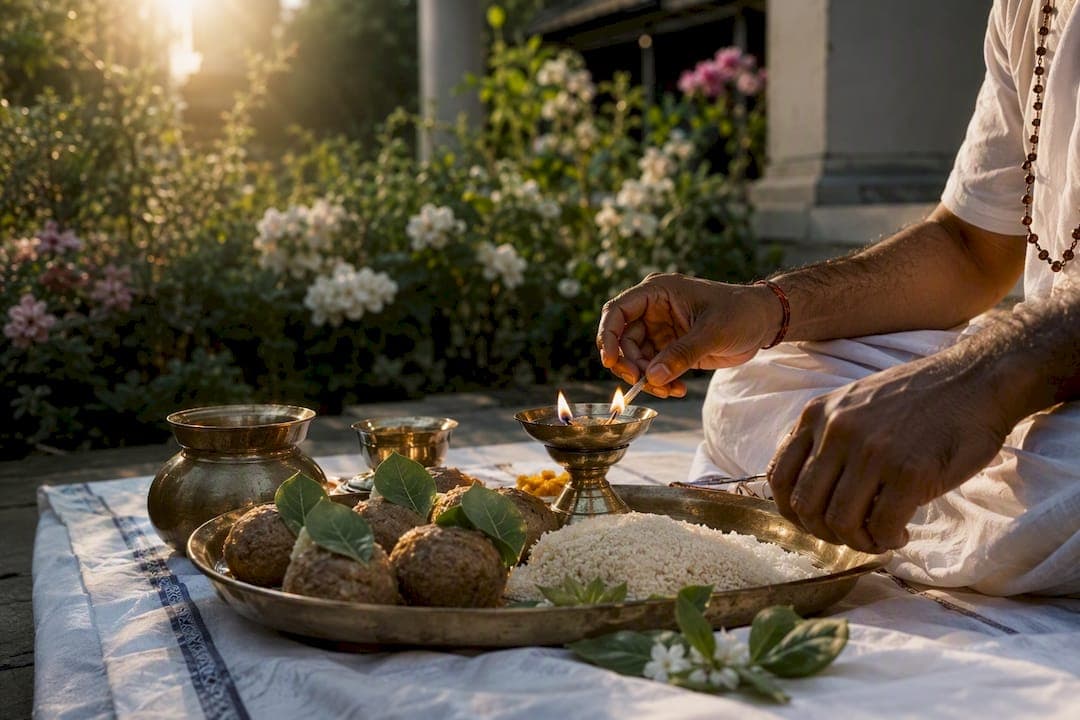
Antyesti, the Hindu cremation rites, moves a family through three phases: preparing the body with washing and prayer, the cremation ceremony itself at a pyre or crematorium, and post-cremation rites that guide the soul's journey. Cremation typically happens within about two days of death, though timing and specific customs vary by region, sect, and family tradition.
TL;DR:
- The timing of cremation usually occurs within two days of death, but delays may happen due to travel, unexpected deaths, or facility availability.
- Preparation involves washing with spiritual substances like milk and turmeric, dressing according to gender customs, and offering items such as rice balls and Tulsi leaves.
- The cremation ceremony includes circumambulation, offerings to Agni, and lighting the fire, with rites adapted for traditional wood pyres or electric crematoria.
- Ashes are collected within one to two days and traditionally immersed in the Ganges or similar water, followed by a mourning period of about ten days with daily rituals.
- Administrative steps like obtaining the death certificate and booking with approved crematoria are essential to prevent delays, while eco-friendly options include electric cremation and alternative immersion methods.
Table of Contents
- What Is Antyesti and Why Do Hindus Cremate?
- What Are the Steps in a Hindu Cremation Timeline?
- How Is the Body Prepared for Hindu Cremation?
- What Happens During the Cremation Ceremony?
- What Rituals Follow Cremation and How Long Does Mourning Last?
- What Documents and Permits Does Hindu Cremation Require?
- Are There Eco-Friendly Options for Hindu Cremation?
- A Publisher's Perspective on Getting This Right
- How Indianlifememorial Supports Families Through Antyesti
- Where to Verify These Rites and Procedures
What Is Antyesti and Why Do Hindus Cremate?
Antyesti, sometimes called Antima Samskara or Vahni Samskara, is the final of the sixteen samskaras that mark a Hindu life from birth through death. The word itself means "last rites," and the rites exist to do one thing: help the atman, the soul, separate cleanly from the physical body so it can continue its journey toward liberation.
Fire, or Agni, sits at the center of this belief. In Hindu philosophy, Agni is not just flame but a messenger, carrying the offering (in this case, the body itself) from the earthly realm into the spiritual one. Cremation is understood as a final act of purification, releasing the five elements the body is made of back into nature while freeing the atman from any remaining attachment to physical form.
That said, no single "correct" version of Antyesti exists everywhere. Practices shift based on region, community, and even the specific temple lineage a family follows. What holds constant is the underlying purpose:
- Purification of the body and the soul's release from it
- Fulfillment of a final duty (dharma) owed by the family, especially the eldest son or closest male relative
- Support for the soul's transition, easing its passage rather than leaving it tied to the world it has left
- Marking closure for the community, not just the immediate family
Understanding this framework matters before walking through the mechanics, because every action in the process, from washing the body to lighting the fire, ties back to one of these spiritual goals. None of it is arbitrary.
What Are the Steps in a Hindu Cremation Timeline?
Families rarely have time to research ritual sequencing while grieving, which is exactly why having a clear checklist matters in the first hours after a death.
- Confirm the death and get medical certification. A doctor or hospital issues the certificate needed before any funeral arrangements can proceed.
- Contact a priest and a funeral director experienced in Hindu rites. Timing and ritual sequence both depend on getting the right people involved early.
- Wash and purify the body. This usually happens at home or at a funeral parlor, using water, and often milk or other purifying substances.
- Dress the body and arrange a viewing or wake. Families choose based on tradition and practicality; some prefer a home wake, others a funeral parlor setting.
- Transport the body to the crematorium or cremation ground. A procession often accompanies this step, with specific customs about who leads and how the body is carried.
- Perform rites at the crematorium. This includes circumambulation, offerings, and either lighting the pyre or initiating an electric cremation.
Most families complete cremation within about two days of death, a window that reflects both spiritual guidance and practical necessity. Exceptions happen: waiting for family to travel from abroad, coroner involvement in unexpected deaths, or facility availability can all push the timeline out. A licensed funeral director familiar with Hindu customs can help a family adjust the sequence without compromising the rites that matter most.
Pro Tip: Ask your funeral director which steps can happen in parallel. Body preparation and priest coordination often run at the same time, which can shave hours off an already stressful day.
How Is the Body Prepared for Hindu Cremation?
Preparation of the body is where ritual and practicality meet, and it is usually the first place families feel the weight of tradition settle in.
Washing comes first, and it is rarely a plain bath. Water mixes with milk, ghee, and sometimes turmeric, each carrying its own symbolic weight. Turmeric represents purity and protection, milk and ghee suggest nourishment carried into the next stage of the soul's journey, and Tulsi leaves (holy basil) are often placed on or near the body for their sacred association with Vishnu.
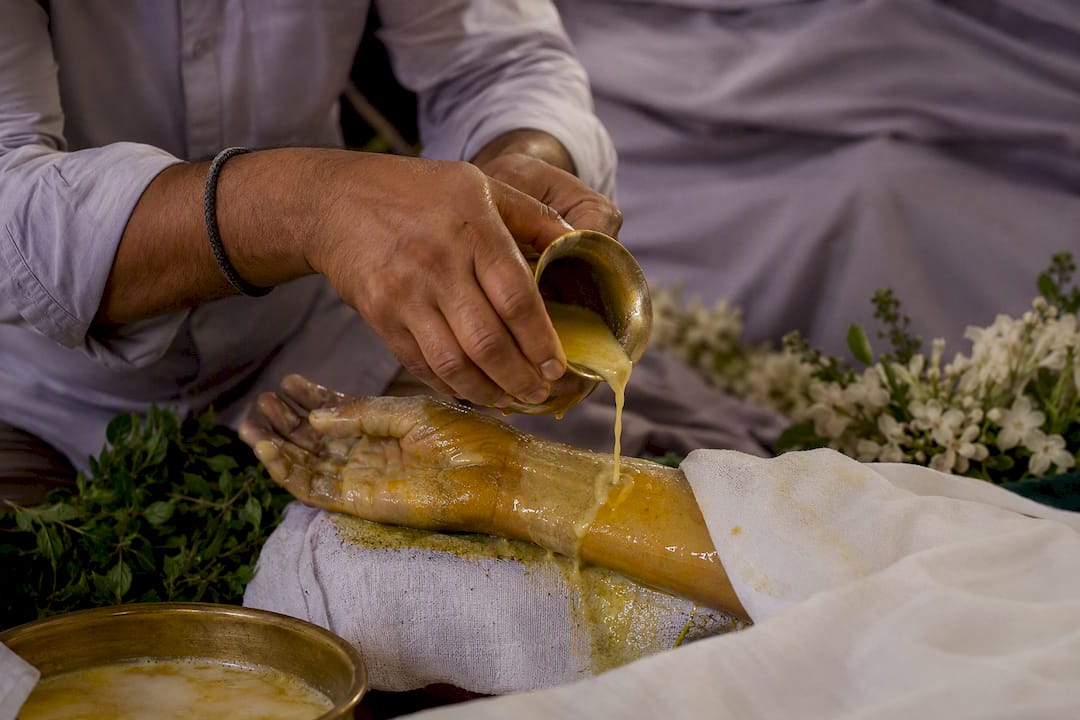
Dressing follows specific gendered customs in many communities. Men are often dressed in white, a color tied to mourning and simplicity across Hindu tradition, while married women may be dressed in red or another color significant to their marital status. Some families tie the big toes together, a practical and symbolic gesture some traditions associate with keeping the body composed.
Offerings placed with the body typically include:
- Rice balls (pinda), symbolizing sustenance for the soul's onward journey
- Tulsi leaves, placed near the mouth or chest
- Small amounts of gold or a coin, in some regional customs
- Flowers, particularly marigold, arranged around the body
Not every family handles this stage themselves. Many now choose professional preparation, including embalming and casketing, particularly when repatriation is involved or when a wake will last more than a day. This choice does not diminish the ritual; it simply shifts who performs the physical tasks while family members focus on prayer and presence. Guidance on appropriate hindu funeral attire can help relatives and guests dress respectfully for the wake and ceremony that follow.
What Happens During the Cremation Ceremony?
The ceremony itself follows a sequence that has remained largely consistent even as cremation methods have modernized.
The body is carried to the crematorium, generally feet first, a positioning tradition holds as appropriate for the deceased's final journey. Some communities orient the body facing north, others south, depending on regional custom, and crematorium staff can usually confirm which convention applies to a given facility. The eldest son or closest male relative typically leads the procession and performs the primary rites, though modern practice increasingly allows female relatives to take on this role when family circumstances call for it.
At the pyre or crematorium, mourners circumambulate the body, usually three or five times, while priests recite mantras invoking Agni and requesting a peaceful passage for the soul. Rice and pinda offerings are placed near the body, and ghee is sprinkled as a purifying, sacred substance meant to feed the fire and, symbolically, the journey ahead.
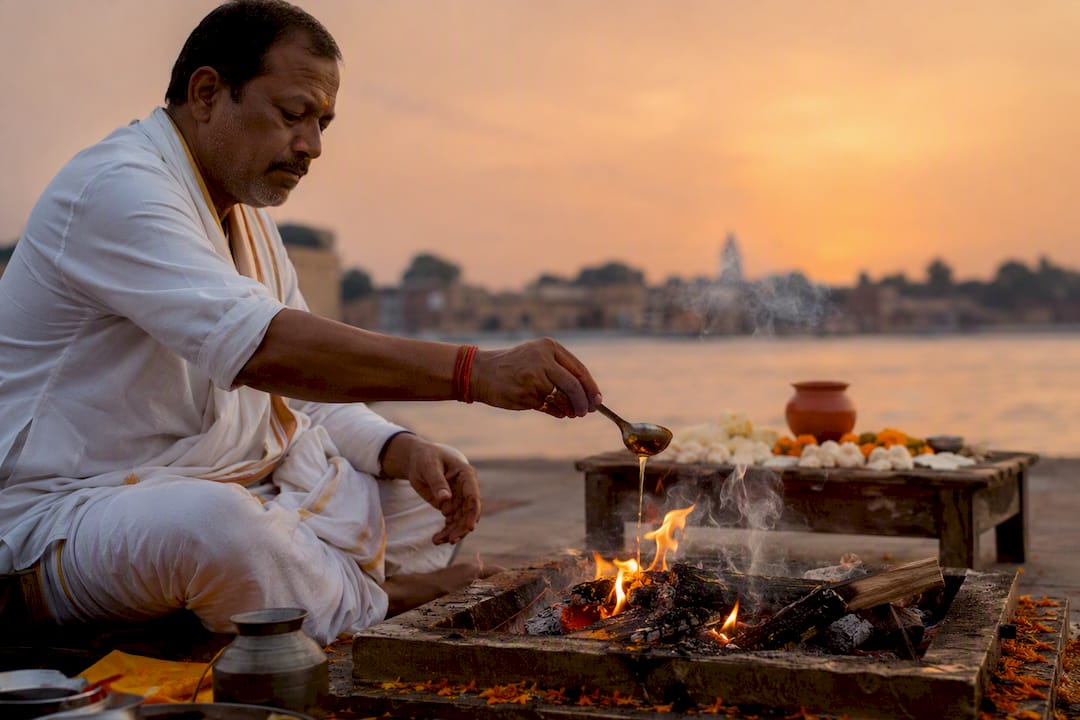
The moment of lighting differs depending on whether the family uses a traditional wood pyre or an electric crematorium. On an open pyre, the eldest son lights the fire directly, often after performing kapal kriya, a ritual act traditionally involving a symbolic strike to the skull meant to release the soul from the body. Electric crematoria change the mechanics: the body rests on rails inside a chamber rather than atop wood, and the family may initiate the process with a switch or button rather than a flame. Most of the surrounding rites, the offerings, the mantras, the circumambulation, continue regardless of method, and many facilities allow a modified or symbolic version of kapal kriya for families who prefer it.
After the fire has done its work, immediate etiquette calls for mourners to bathe before returning home, a practice tied to purification after contact with death. Ashes are collected once cooling permits, usually a day or so later. Flowers and offerings placed during the ceremony carry their own significance, detailed further in this guide to funeral flowers and offerings.
What Rituals Follow Cremation and How Long Does Mourning Last?
Cremation is not the end of Antyesti. Ash collection and the days that follow carry as much ritual weight as the ceremony itself.
Ashes are typically gathered within a day or two of cremation, cooled and placed in an urn. Traditional practice calls for immersion in a sacred river, the Ganges being the most significant, though families outside India or without easy river access increasingly arrange immersion in a locally significant body of water or repatriate ashes for immersion abroad.
Mourning practices commonly last around ten days, with the family observing daily rites during that period. Shraddha, the ceremony that honors and nourishes the departed soul, and pind daan, the ritual offering of rice balls to assist the soul's journey, both take place during or shortly after this period. These rites are considered essential to the soul's transition toward peace.
- Ashes collected once cooled, generally within one to two days
- Immersion arranged in a sacred river or an alternative body of water when travel isn't possible
- Mourning period of 10 to 13 days observed with daily rituals
- Shraddha and pind daan performed to support the soul's onward journey
- Annual Shraddha observed afterward as a remembrance rite
Families who want a deeper walkthrough of this stage can find it in this guide to Hindu post-cremation rites. Many households also continue an annual Shraddha observance, treating it as a yearly touchpoint for remembrance rather than a one-time obligation.
What Documents and Permits Does Hindu Cremation Require?
Arranging a cremation isn't only a spiritual undertaking. Administrative steps run in parallel, and getting them right early prevents delays during an already difficult week.
Families generally need a medical death certificate and identification documents for the deceased before a crematorium will proceed. The National Environment Agency (NEA) publishes official guidance covering cremation procedures at approved facilities, including how electric crematoria operate and what documentation is expected. A licensed funeral director typically handles the booking process directly with the crematorium, coordinating available slots around the family's preferred timing and the priest's schedule.
- Medical death certificate, arranged through the attending doctor or hospital
- Identification documents for the deceased
- Crematorium booking, usually coordinated by the funeral director
- Confirmation of approved facility use per NEA cremation guidelines
- Repatriation paperwork, if ashes or remains need to travel internationally
For anything unusual, a delayed timeline, cross border repatriation, or disputes over next-of-kin authority, contacting the funeral director or the relevant government body directly resolves most issues faster than guesswork. A broader post-death checklist for Hindu and Indian families covers the administrative side beyond cremation itself.
Are There Eco-Friendly Options for Hindu Cremation?
Traditional wood pyres consume a significant amount of timber per cremation, a fact that has pushed both environmental advocates and religious communities toward alternatives that respect ritual while reducing impact.
Electric crematoria represent the most widespread eco-friendly shift already in practice. They eliminate the need for cut timber entirely and typically produce less smoke than an open pyre, while still allowing mantras, offerings, and most ceremonial acts to proceed as they would at a traditional cremation ground. Some crematoria have also introduced improved pyres that use less wood through better airflow design, cutting fuel consumption without changing the ritual itself.
Ash handling has an environmental dimension too. Immersion in rivers, once assumed to be harmless, has drawn scrutiny in regions where waterways already face pollution pressure. Families increasingly consider immersion in less ecologically sensitive water or explore memorial alternatives that reduce the volume of material entering a river system.
None of these shifts require abandoning the spiritual core of Antyesti. The mantras, the offerings, the mourning period, and Shraddha remain intact regardless of whether the fire comes from wood or electricity. What changes is the delivery method, not the meaning behind it, and most priests and funeral directors experienced in Hindu rites can walk a family through which modern option best fits both their beliefs and their circumstances.
A Publisher's Perspective on Getting This Right
Families rarely get a second chance to perform Antyesti correctly, which is why specialized experience matters more than general funeral knowledge. Indianlifememorial focuses specifically on Hindu and Indian rites, working with experienced priests and transparent, upfront pricing so families spend their energy on grief, not logistics. Families consistently describe that clarity as the difference between a chaotic day and a dignified one.
— Admin
How Indianlifememorial Supports Families Through Antyesti
Arranging Antyesti under time pressure is harder than it should be, and most families are doing it for the first time while grieving. Indianlifememorial exists specifically to close that gap: full-suite Hindu funeral services with priest coordination built in, so the ritual sequence, from body preparation through post-cremation rites, happens correctly without a family having to research it themselves.

Reach out at any hour and expect a straightforward conversation about what happens next: which documents are needed, how quickly a crematorium slot can be booked, and exactly what the fixed pricing covers before you commit to anything. That transparency, paired with priests who understand every regional variation in the rites, is what separates a rushed cremation from one that honors the family's traditions properly. For families who want to arrange the full range of Hindu funeral services now, or explore pre-planning options before a crisis arrives, the next step is a single call away.
Where to Verify These Rites and Procedures
Families wanting to confirm administrative requirements should consult the National Environment Agency's official guidance on cremation services and approved facilities, which covers procedures at government-regulated crematoria directly. For the ritual and historical context behind Antyesti, encyclopedic sources on Hindu philosophy and academic explainers on Antyesti provide deeper detail on regional variation and symbolic meaning. Local resources describing common practices, including facilities like Mandai Crematorium, offer additional grounding for families navigating these decisions for the first time. A family guide to Hindu funeral rites rounds out the practical side of this research.